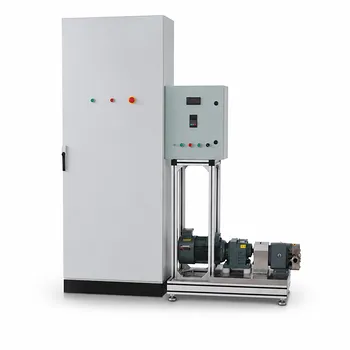
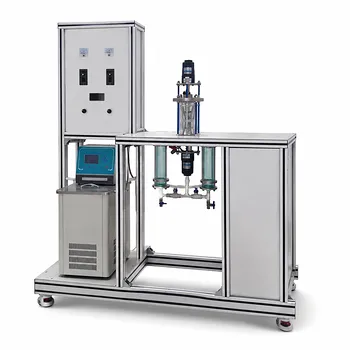
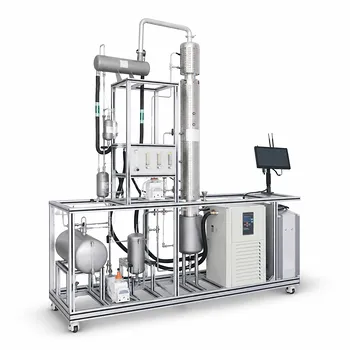
A pilot plant control system complies with IEC 61512 (ISA S88) by adopting a strictly hierarchical, dual-layer architecture that severs the physical equipment’s capabilities from the chemical or biological recipe. The core structure relies on a supervisory system to manage recipe parameters, schedule batches, and archive data, while a Programmable Logic Controller (PLC) executes the sequential logic of process phases—such as opening valves, ramping temperature setpoints, or dosing reagents—and coordinates all low-level regulatory control loops.
The true essence of ISA S88 compliance isn’t just a diagram of layers; it’s the modular, safe, and re-usable separation of “what to make” from “what you have to make it with.” This decoupling lets a single pilot plant seamlessly switch between radically different experiments without reprogramming its core infrastructure.
The ISA S88 Blueprint: Recipe, Equipment, and the Logic of Separation
Decoupling the “What” from the “How”
The standard’s fundamental insight is that a recipe—the procedure for creating a specific product—must be completely independent of the physical equipment. This means a fermentation protocol for E. coli can be written without knowing the exact make or model of the bioreactor. The equipment’s capabilities are defined separately, allowing any compatible vessel to execute the job. This modularity is the engine that drives flexible pilot-plant operation.
The Hierarchical Breakdown: From Recipe to Physical Action
A recipe is sequenced into Unit Procedures (e.g., charge solvent, react, crystallize, harvest). Each unit procedure consists of Operations (e.g., heat to 37°C, cool down, agitate). Operations contain Phases, which are the smallest executable chunks of work that command physical equipment—like opening a specific coolant valve on the reactor jacket. This logical layering lets researchers change a single parameter, such as a temperature setpoint, or completely reorder process steps without rewriting the low-level valve interlock logic.
The Role of the Supervisory System
The supervisory layer acts as the brain of the pilot plant. Its responsibilities include managing a library of master recipes, scheduling batch execution, sending parameter setpoints to the PLC, and collecting all time-series data. This system builds the electronic batch record automatically, capturing every setpoint change, alarm, and operator action. For academic and R&D settings, this full traceability is non-negotiable for validating experimental results and training students on GMP-like documentation.
The Role of the PLC: Orchestrating the Physical Sequence
The PLC is the muscle, executing the sequential control logic defined by the phases. It reads sensor inputs, drives digital outputs to open or close isolation valves, and sends setpoint commands to regulatory controllers. For example, during a “heat” phase, the PLC might enable a temperature PID loop with a target of 50°C and monitor until the state is stable before moving to the next phase. This precise choreography of state transitions—startup, dosing, hold, shutdown—is where ISA S88 shines.
Continuous Regulatory Control Meets Discrete Sequencing
Batch pilot plants are neither purely continuous nor purely discrete; they are a hybrid. You need continuous regulatory loops for temperature, pressure, pH, and dissolved oxygen that run with PID control, while the overall process moves through distinct, time-varying states. The PLC bridges these worlds by changing PID setpoints and control modes (auto/manual) based on the active phase. A fermentation vessel, for instance, will simultaneously maintain a sterile air sparge rate (continuous DO control) while sequentially moving from inoculation to growth and harvest phases.
Hardware Architecture: Building a Safe and Adaptable Platform
Sizing I/O and Planning for Growth
Before a single line of code is written, you must audit the exact type and count of I/O modules—analog inputs for thermocouples and pH probes, analog outputs for control valves, digital inputs for limit switches, and digital outputs for solenoid valves. Always include a safety margin (at least 15–20% spare channels) for future sensor additions. Pilot plants are research tools, and experimental rigs evolve; a locked-down I/O count stifles scientific flexibility.
Safety in Hazardous Environments
Chemical pilot plants often operate in zones where flammable solvents or gases are present. Compliance with ISA S88 must coexist with explosion-proof design standards. This means integrating intrinsically safe barriers, galvanic isolators, and certified fieldbus components. The number of cabinets, power supplies, and operator stations must be matched to both the lab’s physical footprint and the stringent zone-classification requirements to prevent ignition sources from ever reaching the field devices.
Field Instrumentation and Maintainability
The most elegant control logic is useless if a technician cannot quickly troubleshoot a tripped relay. Use clearly labeled terminal boards and relay modules for all field instrument connections. Design the marshalling cabinet so that loop checks, signal tracing, and component replacements can happen at the backplane without undoing a rat’s nest of wiring. For educational pilot plants, this clear physical layout doubles as a powerful teaching tool about control system architecture.
A Concrete Example: The Bioprocess Fermenter
Consider a typical bioprocess pilot plant—a versatile, jacketed fermenter. To comply with ISA S88, the control system would structure a bacterial growth experiment as follows: the recipe defines a unit procedure “Ferment,” containing operations for Sterilization, Inoculation, Growth, and Harvest. The “Growth” operation includes concurrent phases that command the PLC to:
- Temperature control: enable a PID loop modulating a cooling water control valve to hold 37°C.
- Dissolved oxygen (DO) control: regulate a mass flow controller for sterile air sparging based on a DO probe.
- pH control: activate peristaltic pumps to dose acid or sodium hydroxide based on real-time pH feedback.
The PLC sequences the transition from “Heat & Hold” to “Inoculate” by automatically closing the sterilization steam valve, verifying temperature is within bounds, and then signaling the operator to connect the seed vessel. Simultaneously, the supervisory system time-stamps every data point, building a complete batch record for later analysis.
Understanding the Trade-offs and Pitfalls
ISA S88 compliance, when applied without judgment, can burden a small pilot plant with excessive complexity. A full-blown recipe management system for a single benchtop reactor with a handful of I/O points may simply trainwreck a student’s learning curve. The art is in adopting the standard’s logical model without over-engineering the physical implementation. Another common pitfall is architecting the system so rigidly that a researcher cannot insert a manual hold or a mid-run parameter change without breaking the batch record. The interface must allow controlled, auditable manual interventions while preserving data integrity—the batch historian must capture the fact that a setpoint was changed and by whom.
Making the Right Choice for Your Pilot Plant
Selecting the right architectural commitment depends on what you need the system to achieve most reliably.
- If your primary focus is educational flexibility: Emphasize the recipe-equipment separation above all else. Create a library of parameterized phase modules that students can drag and drop to build their own sequences, without touching PLC code.
- If your primary focus is hazardous process safety: Prioritize the hardware layer. Invest heavily in intrinsic safety, vote-to-trip logic on critical valves, and pre-evaluated fail-safe phases. The sequence must default to a safe state autonomously.
- If your primary focus is research data integrity: Obsess over the supervisory batch record. Ensure every operator action, alarm, and forced setpoint is captured with a user identity and timestamp, making the electronic record a legally and scientifically defensible audit trail.
- If your primary focus is multi-product R&D: Build an extensive equipment capability model. The physical units (reactors, filters, centrifuges) must be defined with all their process limits so that any new recipe can be automatically checked for feasibility before execution.
A system structured around these principles becomes more than a control panel; it becomes the reliable, transparent, and adaptable backbone of your entire research and training mission.
Summary Table:
| ISA S88 Hierarchy Level | Key Role in Batch Pilot Plants | Primary Control Hardware/Software |
|---|---|---|
| Supervisory System | Recipe management, batch scheduling, electronic batch record archiving | SCADA / Batch Management Software |
| PLC Logic (Phases) | Executes sequential control (valves, pumps, state transitions) | Programmable Logic Controller (PLC) |
| Equipment/Control Loops | Executes continuous regulatory control (PID loops for temp, pH, flow) | Field Instruments & I/O Modules |
Build Your Compliant Pilot Plant with LABPARK
Designing a control system that meets international standards starts with the right hardware. LABPARK provides industry-grade Educational and Vocational Unit Operations Pilot Plants in chemical engineering, bioprocess & biotech, and environmental & water treatment for universities, research institutes, and enterprises.
Our systems are built to support modular configuration, seamless recipe-equipment decoupling, and robust data integrity, ensuring your students and researchers work with standard-compliant, safe, and flexible technology.
Looking to upgrade your laboratory or training facility? Contact LABPARK today to explore our customizable pilot plant solutions!
Related Products
- Natural Product Extraction Unit Operations Training Pilot Plant
- Continuous Batch Extractive Distillation Educational Pilot Plant
- Multi Pump Fluid Transport Process Piping Unit Operations Training Pilot Plant
- Bio-fermentation Ethanol Production Practical Training Unit Operations Pilot Plant
- Quantitative Dosing and Liquid Flow Control Educational Unit Operations Pilot Plant
People Also Ask
- How to Demo Solubility Sensitivity in SFE Pilot Plants? Practical Thermodynamics
- How do pilot plants differentiate physical vs chemical extraction? Enhance Chemical Engineering Training
- How are HTU and NTU applied to determine extraction column height? Guide to Pilot Plant Scaling
- Why use split-plot designs in pilot plants instead of CRD? Optimize process parameters effectively.
- What are the limitations of acentric factor models? Avoid pilot plant errors with polar fluids.