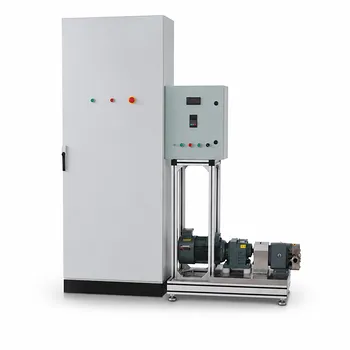
The automation configuration hinges on a computer-coordinated loop of precise fluidic and electronic timing. A multi-way injection valve, driven by a timing-controlled pneumatic actuator, physically introduces the sample into the carrier stream. Simultaneously, the biosensor’s analog millivolt signal is fed to an analog-to-digital converter (ADC), transforming the voltage response into digital data the computer can log and analyze. This single, orchestrated sequence eliminates manual pipetting and manual data recording entirely.
The key to dependable bioprocess monitoring is treating injection and signal processing as a single, synchronized automation cycle. Solid-state relays under software command govern every pump and valve action, from baseline flushing to sample injection to system rinsing. When paired with automated calibration and validation routines, this configuration turns a fragile laboratory technique into a robust, real-time process analytical technology (PAT).
The Hardware Backbone: Valves, Actuators, and Signal Path
How the Multi-Way Injection Valve Automates Sampling
The injection valve typically has multiple ports connected to the sample stream, standard solutions, wash buffer, and the carrier line to the detector.
A pneumatic actuator uses compressed air to switch the valve between load and inject positions at precise times. The computer sends a low-voltage timing signal that triggers the actuator, guaranteeing reproducible injection volumes and eliminating timing drift.
The Analog Signal Chain and Digitization
The biosensor in the detection cell—often a pH-sensitive field-effect transistor or enzyme electrode—generates a tiny millivolt signal proportional to the analyte concentration.
This raw analog signal goes directly into an analog-to-digital converter (ADC). The ADC samples the voltage at high frequency and converts it into a digital value, which the software then plots in real time as a peak. The entire process removes the need for chart recorders or manual peak integration.
Orchestration Through Solid-State Relays
Solid-state relays are the silent switches that connect the computer’s digital I/O to pumps and valves. Unlike mechanical relays, they have no moving parts, so they switch instantly and last indefinitely.
The software sends timed on/off commands through these relays to:
- Start and stop the peristaltic pump for the carrier stream
- Actuate the injection valve
- Switch between sample, standard, and wash lines
- Trigger the data acquisition start and stop
Because all actions are relay-driven, the sequence is perfectly repeatable—the same master timing file runs every cycle.
Embedding Quality Control into the Automation Cycle
Programmed Calibration for Zero-Touch Drift Correction
Before a monitoring run begins, the system automatically performs a calibration cycle. It injects a set of standards (typically three to five concentrations), records the peak heights, and fits a calibration model (linear or logarithmic).
The supplementary software can be configured to repeat this cycle either on a fixed time interval (e.g., every 4 hours) or when triggered by a sensor drift alert. This ensures that the quantitative output stays accurate without an operator ever touching a pipette.
Online Validation via Replicate Injections
To verify that the measurement is stable, the automation method can inject the same sample multiple times (for example, three consecutive injections).
The software instantly calculates the standard deviation of these replicate peak areas. If the RSD (relative standard deviation) exceeds a user-defined threshold, the system can flag the data or automatically trigger a re-calibration. This statistical gatekeeping is impossible in manual assays.
Understanding the Trade-offs
Balancing Robustness and Complexity
Automating everything introduces a single point of failure: the computer and its communication interfaces. A software crash, a disconnected relay board, or a sticky pneumatic valve can halt monitoring until manually reset. The system is only as reliable as the most fragile component in the chain.
The Maintenance Reality
The multi-way valve and its actuator require periodic lubrication and seal replacement, especially when running high-salt bioprocess media. Clogged sample lines or protein fouling on the biosensor surface can create signal artifacts that no automated protocol can fix without physical intervention. Automated rinsing helps, but does not eliminate the need for scheduled sensor regeneration.
Validation Overhead vs. True Control
Automated calibration and replicate validation are powerful, but they consume precious sample volume and time. If the calibration frequency is too aggressive, you lose measurement throughput. If it’s too infrequent, the model drifts and data quality erodes. The configuration must strike a balance that matches the process’s dynamics.
Making the Right Choice for Your Bioprocess Goal
The proper configuration depends on whether your priority is hands-off operation, data integrity, or integration speed.
- If your primary focus is replacing manual ELISA with real-time PAT: Configure the system with automated three-point calibration at the start of each batch and replicate validation every 10th injection. This immediately gives you a measurement frequency and objectivity that offline assays cannot match.
- If your primary focus is closed-loop process control: Program tighter calibration intervals (e.g., every 2 hours) and use the standard deviation from replicate injections as a feedback metric to trigger automated sensor conditioning or back-up measurements.
- If your primary focus is a robust pilot-plant environment with minimal operator training: Use solid-state relays on all critical actuators, run a wash cycle between every sample injection to reduce fouling, and store all timing logic in a single, locked method file to prevent accidental changes.
The true value of automation is not just in eliminating pipettes—it’s in building a measurement cadence so consistent that your process model can trust every data point, every time.
Summary Table:
| Component | Key Function | Main Benefit |
|---|---|---|
| Multi-Way Injection Valve | Routes samples, standards, and wash buffers | Eliminates manual pipetting and contamination |
| Pneumatic Actuator | Switches valve between load and inject positions | Ensures precise, reproducible injection volumes |
| Analog-to-Digital Converter (ADC) | Translates biosensor millivolt signals to digital data | Enables real-time, software-driven peak analysis |
| Solid-State Relays | Controls pumps and valves via computer timing | Guarantees highly repeatable automation cycles |
| Programmed Calibration | Automatically injects standard solutions at set intervals | Corrects sensor drift without operator intervention |
Optimize Your Bioprocess Training & Research with LABPARK
Are you looking to implement advanced PAT and automated biosensor monitoring in your laboratory? LABPARK designs and supplies premium Educational and Vocational Unit Operations Pilot Plants for chemical engineering, bioprocess & biotech, and environmental & water treatment.
Tailored for universities, research institutes, and enterprises, our pilot systems provide hands-on experience with industry-standard automation and fluidic controls.
Contact our engineering experts today to discover how LABPARK can elevate your training and research capabilities!
Related Products
- Bio-fermentation Ethanol Production Practical Training Unit Operations Pilot Plant
- Multi-Functional Membrane Separation Educational Pilot Plant for Unit Operations Lab
- Natural Product Extraction Unit Operations Training Pilot Plant
- Multi-Reactor Educational Pilot Plant for Reaction Engineering Unit Operations
- Educational Unit Operations Pilot Plant for Intraparticle Diffusion Effective Factor Measurement
People Also Ask
- Why Use PTFE & Hastelloy in Chemical Pilot Plants? Prevent Corrosion & Ensure Safety
- Why Compare Predicted and Experimental Excess Enthalpy? Key to Accurate Pilot Plant Scale-up
- Why is the chemical plant startup schedule crucial? De-risk scale-up with pilot plants.
- When to transition from PID to adaptive control in pilot plants? Key process indicators.
- Why must batch and fed-batch fermentation pilot plants be designed to accommodate changing rheological conditions?