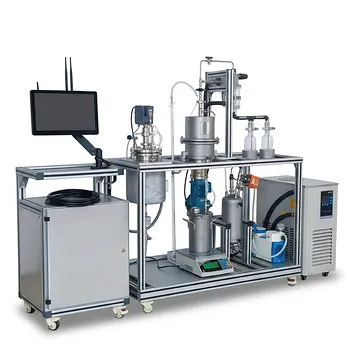
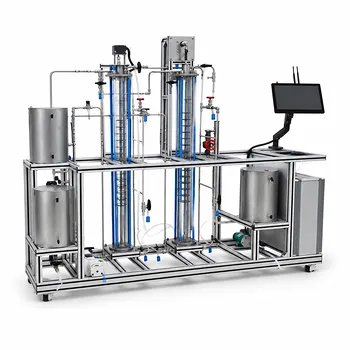
Precise control of a flash distillation pilot plant begins with one critical number: the exact temperature at which your liquid feed will first form a bubble of vapor. Calculating the bubble point temperature tells you how hot to set the pre-heater so that vaporization happens only where you want it – inside the flash vessel. Calculating the bubble point pressure ensures the feed stays completely liquid upstream of the expansion valve, preventing erratic two-phase flow. Together, these calculations eliminate guesswork, stabilize operation, and directly determine whether the pilot plant hits its purity and recovery targets.
Bubble point calculations define the thermodynamic boundaries of the flash process. By pinpointing the conditions where the first vapor bubble appears, operators can pre-heat the feed just enough to drive the desired separation and maintain sufficient pressure to keep the mixture liquid until the moment of flashing. This transforms the pilot plant from an unpredictable trial‑and‑error setup into a controlled, repeatable system.
The Thermodynamic Foundation of Flash Distillation
A flash distillation unit relies on a single, controlled phase change. To control it, you must first know where the phase boundary sits.
Understanding the Bubble Point as a Phase Boundary
The bubble point is the condition where a liquid mixture is saturated, poised to release its first vapor bubble. For a given pressure, the bubble point temperature satisfies the equilibrium condition Σ Kᵢ xᵢ = 1 using each component’s K‑value and liquid mole fraction. This temperature marks the threshold between a stable liquid and the start of vaporization.
Why Pressure Control is Equally Critical
Every liquid has a bubble point pressure – the pressure at which it will start to boil at a fixed temperature. In a flash pilot plant, the feed must remain a single‑phase liquid in the pre-heater and transfer lines. Calculating the bubble point pressure at the desired pre‑heat temperature allows operators to maintain an upstream pressure that is always above this value, preventing premature boiling. Only after the feed passes through the throttling valve does the pressure drop, triggering the flash.
From Calculation to Operational Control
Knowing the theoretical bubble point is the first step. Putting that knowledge into daily control of the pilot plant closes the loop between equations and real performance.
Setting the Pre-Heater Temperature with Precision
Without a calculated bubble point temperature, operators risk two common failures. Heating the feed too little results in incomplete flash vaporization, starving the vapor phase and reducing separation efficiency. Overheating the feed wastes energy, may cause thermal degradation of sensitive components, and can create vapor pockets inside the heater that disrupt flow. Using the exact bubble point temperature as the heater setpoint ensures flash vaporization occurs immediately after the pressure let‑down, with no unnecessary overheating.
Maintaining Single-Phase Flow Upstream
A pump or feed system pushing a two‑phase mixture into a heat exchanger can cause cavitation, uneven heat transfer, and vibration. By calculating bubble point pressure, operators determine the minimum required back‑pressure to keep the liquid phase intact all the way to the flash vessel inlet. This simple check guarantees that the expansion valve, not the heater, triggers the phase change, giving the operator full control over the flash location.
Ensuring a Predictable Vapor–Liquid Split
The flash calculation – solving for vapor fraction using material and energy balances – assumes the feed enters the flash chamber at a known thermodynamic state. If the upstream temperature drifts past the bubble point, you effectively have a partial vaporization before the valve, altering the final liquid and vapor compositions. Bubble point calculations lock in the starting condition, making the predicted split reproducible from run to run.
Common Pitfalls and Trade-offs
Even correct calculations can lead to trouble if their limitations are ignored. Understanding these trade‑offs is essential for robust pilot plant operation.
The Danger of Over-Reliance on a Single Calculation
Bubble point values shift with feed composition. Pilot plant feeds often vary between batches or during a campaign. An operator who uses a single old calculation risks setting the pre‑heater temperature too high or too low as the mixture changes. Regular recalculations based on the latest feed analysis prevent this drift.
Balancing Temperature and Pressure for Energy Efficiency
A higher upstream pressure allows a higher pre‑heat temperature without vaporization, which can increase the vapor fraction after flashing. However, it also raises the energy demand and puts more stress on pump seals and heater elements. Bubble point calculations let you deliberately choose a minimum‑energy operating point – heating the feed just enough to reach the bubble point at a moderate upstream pressure, then letting the pressure drop do the rest.
The Dew Point Side Note: Full Control Requires Both Boundaries
Bubble point tells you when boiling begins; the dew point tells you when condensation starts in the vapor side. In a flash plant, if the vapor line cools below the dew point, liquid can condense unexpectedly and cause hammer or measurement errors. While bubble point controls the inlet, a truly stable operation also monitors the dew point of the overhead vapor. For the scope of boiling control, however, bubble point remains the primary lever.
Making the Right Choice for Your Flash Pilot Plant
How you use bubble point calculations depends on what problem you’re solving today. Pick the scenario that matches your immediate priority.
If your primary focus is achieving a target vapor fraction: Calculate the bubble point temperature at the upstream pressure, then set the pre-heater outlet to that exact value. Verify with a temperature indicator just before the valve, and adjust only if the experimentally achieved split deviates from the flash curve.
If your primary focus is preventing equipment damage: Determine the bubble point pressure at your planned pre‑heat temperature. Set the feed pump discharge pressure at least 20–30% above that value to guarantee liquid‑full flow through the heater and eliminate any risk of cavitation.
If your primary focus is energy efficiency: Use the bubble point temperature as the minimum viable setpoint. Avoid any extra heating that does not directly contribute to the required vapor fraction, and consider heat integration only after confirming the temperature margins.
If your primary focus is experimental reproducibility: Document the exact bubble point temperature and pressure used for each run, along with the feed composition. These metrics define the initial thermodynamic state; controlling to the same values ensures that different trials are truly comparable.
Mastering bubble point calculations injects thermodynamic certainty into every control decision, turning a flash distillation pilot plant from a guessing exercise into a precisely governed unit operation.
Summary Table:
| Parameter | Operational Role | Key Control Benefit |
|---|---|---|
| Bubble Point Temp | Sets pre-heater outlet temperature | Prevents incomplete vaporization & thermal degradation |
| Bubble Point Pressure | Determines minimum feed line pressure | Eliminates premature boiling and pump cavitation |
Elevate Your Chemical Engineering Lab with LABPARK
Master thermodynamic principles with hands-on precision. LABPARK provides state-of-the-art Educational and Vocational Unit Operations Pilot Plants in chemical engineering, bioprocess & biotech, and environmental & water treatment. We help universities, research institutes, and enterprises bridge the gap between theory and industrial practice with reliable, safe, and highly controllable pilot systems.
Maximize your educational and research outcomes—contact our experts today to find the perfect pilot plant solution for your lab!
Related Products
- Continuous Batch Extractive Distillation Educational Pilot Plant
- Multi-Functional Special Distillation Educational Pilot Plant
- Continuous Sieve-Plate Distillation Pilot Plant for Unit Operations Laboratory Education
- Multi-Modal Distillation Unit Operations Training Pilot Plant
- Supercritical High-Gravity Flash Evaporation Educational Unit Operations Pilot Plant
People Also Ask
- Wilson vs. UNIQUAC: How to Choose the Right Thermodynamic Model for Your Pilot Plant
- How does the feed thermal state influence distillation pilot plant design and utility consumption?
- Why use non-ideal VLE calculations in distillation pilot plants? Ensure accurate scale-up & purity
- How to Configure a Distillation Pilot Plant? Key Steps for Multi-Mode Setup
- How to Integrate Spectroscopy in Distillation Pilot Plants for Advanced Process Control