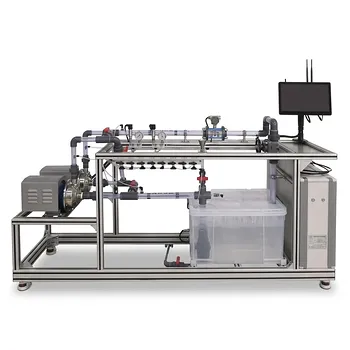
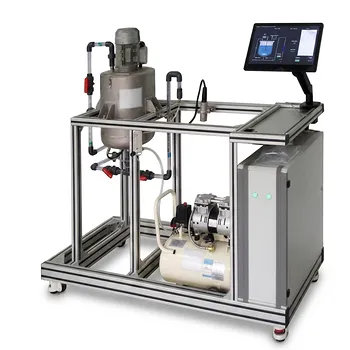
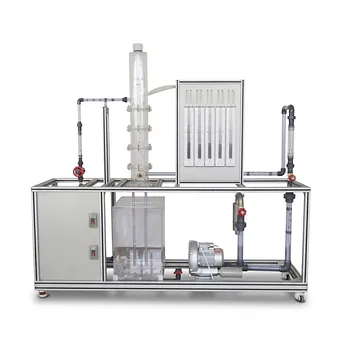
The core mechanism is strikingly simple: gravity-based separators sort particles by exploiting differences in density and size through controlled water flow and mechanical motion. Jigs use a pulsating water column to create a fluidized bed where heavier particles sink and lighter ones rise. In contrast, shaking tables employ a sloped, riffled deck with a back-and-forth shaking motion and cross-flow water, causing particles to fan out into distinct bands based on their specific gravity. In mineral processing pilot plants, these technologies transform abstract theory into tangible, observable physics.
While both jigs and shaking tables harness density differences to separate particles, their true educational power lies in how they convert silent textbook principles into an adjustable, visual laboratory—giving students and operators a hands-on sandbox to see stratification happen in real time and learn the delicate interplay of machine variables that dictates separation efficiency.
Deconstructing the Separation Process
To understand their educational value, we must first clearly dissect how each machine performs classification.
The Jig: Pulsating Water and Stratification
A jig works like a vertical heartbeat. A piston or diaphragm creates a pulsed water flow that lifts an entire bed of material, then lets it settle.
During the upward pulse, the bed dilates and becomes fluidized, allowing particles to reorganize by density as they briefly lose contact. On the downward suction stroke, heavier particles settle faster through the loosened bed, compacting at the bottom, while lighter ones remain suspended and are eventually carried over the top with the cross-flow water.
This rhythmic process creates a clean, layered separation directly in the jig’s hutch. Key operating variables include the stroke length, frequency, and the addition of a heavier “ragging” material on the screen to control density cut-point.
The Shaking Table: A Riffled Canvas of Lateral Forces
A shaking table uses a very different physical principle. Imagine a broad, slightly inclined surface covered with low, parallel riffles.
A motor-driven mechanism imparts a unique asymmetrical shaking motion—a slow forward stroke and a rapid, jerky return. Simultaneously, a film of wash water flows across the deck, perpendicular to the shaking. Particles fed onto the top corner are instantly subjected to competing forces: the shaking pushes them lengthwise, the water pushes them downslope, and friction with the riffles lifts and re-stratifies them.
The result is a stunning visual banding pattern. Heavy, dense particles (like gold) cling to the riffles and ride the slow forward stroke to the concentrate end. Light gangue particles are swept downslope by the water and end up in the tailings. Middlings form their own distinct band in between.
The Hidden Educational Engine: Why These Machines Build Real Expertise
The deep need behind this question isn’t a textbook definition; it’s about how a pilot plant turns a graduate into a processor. The educational value of these units is profoundly rooted in visual feedback, tactile adjustment, and immediate consequence.
From Abstract Theory to Tangible Observation
Mineral processing theory can feel like abstract math. A jig or shaking table makes density a physical thing you can watch. You don’t calculate stratification—you see the bed expand, watch the dark heavy band form against the screen, and see the clean quartz wash over the top.
This direct visual link cements understanding. A student can observe particle mechanics that are identical to those in a heavy media cyclone, but with the entire process openly visible, not hidden inside a steel vessel. It builds a foundational intuition for the behavior of solids in fluids that textbooks alone cannot provide.
The Living Laboratory of Variable Adjustment
The real learning begins when students start turning knobs. The primary reference rightly notes the educational power of manipulating specific variables and observing the instant impact on performance. This is the core of vocational training.
Consider a jig experiment: A student increases the stroke frequency. The bed becomes more dilated, and the separation sharpens, but suddenly, fine heavy particles start escaping to the tailings because the suction phase is now too violent. They learn the trade-off between capacity and accuracy in real-time.
On a shaking table, the analogy is equally powerful. Adjusting the tilt angle even half a degree shifts the entire fan of particles. Increasing the wash water flow cleans the concentrate but may wash valuable middlings away. Changing the stroke length alters the lateral transport speed. One setting optimizes for a high-grade product, another for high recovery, and the student sees the bands physically move. This teaches the multi-objective optimization problem at the heart of all process engineering—without a single line of code.
Building Diagnostic Skills for Industry
These hands-on adjustments cultivate diagnostic thinking. When a student sees a blurred band on the table, they don't just see a bad result; they learn to ask “why.” Is the stroke too fast? Is the feed rate inconsistent? Is the pulp density too high?
This mirrors exactly the fault-finding a shift supervisor performs on a full-scale plant. The pilot-scale jig and table are forgiving enough to let students make mistakes, but precise enough that those mistakes have clear, interpretable consequences. They learn to see process failures not as disasters, but as puzzles with physical solutions.
Understanding the Trade-offs
No educational tool is without its limitations. Objectively evaluating these trade-offs is essential for curriculum design.
While brilliantly visual, these pilot machines are slow and inefficient for high-throughput commercial production. A student who only learns on a jig may develop an intuition for gravity separation, but will not understand the complexity or control systems of a modern centrifugal concentrator.
There is also a risk of over-simplification. A clean separation on a laboratory shaking table with a very narrow size fraction can create a false sense of ease. In the field, the same orebody might produce a feed with extreme variation in particle shape and slime content that completely cloaks the expected density separation. The educational value is maximized only when instructors deliberately introduce messy, real-world feeds to challenge this simplicity.
Finally, the observability is not complete. While you see the output bands on a table, you cannot watch individual fine particles move within the thin water film between riffles. This leaves a small but important gap in the mental model that requires a teacher to bridge with analogies and fluid dynamics theory.
Making the Right Choice for Your Educational Goal
How you integrate these technologies should directly map to your training objectives. Here’s how to align the equipment with specific learning outcomes.
- If your primary focus is teaching the fundamentals of stratification and fluidization: Lean heavily on the jig. Its vertical, pulsating-bed process is the most direct demonstration of Archimedes principle in a dynamic, particle-bed environment.
- If your primary focus is demonstrating multi-factor optimization and recovery-vs-grade trade-offs: The shaking table is superior. The immediate, spatial banding response to changes in tilt, water, and stroke makes it a perfect physical simulator for process control philosophy.
- If your primary focus is preparing students for advanced, high-capacity circuits: Use these pilot units only as a precursor. Follow them with demonstrations or simulators of modern spirals, teetered bed separators, and centrifuges to bridge the gap between simple laboratory physics and industrial reality.
The ultimate educational value of a jig or shaking table isn't in the machine itself, but in the skilled engineering mind it helps to shape through open, observable physics.
Summary Table:
| Equipment | Separation Mechanism | Key Variables to Adjust | Primary Educational Value |
|---|---|---|---|
| Jigs | Pulsating water column fluidizes the bed; heavier particles sink, lighter particles rise. | Stroke length, stroke frequency, ragging material | Demonstrates stratification, fluidization, and Archimedes' principle. |
| Shaking Tables | Asymmetrical shaking with lateral cross-flow water; particles fan out into bands. | Deck tilt angle, wash water flow rate, stroke length | Illustrates spatial multi-factor optimization and grade-vs-recovery trade-offs. |
Bring Hands-On Process Engineering to Life with LABPARK
Bridge the gap between textbook theory and practical industry skills. LABPARK provides advanced Educational and Vocational Unit Operations Pilot Plants in chemical engineering, bioprocess & biotech, and environmental & water treatment. Designed specifically for universities, research institutes, and enterprises, our pilot plants empower students and operators to manipulate real-world variables, troubleshoot systems, and build critical diagnostic skills.
Ready to elevate your laboratory training? Contact LABPARK today to discover how our tailored pilot plant solutions can transform your educational and training outcomes!
Related Products
- Fluid Friction Resistance Determination Educational Unit Operations Pilot Plant
- Centrifugal Pump Performance Determination Educational Unit Operations Pilot Plant
- Educational Rotary Disc Liquid-Liquid Extraction Pilot Plant
- Agitation and Mixing Educational Unit Operations Pilot Plant
- Centrifugal Pump Performance and Orifice Flowmeter Calibration Educational Pilot Plant
People Also Ask
- How do pilot plants teach U-tube manometers? Master Differential Pressure Calculations
- How is the hydrodynamic entrance length estimated for high-Re channel flows? Design accurate pilot-plant measurements
- How do velocity profiles and flow rates differ in Newtonian and power-law fluids? A Pilot Plant Guide
- How do pilot plants demonstrate siphon pressure variations? Visualizing Bernoulli's Energy Balance
- How does high-frequency pressure oscillation affect velocity distribution and boundary layer behavior? Discover Stokes-layer effects