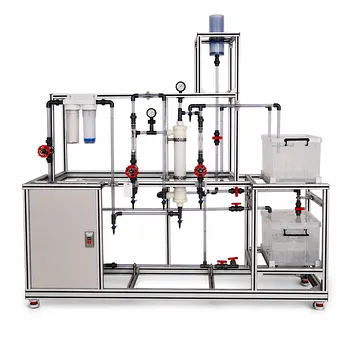
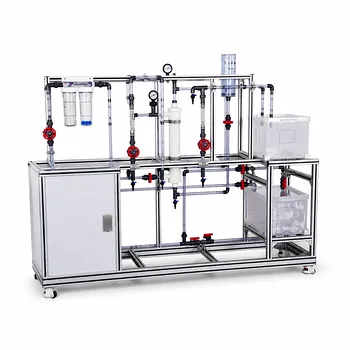
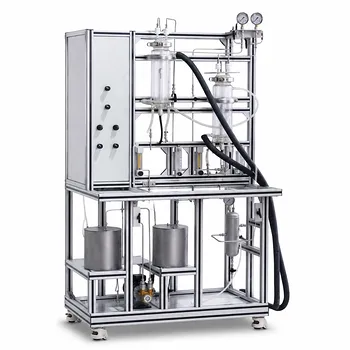
Extreme pH-stable nanofiltration membranes function as chemically resilient, pressure-driven barriers that separate target molecules and ions from highly corrosive acidic or alkaline streams. In environmental and acid/alkali recovery pilot plants, these specialized membranes operate across the full pH spectrum (0–14), withstand temperatures up to 90°C, and handle pressures as high as 50 bar. This stability enables reliable, long-term recovery of valuable resources—such as phosphoric acid or caustic cleaning solutions—and safe removal of heavy metals from industrial wastewater without membrane degradation.
The real power of extreme pH-stable NF membranes lies not just in their broad chemical tolerance, but in how their advanced polymer chemistry maintains stable selectivity and flux under conditions that would destroy standard membranes. For a pilot plant, this translates into dependable data, reduced maintenance, and the confidence to simulate true industrial conditions.
How Extreme pH Nanofiltration Works
The fundamental separation mechanism is the same as in standard nanofiltration: size exclusion combined with charge interactions between the membrane surface and dissolved species. However, the ability to perform this in extremely corrosive environments depends entirely on the membrane’s material backbone.
Balancing Size and Charge Exclusion
The membrane’s pores are engineered in the nanometer range, typically corresponding to a Molecular Weight Cutoff (MWCO) of 150–300 g/mol. This allows it to reject multivalent ions and small organic molecules while letting monovalent ions pass. In acid recovery, for example, the membrane retains heavy metal cations while permitting acid molecules to pass through, concentrating them for reuse.
Withstanding the Chemical Assault
Standard polyamide thin-film composite membranes would rapidly hydrolyze at pH extremes. Extreme pH-stable membranes, however, use sulfonated, cross-linked, or specially coated polymers that resist acid-catalyzed degradation. This chemical resilience prevents the polymer matrix from swelling, cracking, or losing its charge characteristics, which would otherwise destroy selectivity and cause compaction under pressure.
The Materials That Make It Possible
The key to function is in the membrane chemistry. Without the right polymer, nanofiltration in harsh pH is simply not feasible.
Sulfonated Polymeric Membranes
By incorporating sulfonic acid groups into the polymer structure, manufacturers create a negatively charged surface that stays ionized even in strong acids. This fixed charge improves the rejection of target anions and metal complexes while preventing the acid from protonating and degrading the membrane itself.
Coated Composite Barriers
Another approach is to apply a thin, inert barrier coating over a more traditional support layer. These coatings—often based on fluoropolymers or other chemically resistant materials—act as a shield, isolating the underlying structure from the corrosive feed. This allows the composite to withstand aggressive streams like hot sulfuric or phosphoric acid while still delivering useful flux.
Key Operational Parameters in Pilot Plants
In a pilot setting, you can‘t just install an “acid-resistant” membrane and expect success. You must actively align membrane properties with process goals.
pH Tolerance Defines Clean-in-Place Protocols
A membrane with a wide pH tolerance, such as pH 2–11 (or even 0–14), allows for aggressive Clean-in-Place (CIP) procedures. For wastewater or food-stream pilots, where organic fouling is common, you can use strong acids or caustic solutions to restore flux without permanently damaging the membrane. This directly reduces downtime and extends campaign length.
Temperature and Pressure: The Mechanical Limits
Extreme pH feeds often come with elevated temperatures. These membranes are designed to handle operating temperatures of 70°C, and sometimes up to 90°C, without losing structural integrity. Similarly, they can manage transmembrane pressures of 35–50 bar, resisting compaction that would irreversibly crush the porous structure of a less robust film. This mechanical stability keeps flux and rejection steady over months of operation.
Flux and Selectivity Trade-offs
Membrane surface chemistry directly affects throughput. A more hydrophilic membrane, indicated by a lower contact angle (e.g., 25° vs. 46°), can deliver significantly higher pure water flux—120 L/m²h versus 65 L/m²h at 6 bar, for instance. However, a tighter MWCO (150 g/mol) might give 94% glucose rejection with lower flux than a looser MWCO (300 g/mol) providing 90% rejection. The pilot engineer must balance this recovery rate against the required product purity.
Understanding the Trade-offs and Limitations
No single membrane is perfect. Extreme pH stability brings specific compromises you must manage.
- Permeability vs. Stability: The chemical modifications that grant pH resistance often create a denser polymer matrix, leading to inherently lower clean-water flux compared to non-resistant NF membranes.
- Specific Fouling Risks: While resistant to chemical degradation, these membranes can still suffer from scale formation (e.g., calcium sulfate or metal hydroxides) if pretreatment is inadequate, especially when concentrating acidic streams.
- Cost and Complexity: Acid-stable membranes come at a premium. However, in a pilot plant, the cost of premature failure—lost data, schedule delays, safety incidents—can far outweigh the higher initial membrane price.
- Not Universally Solvent-Resistant: A common pitfall is assuming pH stability implies full solvent resistance. An extreme pH membrane may still be attacked by certain organic solvents; always verify compatibility with your specific chemical mix.
Making the Right Choice for Your Pilot Goal
Your selection criteria should flow directly from your pilot plant’s primary objective.
- If your primary focus is acid recovery (e.g., mining, metal finishing): Choose a membrane with proven stability in highly acidic conditions (pH < 1) and high rejection of target heavy metals, while ensuring its MWCO allows the dissolved acid to permeate freely.
- If your primary focus is recovering alkaline cleaning solutions (CIP fluids): Prioritize a wide pH tolerance membrane that offers high hydrophilicity for maximum flux through caustic streams and resists both the organic foulants and the high pH of the cleaning agents themselves.
- If your primary focus is educational simulation or safe chemical processing: Select a membrane with a well-documented, broad pH tolerance (e.g., 2–11) to give students and researchers a forgiving operational window that prevents frequent, costly membrane failure during learning cycles.
- If your primary focus is long-term research with variable feed streams: Invest in a membrane known for resistance to compaction and degradation across a range of pH values. Pre-screen its performance with your harshest expected feedstock to verify the claimed stability before committing to a months-long program.
The right extreme pH-stable membrane removes the fear of chemical attack, allowing you to focus fully on optimizing the true separation process and generating robust pilot data.
Summary Table:
| Parameter/Feature | Operating Range / Value | Key Function in Pilot Plants |
|---|---|---|
| pH Tolerance | 0 – 14 | Resists harsh acids/alkalis; enables aggressive CIP |
| Temperature | Up to 90°C | Handles hot feed streams without structural loss |
| Pressure Limit | 35 – 50 bar | Resists compaction under high operating pressures |
| MWCO | 150 – 300 g/mol | Selectively separates multivalent ions & organics |
| Membrane Materials | Sulfonated polymers / coated composites | Prevents membrane degradation and swelling |
Scale Up Your Research with LABPARK Pilot Plants
Are you looking to integrate advanced membrane separation into your research or curriculum? LABPARK provides premium Educational and Vocational Unit Operations Pilot Plants in chemical engineering, bioprocess & biotech, and environmental & water treatment. Designed specifically for universities, research institutes, and enterprises, our systems deliver the reliability and performance needed to simulate real-world industrial environments.
Ready to elevate your training and research capabilities? Contact our engineering experts today to find the perfect pilot plant solution!
Related Products
- Multifunctional Membrane Separation Educational Pilot Plant with Ultrafiltration, Nanofiltration, Reverse Osmosis
- Multi-Functional Membrane Separation Educational Pilot Plant for Unit Operations Lab
- Ultrafiltration Membrane Separation Educational Pilot Plant
- Hollow Fiber Ultrafiltration Membrane Separation Educational Pilot Plant
- Multi Functional Membrane Crystallization Educational Unit Operations Pilot Plant
People Also Ask
- How do PEI, PVDF, and PSU membranes compare in pilot plants? Find the best fit.
- Pervaporation vs. Vapor Permeation: Handling Suspended Solids in Membrane Pilot Plants
- What are the trade-offs of polymer vs inorganic membranes in teaching pilot plants? Key laboratory comparison.
- How can operators optimize operating conditions and cleaning protocols in membrane separation pilot plants to mitigate fouling?
- What are the advantages of membrane separation in pilot plants? Efficient Organic Vapor Recovery