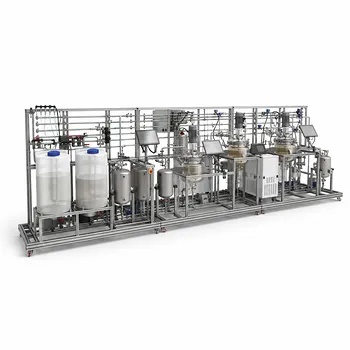
At its core, an electrolytic copper refining pilot plant is a scaled-down industrial cell that reveals how a carefully chosen electrical potential can pluck out pure copper atoms while forcing a dozen different impurities to go their separate ways. In such a pilot plant, an impure copper anode and a pure copper cathode are submerged in a sulfuric acid–copper sulfate electrolyte. When direct current is applied, only copper ions are driven to the cathode to form 99.9% pure metal; more active contaminants like zinc, nickel, and iron stay dissolved in the solution, and less active noble metals (gold, silver, platinum) never dissolve at all, settling instead as a valuable anode sludge. The entire demonstration turns an abstract textbook diagram into a measurable, observable reality.
The key lesson is that the inherent differences in electrochemical potential between copper, base metals, and precious metals allow a single applied voltage to achieve both purification and by-product concentration. A pilot plant makes this separation tangible by letting you see the anode waste, watch the cathode brighten, and quantify every step with real-time sensors and mass balances.
The Electrochemical Sorting Mechanism
The bedrock of the process is a hierarchy of reactivity that a pilot plant exploits with surgical precision. When the impure anode dissolves, every metal atom must decide whether to enter the solution as an ion or remain as a solid.
Why Only Copper Deposits at the Cathode
The applied voltage is tuned to a narrow window where the reduction of Cu²⁺ to metallic copper is thermodynamically and kinetically favored. Metals more active than copper—zinc, iron, nickel—have more negative reduction potentials, so they require a much higher voltage to be reduced. Under the controlled cell potential, they simply stay as ions in the electrolyte.
Why Noble Metals Form Sludge
Conversely, metals less active than copper, including silver, gold, platinum, and palladium, have more positive reduction potentials. They are too noble to be oxidized at the anode, so they do not dissolve at all. Instead, they slough off as fine particles and accumulate at the bottom of the cell as an anode sludge. This mechanical separation is as important as the electrochemical one—it automatically concentrates high-value by-products.
The Role of the Electrolyte Composition
The copper sulfate–sulfuric acid bath isn’t just a passive conductor. It maintains the correct ionic environment to keep base metal impurities in solution, suppresses side reactions like hydrogen evolution, and ensures that the copper deposition proceeds smoothly with minimal dendrite formation.
How a Pilot Plant Makes the Separation Visible
A well-designed pilot plant transforms these principles from a chemical equation into an interactive learning tool. Modern educational units use transparent cell walls, built-in sensors, and scalable components to let you observe, measure, and control every variable in real time.
Live Observation of Anode Dissolution and Cathode Growth
With transparent reactor cells, students can watch the crude anode shrink as copper atoms are oxidized and enter the electrolyte. Simultaneously, the pinkish glow of fresh, pure copper appears on the cathode. The contrast between the dwindling, irregular anode and the smooth cathode coating is a vivid demonstration of selective deposition.
Real-Time Monitoring of Voltage and Current Density
These pilot plants are equipped with adjustable DC power supplies and precision meters. By varying the voltage, a student literally sees the point at which copper deposition begins and where hydrogen evolution or impurity co-deposition would occur. Measuring the current allows calculation of deposition rate and current efficiency—direct applications of Faraday’s laws.
Quantifying the Fate of Impurities
After a run, the system enables mass balance studies. The dissolved base metal concentration in the electrolyte can be tracked via sampling or ion-specific probes. The anode sludge is collected, dried, and weighed, then often analyzed to show the presence of precious metals. This turns the concept of “impurity separation” into hard numbers: how much copper came out pure, how much sludge formed, and what the sludge is worth.
The Critical Lever: Voltage Control
Voltage is the primary dial that separates copper from chaos. A pilot plant demonstration zeroes in on this variable because it governs both purity and process economics.
The Narrow Electrochemical Window
If the voltage is too low, copper deposition is slow and patchy. If it’s too high, side reactions kick in: hydrogen gas bubbles form at the cathode, wasting energy and roughening the deposit, and less noble metals may start to plate out as contaminants. The pilot plant illustrates that there is an optimal voltage range—typically 0.2–0.4 V under industrial conditions—where copper purity stays above 99.9% while maintaining a practical production rate.
Linking Voltage to Current Efficiency
Operating at the optimal voltage doesn’t just protect purity; it maximizes current efficiency. In a pilot run, students can measure the actual mass of copper deposited versus the theoretical mass predicted by Faraday’s law. Deviations immediately spark discussions about parasitic reactions, electrolyte resistance, and energy consumption.
Understanding the Trade-offs
Even the most elegant selective deposition has built-in conflicts. A pilot plant forces you to confront these trade-offs rather than gloss over them.
Purity vs. Production Rate
You can raise the voltage to deposit copper faster, but this diminishes purity. The pilot plant shows that a 5% increase in voltage might cut purity from 99.99% to 99.95%—still saleable, but not acceptable for high-end electrical applications. Students learn that every specification is a negotiation between speed and quality.
Sludge Handling and Recovery
Anode sludge is a mixture of precious metals, residual copper, and other solids. In a pilot plant, filtering and washing this sludge mimics a real-world challenge: if not sufficiently rinsed, residual copper sulfate contaminates the precious metal concentrate. The need for solid-liquid separation equipment—such as vacuum filters or centrifuges—highlights that purification doesn’t end in the electrolytic cell.
Electrolyte Maintenance and Build-Up of Soluble Impurities
As more anodes are processed, the concentration of soluble base metals (especially iron and nickel) climbs in the electrolyte. Ultimately, this degrades current efficiency and can lead to impurity co-deposition. In a multi-cycle pilot plant demonstration, you can observe the need for electrolyte bleeding and regeneration, teaching that a closed-loop process requires continuous impurity management.
Making the Right Choice for Your Goal
How you use an electrolytic copper refining pilot plant should align with the specific lesson you need to teach or the research question you’re investigating. The same hardware can serve vastly different purposes depending on what you choose to highlight.
-
If your primary focus is foundational electrochemical principles: Run the cell at a single, stable voltage and concentrate on mass balance, Faraday’s law calculations, and visual observation of anode slime formation. Keep it simple to solidify the core concept that voltage discriminates between metals.
-
If your primary focus is process optimization and industrial relevance: Vary the voltage, temperature, and electrolyte flow rate systematically. Measure the effect on deposition rate, purity, and energy consumption. Use these data to find the “sweet spot” and discuss how economic factors drive real plant decisions.
-
If your primary focus is by-product recovery and economics: After the electrolysis run, put the anode sludge through a complete separation and assay workflow. Quantify the silver, gold, and platinum group metals, and calculate the contribution of sludge recovery to the overall profitability of the refining operation.
-
If your primary focus is equipment scale-up and unit operations: Integrate the electrolytic cell with pilot-scale filtration and drying equipment. Study how agitation, wash ratios, and drying curves affect the recovery of clean anode sludge, directly connecting electrochemistry to downstream mechanical processing.
A chemical engineering pilot plant does more than just replicate copper refining—it isolates the fundamental lever of voltage, makes impurity separation brutally clear, and hands you the controls so that the principles of selective metal deposition become an unforgettable, data-rich experience.
Summary Table:
| Metal Group | Reactivity / Potential | Behavior in Cell | Output Product |
|---|---|---|---|
| Copper (Cu) | Target Potential | Dissolves & deposits at cathode | 99.9%+ Pure Cathode |
| Active Impurities (Zn, Fe, Ni) | More active (Negative) | Dissolves & stays in electrolyte | Soluble Waste / Electrolyte Bleed |
| Noble Metals (Au, Ag, Pt) | Less active (Positive) | Does not dissolve, falls to bottom | Valuable Anode Sludge |
Elevate Your Chemical Engineering Lab with LABPARK
Bridge the gap between theoretical electrochemistry and industrial reality. LABPARK designs and manufactures high-performance Educational and Vocational Unit Operations Pilot Plants in chemical engineering, bioprocess & biotech, and environmental & water treatment. We help universities, research institutes, and enterprises train the next generation of engineers with hands-on, transparent, and sensor-rich systems.
Contact our engineering experts today to customize a pilot plant solution for your curriculum or research facility!
Related Products
- Electrolyte Distillation Purification and Formulation Educational Pilot Plant
- Electrochemical Water Treatment Educational Unit Operations Pilot Plant
- Electrolytic Hydrogen Production Educational Unit Operations Pilot Plant
- Water Electrolysis Hydrogen Production and Storage Educational Pilot Plant
- Dual-Mode Rectification Pilot Plant for Practical Training Unit Operations
People Also Ask
- Why does simple distillation yield higher efficiency than flash distillation? Key thermodynamic differences.
- How to Integrate Spectroscopy in Distillation Pilot Plants for Advanced Process Control
- Why is the acentric factor important in pilot plants? Fluid property prediction.
- How to Verify Distillation Boundary Lines & Composition Regions with Pilot Plants
- How does double temperature difference control improve distillation pilot plants? Stabilize purity.