The definitive method for monitoring phosphoric acid cleaning solutions in pilot plant maintenance is a straightforward acid-base titration — but only if metallic interferences are chemically neutralized. You titrate the filtered solution as a dibasic acid to a thymolphthalein endpoint using standard sodium hydroxide. The critical precursor to an accurate result is adding potassium fluoride, which selectively masks dissolved ferric and aluminum ions by locking them into stable hexafluoro complexes. Without this step, the metal hydrolysis mimics acid and inflates your reading.
Pilot plant operators need a rugged, field-friendly method to track cleaning solution strength as it becomes loaded with dissolved metals. The core insight is that fluoride masking is the non-negotiable gatekeeper — it eliminates the false acidity from Fe³⁺ and Al³⁺ ions, turning a compromised titration into a reliable process control tool.
The Titration Method for Phosphoric Acid
In a pilot plant loop, your goal is to know the active phosphoric acid concentration as it degrades during a clean-in-place (CIP) cycle. The titration procedure is deliberately simple, but it hinges on two chemical selections that target the deep need for accuracy.
Why Thymolphthalein Instead of Phenolphthalein
Phosphoric acid (H₃PO₄) is a polyprotic acid. When you want to quantify it for cleaning power, you titrate it as a dibasic acid — consuming two protons per molecule. This requires an indicator that changes color at a higher pH range.
Thymolphthalein has a transition pH around 9.3–10.5, matching the second equivalence point where H₃PO₄ has lost two protons. Phenolphthalein, which changes around pH 8.2–10.0, is better suited for monobasic titrations (like HCl or sulfamic acid) and would give an ambiguous endpoint here.
The Standard NaOH Titration
The procedure itself is a classic volumetric analysis:
- Filter a representative sample of the spent cleaning solution to remove suspended solids.
- Add potassium fluoride solution to the filtrate (masking step).
- Titrate with standardized NaOH to the first persistent pale blue color of thymolphthalein.
Because you are measuring the active acid reserve, not total phosphorus, this method directly answers the surface need: “What concentration do I still have working in the loop?”
Understanding Metallic Interferences
The real enemy of a clean titration isn’t the procedure — it’s the chemistry hiding in the background. Ferric (Fe³⁺) and aluminum (Al³⁺) ions inevitably accumulate as the acidic solution attacks pipe scale and equipment surfaces.
How Metal Ions Falsify the Result
These trivalent metal ions don’t just sit idle. In the aqueous environment of the titration, they hydrolyze — splitting water molecules and releasing protons. For example:
Fe³⁺ + nH₂O ⇌ [Fe(OH)ₙ]⁽³⁻ⁿ⁾⁺ + nH⁺
Each hydrolyzed metal ion acts as a weak acid, consuming your NaOH titrant. The result is a falsely high phosphoric acid reading. You might think your cleaning solution is stronger than it is, leading to premature replenishment or a false sense of security about its remaining efficacy.
The Difference Between Total Metals and Active Acid
It’s tempting to assume that dissolved metals simply “cancel out,” but the acid they generate is an artifact, not cleaning power. The deep need here is discriminating between the real phosphoric acid and the interfering acidity. A direct titration without masking measures the sum of all acidic species, which is useless for process control.
The Masking Strategy with Fluoride
The solution is elegant and was designed precisely for this industrial nuisance. Potassium fluoride (KF) is the workhorse that rescues the titration.
The Chemistry of Hexafluoro Complexes
Fluoride ions (F⁻) have an extremely high affinity for trivalent metals. When you add KF to the sample, a rapid ligand exchange occurs:
Fe³⁺ + 6F⁻ → [FeF₆]³⁻
The resulting hexafluoro ferrate(III) and hexafluoro aluminate complex ions are extraordinarily stable. They completely suppress the metal’s ability to hydrolyze and release protons. Once masked, the metals become inert spectators during the NaOH titration, and the only acid reacting is the phosphoric acid still present.
Practical Execution Is Simplicity Itself
There is no delicate pH adjustment or waiting period. You simply add an excess of KF solution to the filtered sample before titration. The reaction is rapid and quantitative at room temperature. This speed and robustness make it perfectly suited for a pilot plant floor, where a maintenance technician needs a quick, reproducible answer without a full lab bench.
Critical Trade-offs and Practical Considerations
This method is powerful, but it’s not immune to misuse. Understanding its boundaries ensures you get the accuracy you depend on.
The Safety Profile of Fluoride
Potassium fluoride is a source of free fluoride ions and is toxic if ingested. In a pilot plant environment, it must be handled with appropriate PPE and segregated from acidic solutions that could generate HF gas. The masking step itself generates no dangerous fumes, but operator awareness is non-negotiable.
Potential Pitfalls in the Masking Step
While robust, the fluoride masking is not infinitely forgiving:
- Insufficient KF: If the sample contains an unusually high metal load (e.g., after a major descaling event), you may not add enough fluoride to complex all Fe³⁺ and Al³⁺ ions. A simple rule is to use a generous excess — the thumb rule in process labs is to add at least a 10:1 molar ratio of F⁻ to total anticipated trivalent metals.
- Very high chromium or other metals: The primary and supplementary references focus on Fe³⁺ and Al³⁺. Other trivalent species like chromium(III) can also hydrolyze, but fluoride may not mask them as efficiently. In specialized alloy cleaning, this can introduce a minor residual interference, but for typical stainless steel and aluminum pilot plant systems, Fe and Al dominate.
When to Use a Monobasic vs. Dibasic Titration
The method described is for phosphoric acid. If you switch cleaning agents — for example, using sulfamic acid or hydrochloric acid in a subsequent rinse — the same masking principle applies, but the titration endpoint changes. You would then titrate as a monobasic acid to a phenolphthalein endpoint. Recognizing this prevents you from locking into a single protocol and misinterpreting data when cleaning chemistry changes.
Making the Right Choice for Your Maintenance Program
Your deep need is a reliable, quick field method that tells you when to replenish or dump the cleaning solution. The following goal-based recommendations help you deploy this knowledge.
- If your primary focus is day-to-day process control: Standardize on the fluoride-added, thymolphthalein endpoint titration as your routine. Train all operators that the fluoride addition is mandatory, not optional, and never skip filtration.
- If your primary focus is troubleshooting after a cleaning failure: Run the same titration without fluoride as a comparison. The difference between the masked and unmasked values quickly reveals the burden of metallic acidity, helping you diagnose whether metal fouling, not acid depletion, was the problem.
- If your primary focus is cross-training and safety: Create a simple visual reference card that pairs the chemical steps with the safety requirements. Emphasize that the fluoride step “locks up” metal interferences, turning a variable mess into a controlled measurement.
By embedding fluoride masking at the heart of your titration, you transform a potentially misleading number into a trustworthy signal you can act on.
Summary Table:
| Parameter | Method / Agent | Purpose & Effect |
|---|---|---|
| Titration Type | Dibasic titration | Measures active acid reserve using thymolphthalein indicator (pH 9.3–10.5) |
| Titrant | Standardized NaOH | Quantifies the active cleaning strength of the phosphoric acid |
| Interferences | Trivalent metals ($Fe^{3+}$, $Al^{3+}$) | Hydrolyze during titration, causing falsely high acid readings |
| Masking Agent | Potassium Fluoride (KF) | Complexes metal ions into stable hexafluoro complexes to block interference |
Optimize Your Pilot Plant Operations with LABPARK
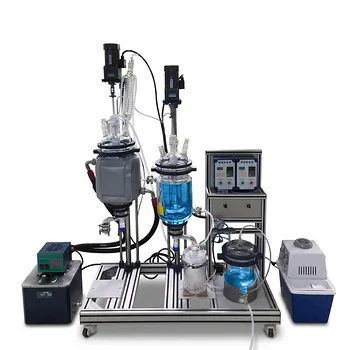
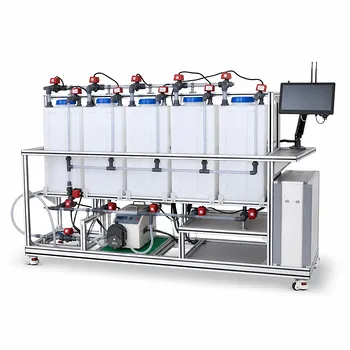
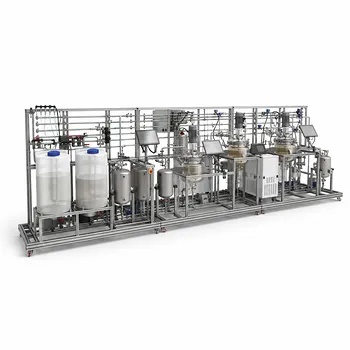
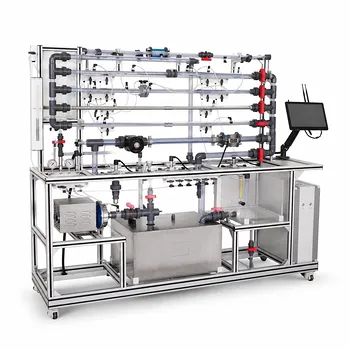
Maintaining precise chemical control is vital for successful pilot plant operations and maintenance. LABPARK provides state-of-the-art Educational and Vocational Unit Operations Pilot Plants in chemical engineering, bioprocess & biotech, and environmental & water treatment. Designed specifically for universities, research institutes, and enterprises, our pilot plants ensure hands-on, industry-grade training and research accuracy.
Ready to upgrade your laboratory or testing facilities? Contact LABPARK today to discover how our specialized pilot plant solutions can support your goals!
Related Products
- Multi-Functional Special Distillation Educational Pilot Plant
- Electrolyte Distillation Purification and Formulation Educational Pilot Plant
- Fixed-Bed Chemical Reaction and Gas Dust Tar Removal Unit Operations Pilot Plant
- Ion Exchange Water Purification Educational Pilot Plant for Engineering Unit Operations
- Potassium Salt Thermal Dissolution and Crystallization Separation Educational Unit Operations Pilot Plant
People Also Ask
- Why does simple distillation yield higher efficiency than flash distillation? Key thermodynamic differences.
- How does double temperature difference control improve distillation pilot plants? Stabilize purity.
- How to Integrate Spectroscopy in Distillation Pilot Plants for Advanced Process Control
- How to Verify Distillation Boundary Lines & Composition Regions with Pilot Plants
- Why is the acentric factor important in pilot plants? Fluid property prediction.