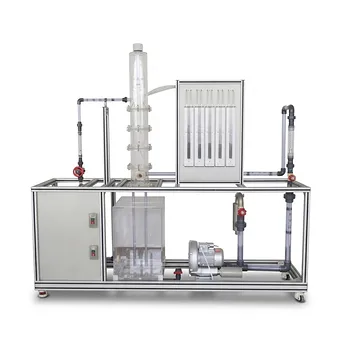
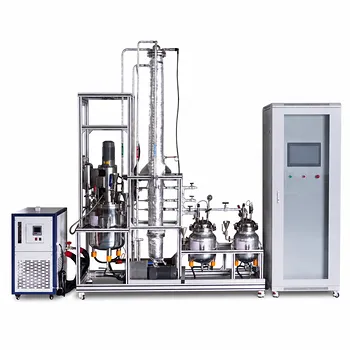
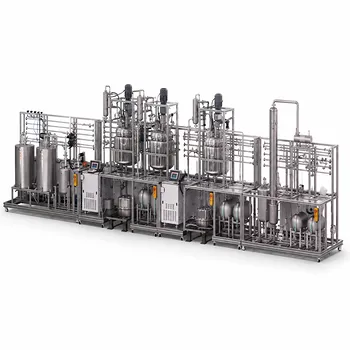
Hands-on failure replication is the fastest path to process mastery. Educational unit operations pilot plants let trainees systematically induce and resolve common tableting and coating defects—such as capping, lamination, weight variability, twinning, and nonuniform coating—by adjusting critical process parameters like press speed, compression force, precompression dwell, pan speed, atomization pressure, and suspension solids load. This deliberate “break‑it‑then‑fix‑it” approach builds a deep, intuitive understanding of cause‑and‑effect relationships without the high material costs or production risks of full‑scale manufacturing.
A pilot plant turns abstract failure modes into tangible, controllable learning moments. By manipulating machinery settings to create real defects and then applying corrective actions, students internalize process control logic and failure mode effects analysis (FMEA) in a way no lecture or simulation can replicate—and they do it safely, affordably, and repetitively.
Replicating Tablet Compression Failures
Tablet compression defects are rarely caused by a single factor. Pilot‑scale tablet presses let users isolate and exaggerate individual variables to observe direct consequences on tablet integrity.
Inducing and Resolving Capping
Capping—the separation of the upper or lower segment from the tablet body—is one of the most instructive failures to replicate. On a pilot press, reducing the main compression dwell time by increasing press speed quickly triggers the defect.
Users then practice corrective strategies: slowing the press to extend dwell time, adding a cohesive binder like microcrystalline cellulose or sucrose, or increasing the moisture content of the granulation. The immediate visual feedback connects machine settings to particle bonding, cementing the principle that capping is fundamentally a fracture caused by insufficient plastic deformation.
Tackling Lamination and Weight Variability
Lamination (horizontal layer splitting) and high weight variability often share overlapping root causes but demand different diagnostic approaches. A pilot plant allows trainees to see how rapid compression‑release cycles or excessive hydrophobic lubricants (e.g., magnesium stearate) promote lamination.
Turning the same press into a weight variability demonstrator is simple: deliberately feed the die with inconsistent powder flow by removing the forced feeder or altering hopper level. The student then resolves it by optimizing paddle speed or adjusting the fill cam. This back‑to‑back experimentation teaches that while lamination is a bonding problem, weight variability is a flow and fill problem—a critical distinction for troubleshooting real production lines.
Uncovering Coating Process Pitfalls
Tablet coating failures are exceptionally sensitive to balance: spray rate, drying capacity, and pan dynamics must align perfectly. A pilot coater provides the granular control needed to demonstrate these delicate interactions.
Preventing Twinning
Twinning—two or more tablets sticking together during coating—can be systematically created by running the pan speed too low or by over‑wetting with a high suspension solids load. As soon as twinning appears, the trainee can incrementally increase pan speed or reduce spray rate to restore individual tablet movement.
The lesson is immediate: successful coating is a function of tablet bed momentum and surface drying rate. Observing the transition from twinned clusters to a freely rolling bed etches this relationship into the learner’s mental model.
Resolving Nonuniform Coating and Roughness
Nonuniform coating (color or thickness variation) and surface roughness are perfect for demonstrating the role of atomization. By lowering atomization air pressure, the user produces large, uneven droplets that dry as orange‑peel textures or cause weight‑gain outliers.
Switching to a finer spray and adjusting gun‑to‑bed distance cures the defect. The pilot plant thus transforms abstract settings like “atomization pressure” into visible surface quality effects, teaching operators how coating uniformity directly links to droplet size distribution and drying time.
From Defect Replication to Process Mastery
Troubleshooting a single defect is just the start. Educational pilot plants excel at cultivating a systemic, failure‑mode mindset that professional FMEA demands.
Embedding a Control Strategy Mindset
When users chart how precompression force influences capping, or how pan speed shifts the twinning threshold, they are essentially building a control strategy. On a pilot plant, integrating basic inline sensors—near‑infrared for moisture, particle size analyzers—trains the user to link critical process parameters to critical quality attributes.
This real‑time data shows that defects are not random; they are predictable outcomes of parameter drift. Practicing continuous process verification on a pilot scale directly mirrors modern pharmaceutical manufacturing expectations and reduces end‑product testing reliance.
Accelerating Root‑Cause Analysis Skills
By running multiple “fault‑insertion” exercises, learners develop the habit of triaging defects based on symptom patterns. A tablet that caps immediately upon ejection points toward compression/decompression issues, while one that fails after a delay suggests elastic recovery or moisture imbalance. Practicing this differential diagnosis repeatedly on a pilot press makes it instinctual, sharply reducing troubleshooting time in a real production environment.
Understanding the Trade‑offs of Pilot‑Scale Training
While pilot plants are indispensable educational tools, their limitations must be acknowledged to set realistic expectations.
- Scale‑dependent dynamics: A pilot press may not fully replicate the thermo‑mechanical stresses and frictional heating of a 47‑station production press. Defects like sticking under high temperatures might appear at different thresholds.
- Material handling differences: Small‑scale gravity feeders behave differently from production forced feeders, so some flow‑related defects may require mental translation to larger equipment.
- Simpler coating environments: Pilot coaters often have fewer spray guns and simpler airflow patterns, meaning an operator who masters the pilot may still need time to adapt to a multi‑gun production pan.
Acknowledging these gaps doesn’t diminish the pilot plant’s value; it frames it as a powerful, safe sandbox for building fundamental cause‑and‑effect knowledge, not a perfect 1:1 replicate of a production line.
Making the Right Choice for Your Training Goal
Your desired outcome determines how to structure the pilot‑plant learning experience. Use this guide to align exercises with your specific focus.
- If your primary focus is operator troubleshooting competency: Design defect‑replication labs where learners cause and correct at least three distinct compression and coating failures, and require them to document parameter‑defect relationships.
- If your primary focus is process development understanding: Expand the exercise to include formulation variables—binder level, lubricant mixing time, coating suspension solids—and map a design space that shows safe operating zones for each failure mode.
- If your primary focus is embedding a quality‑by‑design culture: Integrate inline process analytical technology (PAT) tools during the troubleshooting exercises, so users practice real‑time monitoring and data‑driven decision‑making, not just visual inspection.
- If your primary focus is FMEA facilitation: Use the pilot plant as a live FMEA workshop, deliberately introducing high‑severity defects (like capping) and ranking detection and occurrence risk, then validating corrective actions on the spot.
When you let people touch, break, and fix the process in a low‑stakes environment, you don’t just train them—you build a foundation of instinctive, confident process understanding that scales with their career.
Summary Table:
| Defect | Process Step | Root Cause in Pilot Plant | Corrective Action |
|---|---|---|---|
| Capping | Compression | Low dwell time (high press speed) | Reduce press speed, add cohesive binder |
| Lamination | Compression | Rapid compression-release, excess lubricant | Optimize compression profile, adjust mixing time |
| Twinning | Coating | Low pan speed, high suspension spray rate | Increase pan speed, reduce spray rate |
| Nonuniform Coating | Coating | Low atomization air pressure | Increase atomization pressure, adjust gun-to-bed distance |
Bring Hands-On Process Mastery to Your Institution
To truly understand complex pharmaceutical, chemical, and environmental engineering processes, students and researchers need to experience them firsthand. LABPARK provides state-of-the-art Educational and Vocational Unit Operations Pilot Plants in chemical engineering, bioprocess & biotech, and environmental & water treatment for universities, research institutes, and enterprises. Designed specifically for training and research, our pilot plants allow learners to safely simulate, troubleshoot, and master real-world manufacturing challenges.
Ready to elevate your training programs and laboratory capabilities? Contact LABPARK today to find the perfect pilot plant solution for your needs.
Related Products
- Natural Product Extraction Unit Operations Training Pilot Plant
- Polymerization Granulation and Pellet Processing Educational Unit Operations Pilot Plant
- Multi-Functional Drying Educational Unit Operations Pilot Plant
- Electrolyte Distillation Purification and Formulation Educational Pilot Plant
- High-Gravity Emulsification and Mass Transfer Educational Pilot Plant
People Also Ask
- How to Demo Solubility Sensitivity in SFE Pilot Plants? Practical Thermodynamics
- How do pilot plants differentiate physical vs chemical extraction? Enhance Chemical Engineering Training
- How are HTU and NTU applied to determine extraction column height? Guide to Pilot Plant Scaling
- How can Hotelling's T² & Q statistics detect pilot plant abnormalities? Optimize Safety
- Why use split-plot designs in pilot plants instead of CRD? Optimize process parameters effectively.