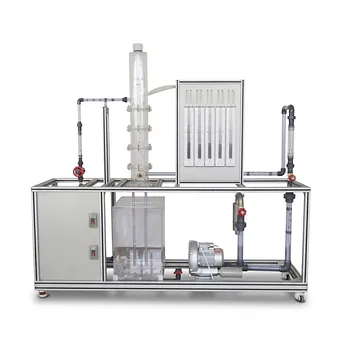
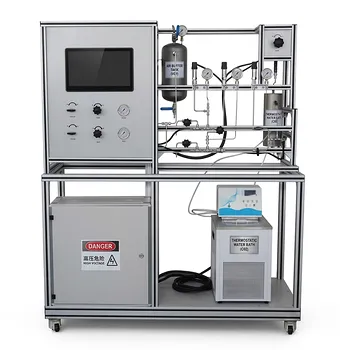
The gap between knowing green chemistry and applying it at industrial scale is a training crisis—one that educational pilot plants can solve. Chemical engineering departments can address this deficit by embedding hands-on curricula that use unit operations pilot plants. These physical systems allow students to manipulate energy-efficient heating, implement waste minimization protocols, and operate closed-loop recycling loops, directly translating the principles of sustainable process design into practical, retained skills.
The real bottleneck isn’t a lack of green chemistry knowledge; it’s an experience void. Educational pilot plants close that void by providing a controlled, scalable environment where future engineers can safely test, fail, and optimize sustainable processes, internalizing the physical and operational realities that no textbook or bench-top flask can replicate.
Why a Training Gap Exists in Green Chemistry
The Lab-to-Industry Chasm
Academic labs typically work at the gram scale, where heat transfer is instantaneous and waste streams are minimal. Industrial production, however, moves in tons, requiring process mass intensity management, heat integration, and safety protocols that simply cannot be simulated in glassware.
When graduates enter industry, they face a steep learning curve. They must suddenly manage the real-world dynamics of raw material feeding rates, exothermic reaction control, and energy efficiency—skills that demand hands-on practice, not just conceptual understanding.
The Missing Muscle of Process Intensification
Process intensification (PI) is a cornerstone of green process design, but its adoption lags because engineers lack in-depth expertise. Most have never physically configured a small-scale intensified reactor or managed the rapid residence times and pressure differentials PI demands.
Without pilot-scale exposure, engineers cannot build the intuitive, operational knowledge required to safely reduce equipment volumes, integrate advanced control systems, and maintain safe pressure levels—all essential for scaling up greener processes.
How Educational Pilot Plants Close the Gap
Hands-On Optimization of Sustainable Process Variables
At the heart of the solution lies the unit operations pilot plant. These are scaled-down versions of real chemical manufacturing systems, designed for teaching. Students directly interact with energy-efficient heating systems, closed-loop recycling loops, and waste minimization protocols.
They can intentionally introduce inefficiencies, measure the consequences, and then optimize. This cycle of troubleshooting energy loss, adjusting flow rates, and monitoring separation efficiency engrains the principles of green chemistry in a way that lectures never could.
Demystifying Scale-Up with Predictive Modeling
Modern industry is shifting from costly trial-and-error to mathematical modeling and scale-down techniques. Educational pilot plants give students the chance to validate these models physically. They can run a reaction at multiple scales, collect data on transport phenomena, and observe how mixing and heat transfer change.
By comparing simulated predictions with real pilot plant results, they develop the ability to analyze process scalability. This aligns academic training with industry’s demand for engineers who can use predictive tools to design greener processes with fewer expensive pilot failures.
Replacing Toxic Solvents with Green Alternatives
A dedicated supercritical fluid extraction pilot plant is a powerful educational tool. Students can replace traditional volatile organic solvents with supercritical carbon dioxide (scCO2) and study the resulting thermodynamics, mass transfer, and separation efficiency.
Through hands-on operation, they witness firsthand how eliminating water and hazardous VOCs can reduce both waste and energy consumption. This experience embeds the habit of solvent substitution as a default green design strategy, equipping them to implement similar shifts in industrial extraction, reaction, and textile dyeing processes.
Embedding Inherently Safer Design
Pilot plants naturally enforce inherently safer design principles because they operate with smaller volumes and limited inventories of hazardous materials. Students learn to conduct hands-on risk assessments, understanding the dynamics of heat transfer in exothermic reactions and the importance of safety interlocks.
They experience why reducing equipment volume minimizes hazard potential, and they design control strategies that depend on lower inventories of hazardous substances. This real-world risk management training produces engineers who can design industrial plants that are inherently safer, not just ones that manage risk with add-on safety systems.
Cultivating Lifecycle Thinking and Resource Efficiency
The transition from lab to commercial scale brings a dramatic drop in process mass intensity—from a median of 185 kg materials/kg API at preclinical stages to 45 kg/kg at commercial production. Pilot plants expose students to the engineeering constraints that drive this change.
In a pilot plant, mismanaging heat integration or a raw material feeding rate creates immediate, measurable waste—a lesson in the lifetime impacts of design choices. Students develop holistic lifecycle thinking, learning to design processes that are resource-efficient from the start, not retrofitted for sustainability later.
Understanding the Trade-offs and Practical Hurdles
The Cost and Space Reality
Pilot plants require significant capital investment, dedicated floor space, and ongoing maintenance. For departments with tight budgets, a fully featured unit operations lab can strain resources, and the cost of consumables and replacement parts adds up quickly.
The Risk of Oversimplification
A pilot plant that is too idealized—perfectly scaled down without realistic heat loss, fouling, or pump inefficiencies—can create a false sense of security. Students might graduate without experiencing the messy, nonlinear challenges that define real industrial sustainability work. The plant must intentionally include real-world imperfections to be an effective training ground.
Integration with an Already Crowded Curriculum
Adding pilot plant sessions to a packed chemical engineering syllabus is non-trivial. Without careful design, practical labs can become a scheduling burden, leaving less time for foundational theory. The answer lies in deep integration: using the pilot plant as the central laboratory around which core courses on separations, reaction engineering, and process design are organized, not as an optional add-on.
Making Pilot Plant Training Work for Your Department
The path forward is not about buying the most expensive equipment; it’s about aligning the plant’s capabilities with your educational and sustainability goals. Here’s how different priorities should shape your approach:
- If your primary focus is developing process intensification expertise: Invest in a modular pilot plant with advanced control systems and small-volume reactors. Students should directly configure and control residence time, manage pressure drops, and integrate multiple unit operations into a single, compact skid.
- If your primary focus is advancing green solvent substitution: Acquire a supercritical CO2 extraction or reaction pilot plant. Design experiments that quantify solvent elimination, energy use, and product purity so students can build a business case for solvent substitution alongside the technical skill.
- If your primary focus is instilling inherently safer design principles: Use the pilot plant to run experiments with non-hazardous but exothermic model chemistries. Embed failure-mode exercises, safety interlock design challenges, and risk assessment documentation into the curriculum so that safety becomes a design parameter, not an afterthought.
- If your primary focus is bridging the scale-up gap: Pair mathematical modeling software with a versatile pilot plant. Have students simulate a process, run it on the pilot scale, and compare the real outputs. Mandate that they explain discrepancies caused by mixing, heat transfer, and mass transfer limitations—building the predictive skills industry desperately needs.
When chemical engineering departments turn sustainable principles into practiced habits on the pilot plant floor, they don’t just produce graduates who know green chemistry—they produce engineers who can build it.
Summary Table:
| Training Challenge | Pilot Plant Solution | Student Learning Outcome |
|---|---|---|
| Lab-to-Industry Chasm | Scaled-down unit operations plants | Hands-on optimization of temperature, feed rates, and energy |
| Process Intensification | Modular intensified reactors | Mastery of residence times, pressure control, and space reduction |
| Toxic Solvent Use | Supercritical CO2 extraction plants | Practical execution of solvent substitution and waste reduction |
| Inherently Safer Design | Controlled exothermic test systems | Real-world hazard assessment and safety interlock configuration |
| Scale-Up Bottlenecks | Math modeling paired with physical runs | Validation of transport phenomena and process scalability |
Empower the Next Generation of Chemical Engineers with LABPARK
Bridging the gap between theoretical green chemistry and industrial application requires hands-on training. LABPARK provides state-of-the-art Educational and Vocational Unit Operations Pilot Plants in chemical engineering, bioprocess & biotech, and environmental & water treatment.
Designed specifically for universities, research institutes, and enterprises, our pilot plants help students master scale-up, process intensification, and sustainable process design in a safe, controlled environment.
Ready to elevate your engineering curriculum? Contact us today to discuss your laboratory needs!
Related Products
- Multi-Reactor Educational Pilot Plant for Reaction Engineering Unit Operations
- Multi-Functional Special Distillation Educational Pilot Plant
- Multi-Functional Membrane Separation Educational Pilot Plant for Unit Operations Lab
- Micro-Scale Gas-Solid Catalytic Reaction Educational Pilot Plant
- High-Gravity Emulsification and Mass Transfer Educational Pilot Plant
People Also Ask
- How do reactor pilot plants define QbD design space? Master chemical process scale-up.
- When configuring a reactor unit operations pilot plant for highly exothermic reactions, how to prevent thermal runaway?
- How do metal ion-catalyzed reaction mechanisms inform chemical engineering pilot plant design? From kinetics to scale-up
- What are the barriers to process intensification & how do pilot plants help?
- What role do educational pilot plants play in scaling green chemistry? Bridging the Lab-to-Industry Gap