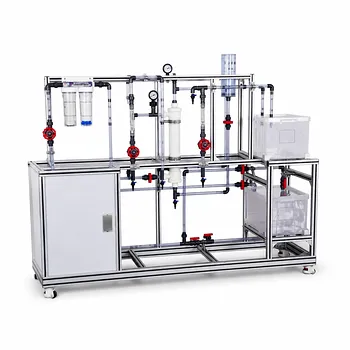
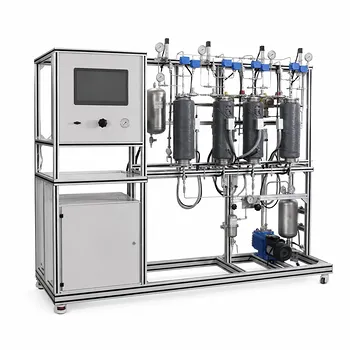
At the intersection of nanotechnology and industrial bioprocessing, a single color change can unlock a wealth of process efficiency.
Bioprocess and biotechnology training systems demonstrate industrial applications of magnetic Fe₃O₄ nanozymes by using them to catalyze a colorimetric reaction, such as the oxidation of ABTS in the presence of hydrogen peroxide, and then analyzing the result with a spectrophotometer. This simple setup transforms an undergraduate lab exercise into a realistic model of industrial biosensing, catalyst optimization, and cost‑conscious recycling.
A well‑designed training system does more than teach basic enzyme kinetics—it directly mirrors industrial workflows. By demonstrating how magnetic nanozymes mimic peroxidase, enable contaminant detection, and can be recovered and reused, the system makes the entire value chain of industrial biocatalysis tangible.
Bridging the Gap from Lab to Industry
The challenge with any advanced material is translating its bench‑scale promise into a plant‑ready process.
Training systems solve this by compressing the industrial lifecycle into a few practical unit operations.
Students and professionals see first‑hand why magnetic nanoparticles are more than a laboratory curiosity.
Turning a Nanomaterial into an Enzyme Mimic
The core demonstration begins with synthesised Fe₃O₄ magnetic nanoparticles that exhibit intrinsic peroxidase‑like activity.
This means they catalyse the same reaction as the natural horseradish peroxidase enzyme—converting a colourless substrate into a coloured product.
In the training system, the substrate ABTS is oxidised in the presence of hydrogen peroxide, producing a measurable colour change.
The Industrial Signal: Measurement and Quantification
Industrial biosensors rely on converting a molecular event into a quantifiable electrical or optical signal.
Here, the colour change is measured with a spectrophotometer, typically recording absorbance at 417 nm.
This replicates the readout of countless industrial process analytical technologies (PAT) that monitor enzyme activity in real time.
Scaling Up the Lesson: Industrial Insights from a Simple Reaction
Once the colourimetric reaction is running, the training system can reveal three layers of industrial relevance that go far beyond a standard biochemistry lesson.
First Insight: Kinetic Fingerprinting for Process Optimisation
In a manufacturing environment, knowing the exact reaction rate under different conditions is critical for reactor sizing and control.
Students can vary substrate or H₂O₂ concentrations and measure the initial reaction rate, allowing them to calculate Michaelis‑Menten kinetic parameters.
This directly shows how industrial bioprocess engineers model and optimise enzyme‑catalysed steps to maximise throughput while minimising raw material waste.
Second Insight: Contaminant Detection through Competitive Inhibition
One of the most practical industrial applications of nanozymes is rapid quality testing.
The training system can be configured to detect melamine, an illegal adulterant, through a competitive binding inhibition mechanism.
When melamine is present, it disrupts the nanozyme’s active site, weakening the colour signal in a dose‑dependent manner.
This is a direct analogue of how industrial biosensor cartridges are designed to detect food contaminants, toxins, or disease markers with minimal sample preparation.
Third Insight: The Economics of Catalyst Recycling
Perhaps the most transformative industrial advantage of magnetic nanozymes is their reusability.
After the reaction, a simple external magnetic field recovers the nanoparticles, which can then be washed and reintroduced into a fresh reaction cycle.
Tracking the retained catalytic activity over several cycles teaches the fundamental economic trade‑off between catalyst lifetime and overall process cost—exactly the calculation a process development team would make when choosing between a disposable enzyme and a recyclable nanozyme.
Understanding the Trade-offs and Limitations
A transparent evaluation must acknowledge where a training system’s demonstration ends and real‑world complexity begins.
These limitations do not diminish the educational value; they define the critical thinking skills needed for scale‑up.
Sensitivity to Matrix Effects
The simple buffer systems used in training do not account for the complex interference found in industrial samples like fermentation broths or food homogenates.
Real nanozyme sensors must be validated against background proteins, competing substrates, and pH swings.
A training system hints at this by spiking a known contaminant, but it cannot fully replicate the robustness testing required for regulatory approval.
The Peroxidase Paradigm is Only One Facet
While the ABTS‑H₂O₂ model is pedagogically excellent, it represents only a fraction of the nanozyme portfolio.
Industrial applications also exploit catalase, oxidase, or superoxide dismutase‑like activities for different transformations.
The training system should be positioned as a gateway to understanding the broader enzyme‑mimic landscape, not as an exhaustive demonstration of all possible industrial uses.
Scale‑Up is Non‑Trivial
Recovering nanoparticles with a simple benchtop magnet is straightforward; doing so in a 10,000‑litre reactor is a massive engineering challenge involving high‑gradient magnetic separation.
The training system illustrates the principle of magnetic recovery, but students must be taught that industrial separation requires specialised equipment and energy costs that can alter the economic viability.
Making the Right Choice for Your Goal
The finest training systems match their demonstration to the specific outcome the user needs. Apply the following recommendations to align your own bioprocess curriculum or pilot study with your real objectives.
- If your primary focus is fundamental education: Use the full kinetic characterisation and recycling cycle to cement the concepts of biocatalysis, allowing students to compare nanozymes directly with natural enzymes under identical conditions.
- If your primary focus is industrial biosensor development: Emphasise the melamine detection module as a model for competitive inhibition assays, and challenge users to test detection limits and selectivity in the presence of common interferents.
- If your primary focus is process economics and sustainability: Centre the exercise around catalyst recycling studies, requiring a cost‑per‑cycle analysis that weighs magnetic separation energy against material replacement costs.
- If your primary focus is bridging nanomaterial synthesis and application: Combine the synthesis of Fe₃O₄ nanoparticles with the functional validation step, so that users see how subtle changes in nanoparticle size or coating directly alter the measured enzyme‑like activity.
Every absorbance reading taken in a well‑designed training system is a miniature version of the data that drives modern industrial biotech—from food safety screens to sustainable chemical production.
Summary Table:
| Industrial Application | Training Demonstration Method | Key Educational & Process Insight |
|---|---|---|
| Biosensing & PAT | Oxidation of ABTS (absorbance at 417 nm) | Real-time quantification of enzymatic signals. |
| Process Optimization | Varying substrate/H₂O₂ concentrations | Calculating Michaelis-Menten kinetic parameters. |
| Contaminant Detection | Melamine competitive binding inhibition | Simulating rapid food safety and quality testing. |
| Catalyst Recycling | Magnetic recovery of Fe₃O₄ nanoparticles | Evaluating process economics and sustainability. |
Bring Industrial Bioprocessing to Life in Your Lab
Bridge the gap between laboratory nanoscience and commercial bioprocess engineering. LABPARK provides state-of-the-art Educational and Vocational Unit Operations Pilot Plants across chemical engineering, bioprocess & biotech, and environmental & water treatment.
Tailored for universities, research institutes, and enterprises, our pilot plants deliver hands-on experience in catalyst recycling, kinetic modeling, and biosensing optimization.
Ready to elevate your training curriculum? Contact LABPARK today to find the perfect pilot plant solution for your institution!
Related Products
- Bio-fermentation Ethanol Production Practical Training Unit Operations Pilot Plant
- Polymerization Granulation and Pellet Processing Educational Unit Operations Pilot Plant
- Natural Product Extraction Unit Operations Training Pilot Plant
- Water Electrolysis Hydrogen Production and Storage Educational Pilot Plant
- Liquid-Liquid Mass Transfer Coefficient Determination Educational Pilot Plant
People Also Ask
- Why Use PTFE & Hastelloy in Chemical Pilot Plants? Prevent Corrosion & Ensure Safety
- Why Compare Predicted and Experimental Excess Enthalpy? Key to Accurate Pilot Plant Scale-up
- Why is the chemical plant startup schedule crucial? De-risk scale-up with pilot plants.
- Why Does a Pilot Plant Solver Return a Singular Matrix Error, and How Can You Resolve It?
- How can pilot plants demonstrate a control strategy in a design space? Practical QbD implementation.