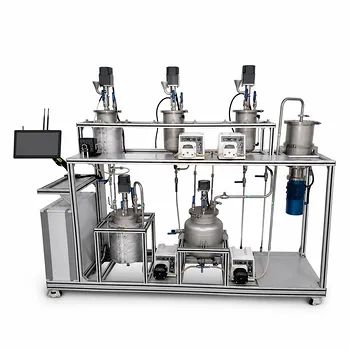
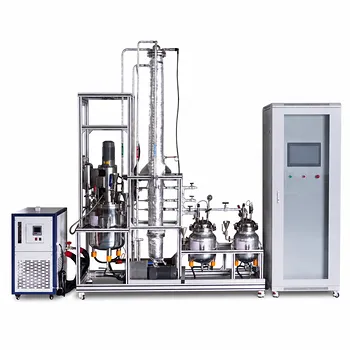
Thermodynamic film-coating scale-up is mastered by intentionally mismatching your pilot-plant inputs to achieve a target exhaust condition.
A chemical engineering unit operations pilot plant enables students and researchers to characterize the unique heat loss signature of a coater—called the Heat Loss Factor (HLF)—and then apply material and energy balances to translate that signature to larger equipment. By demonstrating that identical exhaust air temperature and relative humidity produce equivalent film quality regardless of vessel size, the pilot plant turns an opaque, trial-and-error scaling problem into a transparent, predictive thermodynamic exercise.
Scaling a film-coating process is not about copying inlet settings; it is about matching the thermodynamic end state of the drying air. A pilot plant lets you empirically measure how much energy your system loses so you can then calculate exactly what inlet temperature, airflow, and spray rate a production-scale coater needs to hit the same exhaust condition—dramatically reducing failed validation batches and wasted material.
The Thermodynamic Core of Film-Coating Scale-Up
All film-coating processes share a hidden dependency: the microenvironment at the coating surface is controlled by the equilibrium between sprayed solvent and drying air. During scale-up, that equilibrium can break if you simply keep the same inlet air temperature and flow rate.
Why Matching Exhaust Conditions Is Everything
The thermodynamic state of the exhaust air—its temperature and relative humidity—directly sets the drying rate and final film structure.
When a small lab coater and a large production coater run with identical exhaust conditions, the droplet drying kinetics and film formation become near-identical.
The pilot plant’s instrumentation allows you to monitor these exhaust values in real time, making the abstract thermodynamic model a tactile, measurable reality.
The Hidden Variable: Heat Loss Factor (HLF)
As air moves from the inlet heater to the coating bed and out through the exhaust, a fraction of its energy is lost to the equipment walls, piping, and the surrounding environment.
The Heat Loss Factor (HLF) quantifies this energy leakage as a function of the coater’s construction and scale.
Without knowing the HLF, any attempt to predict inlet conditions from exhaust targets is guesswork.
A pilot plant turns HLF from an unknown into an experimental constant.
How the Pilot Plant Becomes a Scale-Up Simulator
The pilot plant is not just a smaller version of a production machine; it is a thermodynamic measuring instrument. By running carefully designed solvent–water sprays and collecting data, users can extract the HLF and then use it as the cornerstone of a predictive scale-up model.
Step 1: Measuring the Heat Loss Factor Experimentally
Operators load the pilot coater with placebo tablets and run a spray sequence using only water or a solvent blend.
They record the inlet air temperature, the spray rate, the airflow, and the resulting exhaust air temperature and humidity.
By performing an energy balance around the coater—accounting for the latent heat of vaporization and the sensible heat picked up by the air—they back-calculate the amount of heat that did not contribute to drying.
That missing energy is the HLF, now expressed as a quantitative value (e.g., kJ per hour per degree of temperature difference).
Step 2: Applying Material and Energy Balances for Prediction
With the HLF in hand, students and researchers write full material and energy balances across the production-scale coater.
They fix the desired exhaust temperature and relative humidity—identical to those proven on the pilot scale—and then solve the balance equations for the unknown inlet air temperature, drying airflow, and spray rate.
This exercise transforms an abstract lecture-room equation into a engineering workflow: measure once, predict once, validate quickly.
Step 3: From Pilot Data to Full-Scale Operating Parameters
The result is a set of inlet settings for the production machine that are calculated, not guessed.
The pilot plant demonstrates that two coaters of vastly different size can produce equivalent film quality if the exhaust thermodynamics match, because the underlying scientific principle—conservation of energy—is scale-independent.
This directly reduces the number of large-scale validation batches, saving material, time, and budget.
Beyond Single-Point Thermodynamics: Building a Robust Scale-Up Mindset
While matching exhaust conditions is the primary thermodynamic requirement, a modern pilot plant also introduces the complexities that make film-coating scale-up genuinely predictive.
Incorporating Multivariate Process Signatures
Scale-up is not just a univariate endpoint check; the entire process path matters.
Pilot plants equipped with multiple sensors (air temperature, humidity, spray pressure, pan speed) allow users to build a multivariate model of the coating quality.
By tracking the trajectory of temperature and humidity over time, researchers can define a process signature—a fingerprint of the thermodynamic history—that must be reproduced at scale, not just a single exhaust value.
Capturing Time-Dependent Phenomena Through Extended Runs
Film-coating campaigns in production last for hours, and subtle effects like nozzle clogging, tablet attrition dust accumulation, or gradual heat exchanger fouling only appear during prolonged operation.
The pilot plant can be run continuously over extended periods, revealing long-term thermodynamic drifts and allowing for proactive design changes.
This bridges the gap between idealized lab trials and the reality of sustained manufacturing.
Demonstrating Heat Transfer Rate Limitations
As vessel size increases, the surface-area-to-volume ratio drops sharply, making batch heating and cooling inherently slower.
In a pilot plant, students can conduct UA (heat transfer coefficient × area) trials—for example, heating a batch of tablets and recording the temperature ramp—to quantify how quickly heat can be transferred.
These experiments make the abstract concept of "slower heat transfer at scale" physically tangible, and they teach future engineers how to set realistic inlet air temperature limits to avoid localized overheating or film defects.
Understanding the Trade-offs and Educational Limits
A unit operations pilot plant is an extraordinary teaching tool, but treating it as an exact miniature of a production facility can mislead.
- Wall effects and surface losses: Small coaters have proportionally larger heat losses, meaning the HLF measured on a bench-top unit may not linearly extrapolate to a 500 kg machine. The pilot plant teaches users how to measure the factor, but the value itself is scale-specific.
- Flow dynamics do not scale linearly: The air flow pattern inside the coating pan (plug flow vs. well-mixed) can change with diameter, altering the local drying environment in ways that a single exhaust RH measurement does not fully capture.
- Simplified formulations vs. commercial complexity: Pilot runs often use placebo or simple solutions; they cannot always replicate the rheology changes or fouling tendency of a complex commercial coating dispersion. It is the methodology, not the exact number, that transfers.
- Cost of experimentation is still real: While cheaper than failed production batches, pilot-plant runs consume time and materials that must be factored into curriculum planning and research budgets.
Making the Right Choice for Your Educational or Research Goal
The way you use a unit operations pilot plant to teach film-coating scale-up should align with your deepest objective: is it to build intuition, validate a model, or prepare for a specific industrial transition?
- If your primary focus is teaching core thermodynamic principles: Design a lab where students measure the HLF of the pilot coater, then apply the energy balance to predict the inlet conditions for a hypothetical larger coater. The calculation, not the coating result, is the learning outcome.
- If your primary focus is industrial process development: Run long-duration continuous trials with the actual coating formulation, map the multivariate process signature, and deliberately introduce upsets (e.g., a drop in spray rate) to see if the exhaust condition can be restored by adjusting inlet temperature—building a failure-proof control strategy.
- If your primary focus is equipment design and cost estimation: Collect steam, electricity, and airflow data from the pilot plant, then use capacity-ratio scaling (exponent ~0.6) to estimate the capital cost of a production unit, linking thermodynamics directly to process economics.
- If your primary focus is bridging theory and practice in a single course: Follow the full arc: bench-scale droplet-drying observation → pilot-plant HLF measurement → simulation of full-scale inlet settings → discussion of why real scale-up still requires a safety margin.
The pilot plant’s greatest gift is not a perfect prediction; it is the confidence that comes from seeing an abstract thermodynamic equation come to life, producing a known film quality from a set of calculated numbers—and knowing exactly why it worked.
Summary Table:
| Scale-Up Step | Core Activity | Key Parameter & Purpose |
|---|---|---|
| 1. Pilot Calibration | Run water/solvent spray trials | Measure Heat Loss Factor (HLF) to quantify system energy leakage. |
| 2. Thermodynamic Modeling | Apply mass and energy balances | Calculate production-scale inlet air temperature and flow rates. |
| 3. Production Execution | Match target exhaust temperature & RH | Replicate droplet drying kinetics to ensure uniform film quality. |
Bridge the Gap Between Theory and Industry with LABPARK
Bring abstract thermodynamic principles to life in your classroom or lab. LABPARK provides premium Educational and Vocational Unit Operations Pilot Plants in chemical engineering, bioprocess & biotech, and environmental & water treatment. Designed specifically for universities, research institutes, and enterprises, our pilot plants deliver the precise instrumentation and scalability required to prepare the next generation of engineers.
Ready to elevate your engineering curriculum or research capabilities? Contact our technical team today to find the ideal pilot plant configuration for your facility!
Related Products
- Rising and Falling Film Evaporation Educational Unit Operations Pilot Plant
- Polymerization Granulation and Pellet Processing Educational Unit Operations Pilot Plant
- Multi-Functional Drying Educational Unit Operations Pilot Plant
- Multi Functional Membrane Crystallization Educational Unit Operations Pilot Plant
- Ultrafiltration Membrane Separation Educational Pilot Plant
People Also Ask
- How do educational unit operations pilot plants bridge theory and design? Bridge the Engineering Gap
- How do educational unit operations pilot plants address safety and waste management when scaling up?
- How is the heat transfer area calculated for an evaporation unit operations pilot plant during experimental design? Guide
- How to select educational evaporator pilot plants for thermal & scaling solutions? Complete Guide
- What are the structural characteristics & applications of rising-falling film evaporators in unit operations training?