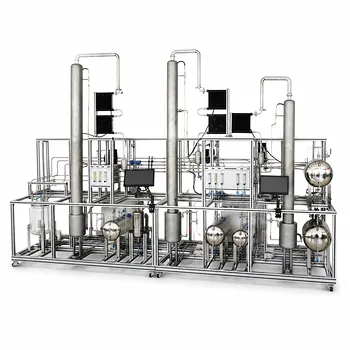
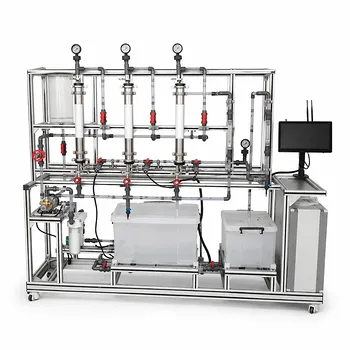
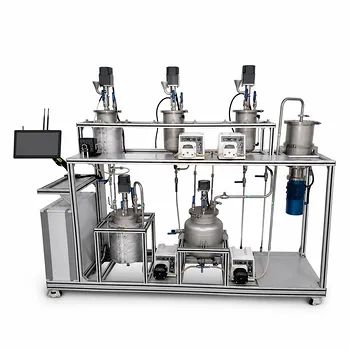
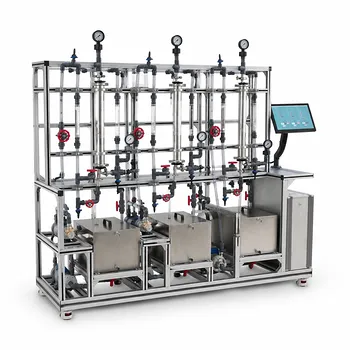
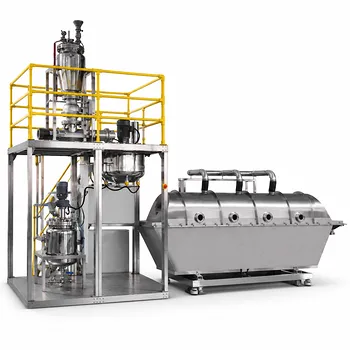
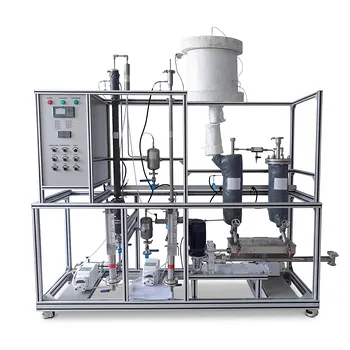
The foundational complexity is not in the chemistry but in the chaos of the raw material.
A biorefinery pilot plant must cope with feedstocks that are compositionally volatile, oxygen-rich, and physically dilute, whereas a traditional oil refinery processes a remarkably constant hydrocarbon stream. This forces the design to accommodate a far wider range of unit operations—robust pre-treatment, specialized deoxygenation catalysts, and integrated biochemical/thermochemical steps—that a petroleum pilot plant simply does not need.
While an oil refinery’s pilot setup handles a predictable, energy-dense liquid, a biorefinery must process an inconsistent, water-logged solid that is chemically more akin to a reactive sponge. This single difference cascades into a requirement for a broader, more integrated suite of unit operations, elevating both complexity and cost.
The Feedstock’s Architecture: How It Redefines Upstream Design
The physical and chemical nature of biomass directly dictates the front end of any pilot plant. Unlike crude oil, its very structure forces engineers to solve problems that petro-refineries never face.
Compositional Volatility vs. Homogeneous Feed
An oil refinery’s pilot unit can assume a narrow band of paraffins, naphthenes, and aromatics.
Biomass, by contrast, can swing dramatically in cellulose, hemicellulose, lignin, and ash content from one batch to the next.
This variability demands flexible feeding systems and adaptive pretreatment protocols that are absent in the standardized pumps and heat exchangers of a petro pilot plant.
The Dilution Problem: Water, Low Density, and Logistics
Crude oil has a high energy density and minimal water. Biomass often arrives at the gate with 20–60% moisture and a low bulk density.
Handling this volume requires oversized conveyors, drying equipment, and massive storage—unit operations that scale poorly and introduce significant energy penalties.
A petro pilot plant simply meters a liquid; a biorefinery pilot must engineer around a soggy, bulky solid.
Oxygen Content: The Root of Reactivity and Corrosion
Biomass typically carries 35–50 weight percent oxygen, versus effectively zero in crude.
This oxygen makes intermediates acutely unstable, prone to polymerization, and corrosive to standard stainless steels.
Consequently, a biorefinery pilot must specify high-alloy metallurgy and advanced passivation techniques well upstream, adding a layer of materials engineering that a traditional oil refinery station avoids.
The Unit Operation Cascade: Why the Process Map Expands
Downstream, the conversion steps multiply. The path from raw biomass to a stable product requires a sequence of operations that simply has no parallel in straight-run distillation or catalytic cracking.
Pre-treatment as a Non-Negotiable Step
Petroleum assay distillation is the first step in an oil pilot plant. In a biorefinery, size reduction, acid hydrolysis, steam explosion, or organosolv fractionation must precede any meaningful reaction.
These operations are energy-intensive, enzyme-dependent, or solvent-demanding—each bringing their own purge, recovery, and waste-handling loops.
From Separation to Deoxygenation: A New class of catalytic complexity
Oil refining relies on separation by boiling point followed by hydrogen addition or carbon rejection.
A biorefinery pilot plant must install catalytic hydrodeoxygenation, decarboxylation, and aqueous-phase reforming units that strip oxygen from highly polar molecules.
These reactors demand multi-zone temperature control and advanced catalyst support strategies (e.g., Al₂O₃, CeO₂, ZrO₂) merely to suppress coking and stabilize operation over days, not weeks.
Integrating Biological and Thermochemical Worlds
An oil refinery’s pilot hall is entirely chemical—cracking, alkylation, reforming.
A biorefinery must often transition from a biochemical section (e.g., sterilization, fermentation, or enzymatic hydrolysis) to a thermochemical section (e.g., pyrolysis, gasification).
That means the pilot plant is a mosaic of aseptic bioreactors, membrane separations, and high-temperature fluidized beds, all managed under one roof.
Process control becomes exponentially harder because each zone has fundamentally different mass transfer and shear sensitivity requirements—think airlift loop fermenters for shear-sensitive cells feeding product into a fluidized bed catalytic cracker.
Understanding the Trade-offs
This operational breadth is not without penalty. A more complex pilot plant brings inherent liabilities that researchers must accept.
Higher Capital and Maintenance Cost: Special alloys, membrane systems, and dual-use reactors drive up initial investment.
Energy Penalty from Water: Drying or vaporizing water in the feedstock can consume more energy than the chemical conversion itself, skewing life-cycle analyses.
Coking and Deactivation: High oxygen content accelerates catalyst coking; pilot runs require frequent catalyst regeneration or replacement, reducing uptime.
Contamination Risk: Switching between biochemical and thermochemical modes risks cross-contamination, demanding rigorous CIP/SIP cycles that slow throughput.
Scale-up Fragility: A unit operation that works on a bench scale often fails at pilot scale due to heat transfer limitations or mixing defects that are trivial in homogeneous petroleum streams.
Designing a Pilot Plant for Your Research Goal
Your choice of unit operations must align with the hypothesis you are testing. Tailor the complexity to the product pathway you intend to validate.
- If your primary focus is biochemical conversion (e.g., ethanol, organic acids): Invest heavily in flexible pre-treatment and bioreactor configurations that can manage variable sugar streams and the shear sensitivity of organisms. Prioritize hollow fiber or packed-bed reactors for integrated separation.
- If your primary focus is thermochemical upgrading to drop-in fuels: Build the pilot around high-temperature alloys, multi-zone furnace control, and advanced deoxygenation catalyst testing rigs. Accept that coking management and solvent recovery will dominate your downtime.
- If your primary focus is integrated biorefining (full value chain): Adopt a modular, skid-based layout with robust water management loops. Emphasize process control systems that can sequence both aseptic and pressurized zones, because the real learning lies at the interfaces.
- If your primary focus is hydrogen production via reforming: Select ethanol or glycerol only if you are willing to mitigate severe coke formation with precious-metal catalysts and precise thermal profiling; otherwise, stick to methane for stability and rapid scale-up validation.
Complexity is the price you pay to mimic the real-world chaos of biomass; a well-architected pilot plant doesn’t hide these differences—it makes them measurable.
Summary Table:
| Feature | Traditional Oil Refinery | Biorefinery Pilot Plant |
|---|---|---|
| Feedstock State | Homogeneous, energy-dense liquid | Inconsistent, water-logged solid |
| Composition | Stable hydrocarbon stream | Volatile (cellulose, lignin, ash) |
| Oxygen Content | Near 0% (low corrosion risk) | 35–50% (high acidity & corrosion) |
| Unit Operations | Distillation, cracking, reforming | Pre-treatment, fermentation, deoxygenation |
Simplify Your Pilot Plant Design with LABPARK
Are you navigating the complexities of scaling up biorefinery or chemical processes? LABPARK provides premium Educational and Vocational Unit Operations Pilot Plants in chemical engineering, bioprocess & biotech, and environmental & water treatment. Designed specifically for universities, research institutes, and enterprises, our modular and flexible setups help you manage feedstock volatility and complex unit operations with ease.
Contact our engineering experts today to customize the perfect pilot plant for your research goals!
Related Products
- Bio-fermentation Ethanol Production Practical Training Unit Operations Pilot Plant
- Natural Product Extraction Unit Operations Training Pilot Plant
- Green Anhydrous Ethanol Refining Practical Training Pilot Plant
- Continuous Batch Extractive Distillation Educational Pilot Plant
- Solid Waste Pyrolysis and Refining Educational Pilot Plant for Unit Operations
People Also Ask
- Why Use PTFE & Hastelloy in Chemical Pilot Plants? Prevent Corrosion & Ensure Safety
- Why Compare Predicted and Experimental Excess Enthalpy? Key to Accurate Pilot Plant Scale-up
- Why is the chemical plant startup schedule crucial? De-risk scale-up with pilot plants.
- When to transition from PID to adaptive control in pilot plants? Key process indicators.
- Why must batch and fed-batch fermentation pilot plants be designed to accommodate changing rheological conditions?