Ignoring the subtle difference between a plastic, thixotropic, or rheopectic fluid isn't a minor oversight—it's the root cause of pumps that fail to move product, pipes that clog solid, and entire production lines that grind to a halt. The distinction is critical because each fluid type dictates a fundamentally different set of requirements for startup force, continuous shear management, and piping geometry. Selecting equipment without this knowledge means you are guessing at the most dangerous variables in your process.
The core problem is that viscosity is not a single number. For plastic fluids, flow depends on overcoming a minimum stress. For time-dependent fluids, viscosity changes based on the shear history inside your pump and pipes. Matching your equipment to these specific behaviors is what separates a safe, efficient process from a catastrophic bottleneck.
The Hidden Trap in Pump Selection: Yield Stress and Plastic Fluids
Many process engineers learn the hard way that a standard centrifugal pump cannot handle a plastic fluid. These materials behave as solids until a specific force is applied, and your system design must account for this from the very first second of operation.
Understanding the 'Toothpaste Problem'
Plastic fluids—like grease, paper pulp, and toothpaste—refuse to flow until they experience a minimum yield stress. Until that stress is exceeded, they act like a rigid plug. This creates a unique startup challenge that a simple viscosity measurement will never reveal.
Pump Requirements: Overcoming the Initial Resistance
Positive displacement pumps are almost always mandatory for plastic fluids. Centrifugal pumps rely on fluid momentum, which is impossible to generate before the yield point. You need a pump that can build high initial discharge pressure without depending on the fluid's own inertia, effectively pushing the solid plug until it shears and begins to move.
Piping Considerations: Avoiding Dead Zones
The danger in piping is a loss of driving force. If the line pressure drops below the yield stress at any point—such as in a dead leg or an oversized pipe section—the fluid will instantly solidify. This forms a permanent blockage. Piping must be designed with a continuous pressure gradient and no low-velocity areas where the material can "set up."
The Time Factor: Thixotropy vs. Rheopexy
Beyond yield stress, some fluids have a structural memory. Their resistance to flow is a direct function of how long and how intensely they have been sheared, creating a moving target for your pump.
Thixotropic Fluids: Easy Pumping After Startup
Thixotropic fluids (like some paints and clays) thin out over time when subjected to constant shearing forces. This might sound helpful, but it creates a startup trap. After a shutdown, the fluid's resting viscosity is high. The pump must handle a cold start against a thick, resistant mass, but once flow begins, the power demand drops significantly. Your system must be sized for the worst-case initial condition.
Rheopectic Fluids: The Danger of Shearing
Rheopectic fluids do the opposite: they thicken when sheared. Continuous pumping action increases flow resistance, leading to escalating pressure drop and the risk of motor overload. This makes long transfer lines a serious liability, as the pipe itself becomes a high-shear region that continuously increases the fluid's viscosity.
Piping Design: Managing Shear History
For thixotropic materials, gentle recirculation loops can be used to keep the fluid moving and maintain its low-viscosity state, preventing startup shocks. For rheopectic fluids, the design goal is the opposite: minimize shear. This means using larger pipe diameters, slower pump speeds, and eliminating sharp bends to prevent a runaway increase in flow resistance.
The Threshold of Destruction: Irreversible Time-Dependent Fluids
Some materials, such as certain dairy products or thermosetting resins, undergo permanent structural changes when sheared. This is not a pumping problem; it is a product destruction problem.
The Coagulation Risk
The fluid's internal structure can be shattered or coagulated by a pump's impeller or gears. Once this irreversible change occurs, the product is waste, and the resulting solids can instantly plug heat exchangers and filters.
Gentle Pumping Technologies
Standard high-shear centrifugal or gear pumps are forbidden. Processes must use low-shear technologies like progressive cavity pumps, peristaltic pumps, or specially designed lobe pumps with large clearances. The goal is to move the material without damaging its delicate microstructure.
Piping for Preservation
Piping must be polished to a sanitary smoothness, with no threaded connections or abrupt diameter changes where material can accumulate and be mechanically worked. The entire system is a preservation exercise, not a brute-force transport.
Understanding the Trade-offs
Selecting based on rheology forces you into difficult compromises, and ignoring them guarantees failure.
When Continuous Shear Becomes a Problem
Keeping a thixotropic fluid moving to reduce viscosity can work against you if the system is oversized. The pump's wasted energy becomes significant heat generation, which can degrade the fluid. Rheopectic fluids punish any attempt at high-speed, high-efficiency centrifugal pumping.
The Cost of Specialized Equipment
Positive displacement pumps and low-shear technologies are more mechanically complex and expensive to maintain than a simple centrifugal pump. A design that fails to identify a fluid as rheopectic might over-specify the pump motor, but one that misidentifies a plastic fluid as thixotropic will simply never start.
Balancing Startup vs. Steady-State Operation
For thixotropic fluids, a system must be overpowered for the startup condition and then run at part load continuously. For rheopectic fluids, the steady-state condition is the worst case, demanding a pump that will never be working harder than at the end of a transfer cycle. Mixing these up leads to tripped breakers or burned-out motors.
Making the Right Choice for Your Process Goal
Your fluid's rheological fingerprint dictates a clear strategic direction for your equipment selection and piping layout.
- If your primary focus is moving a high-yield-stress plastic fluid: Specify a positive displacement pump capable of delivering peak pressure instantly, and design piping to maintain a driving force well above the yield stress at every point.
- If your primary focus is handling a thixotropic fluid without startup damage: Size all motors for the maximum cold-start viscosity and consider piping recirculation loops to maintain a low-viscosity state during idle periods.
- If your primary focus is preventing shear-induced resistance from a rheopectic fluid: Select a low-speed pump and large-diameter, straight-run piping to minimize all sources of mechanical shear, acknowledging that power demand will rise over the pump cycle.
- If your primary focus is preserving an irreversible, delicate product structure: Choose the gentlest pump technology available, such as a peristaltic or low-shear progressive cavity pump, paired with sanitary, obstruction-free piping.
The physical behavior of your fluid writes the performance specification for your entire system; your task is not to push harder, but to listen more carefully.
Summary Table:
| Fluid Type | Flow Behavior | Pump Requirement | Piping Design Goal |
|---|---|---|---|
| Plastic | Flows only after overcoming yield stress | Positive displacement (high initial pressure) | Avoid dead zones; maintain continuous pressure |
| Thixotropic | Viscosity decreases with shear duration | Size motor for high-viscosity cold start | Recirculation loops to prevent startup blockages |
| Rheopectic | Viscosity increases with shear duration | Low speed, low-shear pumps | Large diameters, minimal bends to reduce shear |
| Irreversible | Permanent structural damage from shear | Gentle, low-shear (peristaltic/lobe) | Sanitary, smooth, obstruction-free paths |
Bring Real-World Fluid Dynamics to Your Lab
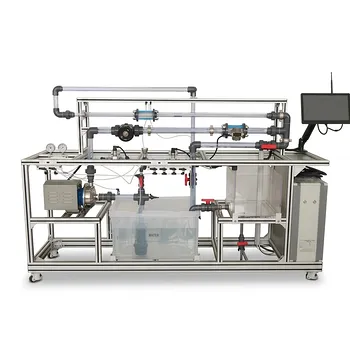
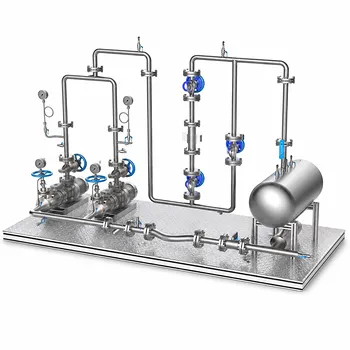
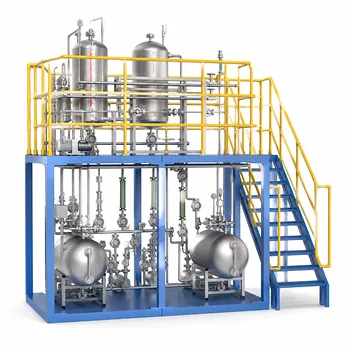
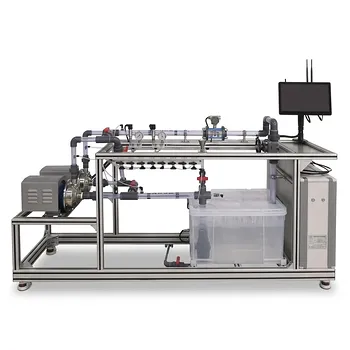
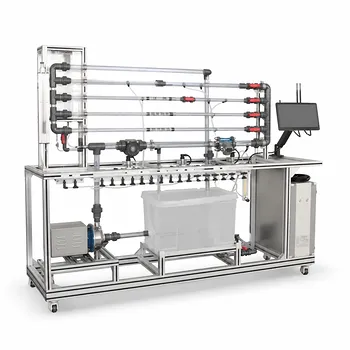
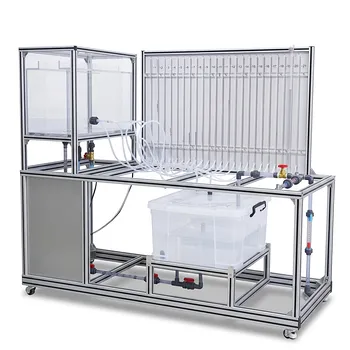
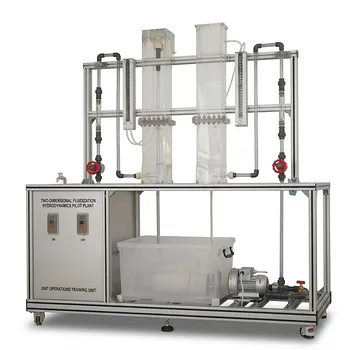
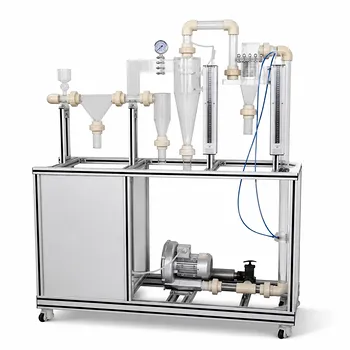
Teaching and researching complex fluid behaviors requires hands-on experience. LABPARK offers specialized Educational and Vocational Unit Operations Pilot Plants in chemical engineering, bioprocess & biotech, and environmental & water treatment. Designed for universities, research institutes, and enterprises, our pilot plants enable you to demonstrate real-world pump and piping challenges with plastic, thixotropic, and rheopectic fluids safely and effectively.
Equip your lab with the industry's best training systems. Contact LABPARK today to get a tailored solution for your institution!
Related Products
- Centrifugal Pump Performance and Orifice Flowmeter Calibration Educational Pilot Plant
- Multi Pump Fluid Transport Process Piping Unit Operations Training Pilot Plant
- Chemical Pipeline Assembly and Fluid Transport Practical Training Unit Operations Pilot Plant
- Fluid Transport and Piping Dynamics Practical Training Unit Operations Pilot Plant
- Centrifugal Pump Performance Determination Educational Unit Operations Pilot Plant
People Also Ask
- What features should instructors look for in pump & flowmeter pilot plants? Key Selection Guide
- Why start a centrifugal pump with a closed outlet valve? Protect your pilot plant motors.
- How to update chemometric calibration models in pilot plants? Best practices for process engineers.
- How can cavitation and slurry erosion be studied and mitigated using fluid transport and centrifugal pump pilot plants?
- How do pilot plants demonstrate siphon pressure variations? Visualizing Bernoulli's Energy Balance