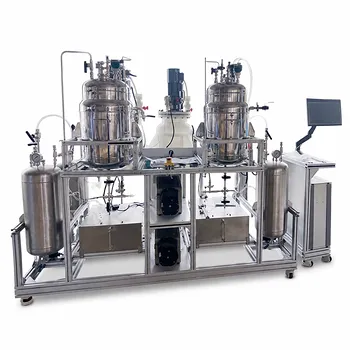
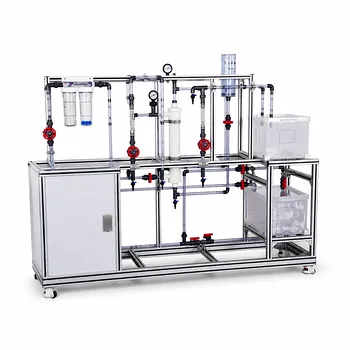
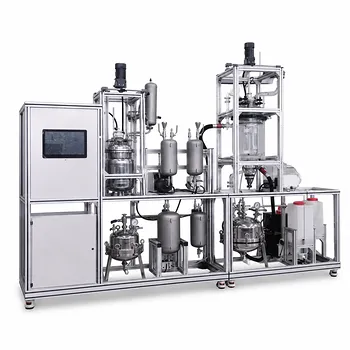
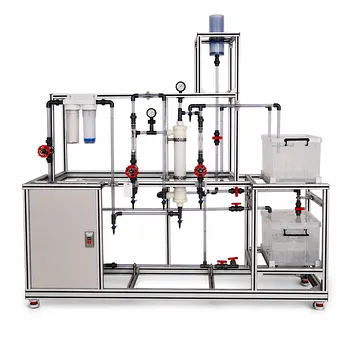
Living cells are not predictable chemical catalysts. Unlike conventional chemical synthesis where inputs and outputs are locked in, bioprocesses are driven by metabolic networks that can shift in real time. That is exactly why online stoichiometric and yield monitoring is a primary objective in the design and operation of bioprocess pilot systems: it turns a dynamic, “living” process into a measurable, controllable one by capturing real-time material and electron balances, enabling immediate decisions that maximize yield and productivity.
Bioprocesses are inherently variable – cells change their metabolic state, substrate consumption, and by-product profiles. Online stoichiometric and yield monitoring is the foundational strategy to see these changes as they happen, so feeding strategies can be adapted instantly. Without it, pilot systems would be flying blind, unable to deliver the process understanding needed for reliable scale-up.
The Unstable Nature of Biological Reactions
Why Fixed Stoichiometry Is a Dangerous Assumption
In classical chemical engineering, a reaction like ( \text{A} + \text{B} \rightarrow \text{C} ) follows a fixed molar ratio. That ratio is a constant you can design around.
In a bioreactor, you are not mixing chemicals – you are cultivating living organisms. The “reaction” is a web of metabolic pathways that respond to dissolved oxygen, nutrient gradients, inhibitor accumulation, and cell age. The effective stoichiometry – how much oxygen is consumed per unit of substrate, or how much product is formed per carbon source – can drift significantly during a single run.
Treating a bioprocess like a fixed-ratio chemical reaction means your feeding strategy will be built on outdated assumptions. The result: missed yield windows, accumulation of unwanted by-products, or even metabolic collapse.
Real-Time Mass and Electron Balances Reveal Metabolic Shifts
The primary reference highlights that modern pilot plants integrate exhaust gas analyzers (O₂ and CO₂), dissolved oxygen probes, and substrate feed meters to close elemental balances continuously.
This combination calculates carbon evolution rates (CER) and oxygen uptake rates (OUR) online. The ratio of these two, the respiratory quotient (RQ), serves as a real-time metabolic fingerprint. A sudden change in RQ often signals a shift from purely respiratory growth to overflow metabolism – a critical event that demands an immediate adjustment in the feed rate.
Online yield coefficients, such as ( Y_{X/S} ) (biomass on substrate) or ( Y_{P/S} ) (product on substrate), are computed directly from these balances. When the yield starts falling, you know the process is deviating from its optimal metabolic state, often minutes to hours before a pH or off-gas trend alone would alert you.
How Online Data Transforms Pilot-Scale Operation
From Black Box to Glass Box: Process Visibility
A pilot reactor without online mass balancing is essentially a black box. You take samples, wait for offline analytics, and react retrospectively. The delay can be hours, during which time metabolites like acetate may accumulate, permanently reducing cell performance.
Online electron and mass balances turn the reactor into a glass box. You can see, second by second, how the cells are using the feed. This transparency is not just academic – it is the difference between an experiment that simply runs its course and one that teaches you the precise limits of the strain.
Feeding Strategy Optimization in One Campaign, Not Five
The primary reason pilot systems exist is to develop and de-risk a process before expensive, large-scale manufacturing. Without online yield data, optimizing a fed-batch profile is a slow trial-and-error process spanning multiple runs.
With online monitoring, you can directly link the instantaneous substrate uptake rate to the product formation rate. If the cells are burning sugar for maintenance rather than product, you see a drop in the carbon yield in real time. You can then instantly titrate the feed rate down, probe the metabolic bottleneck, and recover the yield – all within the same run. This collapses the development timeline dramatically.
Early Detection of Metabolic Bottlenecks
Often the stoichiometric imbalance appears before any physical sensor alarm. For example, a slowly rising ethanol or acetate concentration in the off-gas calculation (via carbon balance inconsistency) may indicate oxygen limitation or a co-factor imbalance even when dissolved oxygen looks stable.
This early-warning capability is invaluable. It allows operators to preempt a process deviation that would otherwise ruin a week-long cultivation. In a pilot plant where each run carries a high material and labor cost, such prevention is a primary economic driver for the monitoring investment.
Understanding the Trade-offs
Sensor Reliability and Calibration Drift
The promise of online stoichiometry rests on the accuracy of gas analyzers, flow meters, and weight scales. Over a long fed-batch run, sensor drift or moisture in the exhaust line can introduce systematic errors. These errors propagate directly into the mass balance, giving a false yield number that can trigger incorrect control actions.
Critical safeguard: Offline sampling and analysis (HPLC for substrates and products, biomass dry weight) remain essential to ground the online signals. The best pilot systems treat online balances as a high-frequency trend, not an independent absolute truth, and they cross-validate periodically.
Cost and Complexity
The sensor suite required – fast gas analyzers, mass flow controllers, precision feed pumps – adds upfront capital and maintenance load. For a corporate R&D facility this is a sound investment, but for a small startup or academic lab, the cost can be prohibitive.
There is also a knowledge barrier. Online elementary balances require robust data-handling infrastructure and a team that understands both the biology and the computational models. Without that expertise, the data may be misinterpreted, leading to overconfidence in a flawed signal.
Data Overload Without Context
Generating a rich stream of real-time yield and stoichiometric data is only valuable if you know how to act on it. Inexperienced teams can be overwhelmed, reacting to every minor fluctuation in RQ that is actually just instrument noise.
The objective is not to react to every data point, but to use the signal to detect sustained metabolic shifts. Successful pilot plants combine the online tool with a clear decision framework: specific RQ or yield thresholds trigger specific feed changes, nothing more.
Making the Right Choice for Your Pilot System
The level of online stoichiometric integration you need depends entirely on what you are trying to achieve and the maturity of your process.
-
If your primary focus is early-stage strain screening: A basic oxygen/CO₂ off-gas analyzer combined with a simple mass balance spreadsheet may be sufficient. The goal is to rank strains by yield, not to finely optimize a feeding profile. Invest in high-throughput consistency over deeply integrated online sensing.
-
If your primary focus is developing a robust fed-batch recipe for tech transfer: Full online electron and mass balancing is non-negotiable. This is where the real value lies. The data directly informs the nutrient feed profile that will be coded into the production-scale recipe, ensuring the same stoichiometric ratios are maintained at scale.
-
If your primary focus is troubleshooting a process that is failing on scale-up: Replicate the pilot process with identical online monitoring. The question “where is the carbon going?” can be answered only by a closed online balance. Use the data to pinpoint if the metabolic bottleneck is oxygen related, substrate inhibition, or a co-factor limitation that only appears at larger volumes.
Ultimately, online stoichiometric and yield monitoring is not just a measurement technique – it is the core feedback loop that transforms a bioprocess from a hopeful fermentation into a predictable, scalable manufacturing step.
Summary Table:
| Monitoring Parameter | Real-Time Insight | Scale-Up Benefit |
|---|---|---|
| Respiratory Quotient (RQ) | Detects metabolic shifts (respiratory vs. overflow) | Prevents by-product accumulation |
| Yield Coefficients ($Y_{X/S}$, $Y_{P/S}$) | Measures carbon conversion efficiency | Optimizes feeding profiles instantly |
| Mass & Electron Balances | Identifies process deviations and bottlenecks | Accelerates development timelines |
Elevate Your Research with LABPARK Pilot Plants
Don't let metabolic unpredictability stall your process scale-up. LABPARK provides advanced Educational and Vocational Unit Operations Pilot Plants in chemical engineering, bioprocess & biotech, and environmental & water treatment for universities, research institutes, and enterprises.
Our systems integrate real-time monitoring solutions to help you optimize yields and build robust, predictable bioprocesses. Contact LABPARK today to find the perfect pilot plant for your facility.
Related Products
- Bio-fermentation Ethanol Production Practical Training Unit Operations Pilot Plant
- Natural Product Extraction Unit Operations Training Pilot Plant
- Continuous Batch Extractive Distillation Educational Pilot Plant
- Electrolyte Distillation Purification and Formulation Educational Pilot Plant
- Multi-Functional Special Distillation Educational Pilot Plant
People Also Ask
- Why Use PTFE & Hastelloy in Chemical Pilot Plants? Prevent Corrosion & Ensure Safety
- Why Compare Predicted and Experimental Excess Enthalpy? Key to Accurate Pilot Plant Scale-up
- Why is the chemical plant startup schedule crucial? De-risk scale-up with pilot plants.
- When to transition from PID to adaptive control in pilot plants? Key process indicators.
- Why must batch and fed-batch fermentation pilot plants be designed to accommodate changing rheological conditions?