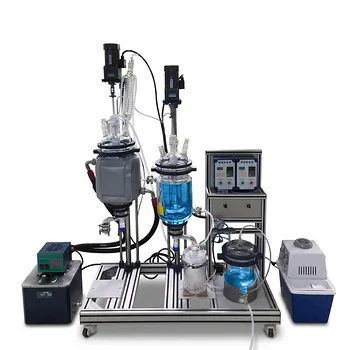
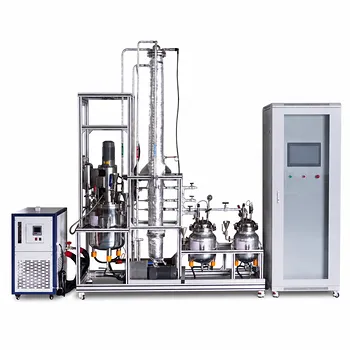
The true benefit lies in bridging the gap between ideal theory and real-world complexity.
When training students on a chemical engineering pilot plant, comparing shortcut fractionation calculations with rigorous simulation software transforms a simple distillation run into a powerful learning experience. It exposes the hidden assumptions of simplified models, teaches the practical art of simulation initialization, and builds the critical skill of validating computer-aided predictions against physical hardware.
By systematically comparing the three sources—shortcut estimates, rigorous tray‑by‑tray simulations, and live pilot‑plant data—students learn to diagnose thermodynamic non‑idealities, avoid numerical convergence failures, and understand exactly why a real column behaves differently from a textbook equation. This layered approach is what turns a unit operations lab from a demonstration into genuine discovery.
The Bedrock: What Shortcut Calculations Teach First
Shortcut methods like the Fenske‑Underwood‑Gilliland equations are not just a fast route to an answer—they are the conceptual scaffold of distillation. They give students an immediate, transparent relationship between key design variables.
Building Intuition for Separation Limits
Shortcut models define the light and heavy key components and calculate the minimum number of theoretical stages under total reflux. Because these calculations assume constant relative volatility and constant molal overflow, students can quickly see the theoretical ceiling of the separation. This creates a clear baseline before any physical run.
Generating the Engine‑Start Parameters
A rigorous simulation cannot start from a blank slate. It requires precise initial guesses for top and bottom temperatures, reflux ratio, reboiler heat duty, and feed stage location to achieve mathematical convergence. Shortcut calculations provide exactly these physically plausible estimates, preventing the dreaded “convergence failure” that stops a rigorous model before it begins.
The Reality Check: Why Rigorous Simulation is Non‑Negotiable
Modern industry relies on tray‑by‑tray simulation programs that solve the full set of material, equilibrium, summation, and enthalpy (MESH) equations for every stage. For a student, moving from a shortcut to a rigorous model is where the real science starts.
Exposing Thermodynamic Non‑Idealities
When a rigorous model uses a cubic equation of state like Soave‑Redlich‑Kwong (SRK) with complex convergence algorithms (e.g., Jacobian inside‑out methods), it actively computes how activity coefficients and non‑ideal vapor‑liquid equilibrium alter the temperature and composition profiles. Comparing this to the shortcut prediction forces students to quantify what “ideal mixture” really means and where it breaks down.
Capturing Energy and Heat Loss Effects
Shortcut methods flatly ignore heat loss and variable enthalpy profiles. A rigorous simulation, however, can model interstage coolers, multiple feeds, and the real energy balance across each tray. When the pilot‑plant column runs at a slightly different reflux ratio or shows a distorted temperature bulge, the rigorous model becomes the diagnostic tool that explains why—not just that the data don’t match.
The Synergy: Making Comparisons in the Pilot Plant
The pilot plant is the ultimate arbiter. The learning explosion happens when the two calculated worlds collide with physical measurement.
The Three‑Way Validation Loop
Students should first run a shortcut simulation to get ballpark numbers, then use those to successfully initialize a rigorous simulation, and finally start the physical column. They then overlay the three datasets:
- The shortcut’s idealized stage count and reflux ratio.
- The rigorous simulation’s predicted temperature and composition profiles.
- The actual pilot‑plant data, with its cold spots, packing inefficiencies, and slower dynamics.
This loop teaches students to validate the software against reality, not just to trust a polished computer screen.
Turning Discrepancy into Deep Learning
When the measured distillate purity falls short of the rigorous model, students must investigate. Was it a convergence problem in choosing the wrong initial feed tray location? A thermodynamic package that doesn’t capture azeotrope formation? An uninsulated column losing heat to the room? The comparison uncovers these layers, transforming troubleshooting from guesswork into systematic engineering detective work.
Understanding the Trade‑offs and Common Pitfalls
This integrated approach is immensely powerful, but it must be taught with full awareness of its limitations. Otherwise, students can draw wrong conclusions from mismatched data.
Where Shortcuts Can Mislead
Shortcut equations are strictly valid only for ideal, two‑product systems. For non‑ideal multicomponent mixtures, the assumption of constant relative volatility can yield feed stage locations and minimum reflux ratios that are significantly off. If a student blindly trusts the shortcut result without the rigorous comparison, they may believe the physical column is failing when it is actually the model that is inappropriate.
The Peril of Numerical Convergence
Rigorous simulations, especially those using inside‑out algorithms, can converge to a mathematically acceptable but physically absurd solution. Without the shortcut‑derived baseline parameters, a student may not recognize a wrong result. The comparison acts as a sanity check: if the rigorous model “converges” to a 50% higher reboiler duty, the student knows immediately to question the simulation inputs or the thermodynamic property method.
The Physical Gap That Simulation Can’t Fill
Even the most accurate rigorous model will deviate from the pilot plant due to unmodeled heat loss, weeping, entrainment, or non‑equilibrium stage behavior. The comparison teaches students that a simulation is always a map, not the territory. The real column’s efficiency and hydraulic limitations are the final layer that no textbook equation can fully capture.
How to Apply This Integrated Approach to Your Training
The key is not to pick one method but to choreograph the progression from shortcut to rigorous to physical run in a deliberate, problem‑first sequence.
- If your primary focus is building fundamental intuition: Start with shortcut calculations to define the absolute theoretical limits of the separation. Use these to frame the subsequent experiments, so students first see the forest before counting the trees.
- If your primary focus is real‑world design and operation: Teach the shortcut as a mandatory pre‑processor for rigorous simulation. Require students to document how the initial estimates prevented convergence failures and influenced the final column design they test on the pilot plant.
- If your primary focus is troubleshooting and diagnostics: Create a mismatch exercise—deliberately run the column at a non‑optimal feed location or feed rate, then challenge students to use the comparison between shortcut, rigorous, and physical data to explain the performance loss.
- If your primary focus is software validation literacy: Have students repeat the rigorous simulation with two different thermodynamic packages and compare which one better matches the pilot‑plant data, proving that the “right” answer is also a choice about model fidelity.
When students leave the lab having held a shortcut estimate in one hand, a rigorous simulation in the other, and a thermal profile from a real column in front of them, they leave not just with data, but with a calibrated engineering judgment that will serve them in every plant they ever step into.
Summary Table:
| Method / Source | Key Focus | Learning Benefit | Limitations |
|---|---|---|---|
| Shortcut Calculations | Idealized theory & base limits (e.g., FUG equations) | Builds fundamental intuition; provides initial convergence parameters | Assumes constant relative volatility; ignores heat loss |
| Rigorous Simulation | Multi-stage MESH equations & thermodynamic packages | Explains variable enthalpy, energy balances, and fluid behavior | Risk of mathematical convergence to physically absurd solutions |
| Physical Pilot Plant | Real-world operation & physical hardware data | Validates software models against physical inefficiencies & dynamics | High complexity; affected by ambient conditions and heat loss |
Bridge the Gap Between Theory and Practice with LABPARK
Equip your students with the analytical skills needed for modern industry. LABPARK provides premium Educational and Vocational Unit Operations Pilot Plants in chemical engineering, bioprocess & biotech, and environmental & water treatment for universities, research institutes, and enterprises.
By integrating our physical pilot plants with your computational curriculum, you enable students to validate theoretical models, troubleshoot thermodynamic non-idealities, and gain hands-on engineering confidence.
Ready to upgrade your laboratory capabilities? Contact LABPARK today to explore our custom solutions!
Related Products
- Multi-Modal Distillation Unit Operations Training Pilot Plant
- Multifunctional Membrane Separation Educational Pilot Plant with Ultrafiltration, Nanofiltration, Reverse Osmosis
- Multi-Functional Membrane Separation Educational Pilot Plant for Unit Operations Lab
- Bio-fermentation Ethanol Production Practical Training Unit Operations Pilot Plant
- Potassium Salt Thermal Dissolution and Crystallization Separation Educational Unit Operations Pilot Plant
People Also Ask
- Why is the measurement of bubble point, dew point, and vapor pressure critical when operating distillation pilot plants?
- How Batch vs Continuous Configuration Affects Distillation Pilot Plant Versatility & Footprint
- Why must distillation data be corrected for subatmospheric pressures when operating chemical engineering pilot plants?
- How does polyphosphate hydrolysis affect scale and corrosion in pilot plants? Essential Monitoring Guide
- How does an azeotropic point affect pilot plant distillation? Overcome VLE limits.