Cascade control transforms a sluggish heat exchanger into a responsive, disturbance-resistant system—essential for pilot plant research.
A cascade architecture is recommended because it neutralizes fast utility-side disturbances before the heat exchanger’s large thermal lag can mask them. The inner flow loop detects and corrects a pressure or flow variation almost instantly, preventing the slow outer temperature loop from ever seeing the resulting temperature drift. This yields dramatically faster settling times, tighter temperature control, and safer, more repeatable experiments—exactly what a chemical engineering unit operations pilot plant demands.
The real problem is delay: single-loop temperature control reacts too late to utility pressure swings. A cascade system solves this by placing a rapid, secondary flow controller inside the main temperature loop. The inner loop absorbs the shock, so the outer loop only has to manage slow thermal dynamics. The result is robust stability and a perfect educational platform for advanced process control.
The Fundamental Challenge: Why a Single Temperature Loop Fails
A heat exchanger pilot plant is about thermal precision. But the physics conspire against it.
The Slow Thermal Response
Heat exchangers possess significant thermal mass and transportation lag. When you change the heating medium flow, the process fluid’s outlet temperature does not budge for seconds—or minutes. This capacity lag makes the system feel unresponsive to a PID controller. By the time a correction arrives, the disturbance has already pushed the process in another direction.
Utility-Side Disturbances Are Common
In a pilot plant, steam or hot oil supply pressure rarely stays constant. Boiler load changes, competing equipment draws, or header interactions cause flow fluctuations that hit the heat exchanger without warning. A single temperature controller sees only the eventual effect—a slow temperature deviation—and must estimate a valve position change long after the disturbance entered the system.
Why a Single PID Loop Struggles
Traditional feedback control compares measured outlet temperature to the setpoint and sends a correction to the control valve. Because of the process’s dead time and time constant, the controller must be tuned conservatively to avoid oscillation. Even with optimal tuning, it cannot react quickly to supply-side upsets. The result: temperature excursions, long settling times, and potential safety concerns during transient experiments.
How Temperature-Flow Cascade Control Solves This
The solution is to introduce a hierarchy of controllers that breaks the delay chain.
The Master-Slave Architecture
In a temperature-flow cascade, the primary (master) controller reads the process fluid outlet temperature. Its output is not sent directly to the valve. Instead, it becomes the remote setpoint for a secondary (slave) flow controller. That secondary controller reads the heating medium flow rate and manipulates the control valve directly. This nesting creates two nested feedback loops working at different speeds.
The Fast Inner Loop Shields the Outer Loop
The inner flow loop has an extremely short time constant and minimal dead time. When a utility pressure spike tries to change the flow, the secondary controller detects the deviation within fractions of a second and adjusts the valve before the flow rate meaningfully shifts. The disturbance is suppressed in the secondary loop—the outer temperature loop never has to respond to it. The temperature controller only corrects for slow, process-side changes like feed flow or inlet temperature variations.
Settling Time and Stability Improvements
Because the outer loop now sees a much more benign “inner process” (a tightly controlled flow rather than a raw valve), it can be tuned more aggressively without risking instability. The outcome: faster recovery from setpoint changes and disturbances, reduced overshoot, and a more stable final product temperature. Pilot plants gain the repeatability needed for accurate heat transfer coefficient measurements and rigorous data analysis.
The Ideal Teaching and Research Tool
Beyond performance, cascade control is unmatched as a pedagogical asset in unit operations labs.
Illustrating Advanced Process Control Principles
A pilot plant with cascade ability lets students and researchers directly observe feedback hierarchy, loop decoupling, and time-scale separation. They can compare single-loop versus cascade performance on the same hardware, analyze Bode plots, and understand why cascading a fast measurement dramatically improves control quality—concepts that are hard to grasp from textbooks alone.
Safety and Repeatability for Pilot Plant Experiments
Tight temperature regulation reduces the risk of product thermal degradation or local overheating, even if the process fluid is not ideally mixed. Combined with proper agitation to ensure representative temperature sensing, cascade control prevents undetected hot spots. The result is safer operation and data that truly reflects the heat transfer phenomenon under study—not the influence of uncontrolled utility fluctuations.
Understanding the Trade-offs and Pitfalls
Cascade control is powerful, but it is not a magic bullet. Some conditions must be met.
Increased Complexity and Tuning Rigor
Two loops mean two sets of tuning parameters. The secondary loop must be tuned tightly and quickly to track setpoint changes from the primary controller without overshoot. If the inner loop is sluggish, cascade offers no benefit over a single loop. Tuning must follow a strict sequence: secondary loop first, then primary.
Sensor and Mixing Requirements
The primary temperature measurement must reflect the true bulk fluid outlet condition. Poor placement or inadequate mixing can introduce noise that the primary controller interprets as a disturbance, causing unnecessary setpoint changes in the inner loop. In pilot-scale tubular exchangers or stirred tanks, ensure the thermocouple is located in a well-mixed region to avoid misleading the master controller.
When Cascade May Be Overkill
If the heating medium supply is inherently stable and the heat exchanger’s thermal mass is small, a well-tuned single-loop temperature controller might suffice. Cascade adds hardware (flow transmitter, additional controller logic) and complexity that may not be justified for extremely small, fast-response units. Evaluate the disturbance profile before committing.
Making the Right Choice for Your Goal
The decision to implement cascade control in a pilot plant heat exchanger should align with your primary purpose.
- If your primary focus is stable, repeatable experimental data: Implement temperature-flow cascade. It will buffer you against unpredictable utility fluctuations and let you capture genuine heat transfer dynamics.
- If your primary focus is demonstrating advanced process control concepts to students: Cascade is an exceptionally clear example of hierarchical feedback. Pair it with simple data logging so students can compare single-loop vs. cascade step responses.
- If your primary focus is rapid startup and minimal tuning effort: A single-loop might be acceptable for a well-regulated utility supply. However, be prepared for longer stabilization times and be mindful of potential safety margins.
- If your primary focus is operator and equipment safety: Cascade control’s rapid disturbance rejection is a safety feature. It keeps temperature deviations small, reducing the chance of thermal runaway or unsafe product decomposition in poorly mixed zones.
By matching the control philosophy to the physics and the educational purpose, you turn a simple heat exchanger into a dependable, instructive platform that reveals the very heart of industrial regulatory control.
Summary Table:
| Feature | Single-Loop Control | Cascade Control (Temp-Flow) |
|---|---|---|
| Response Time | Slow (limited by large thermal lag) | Fast (inner loop responds instantly) |
| Disturbance Rejection | Poor (utility swings cause temp drift) | Excellent (inner loop absorbs shocks) |
| Tuning Complexity | Simple (single PID loop) | Higher (requires sequential loop tuning) |
| Best Used For | Basic systems with stable utility lines | Precision research & advanced teaching labs |
Elevate Your Unit Operations Lab with LABPARK
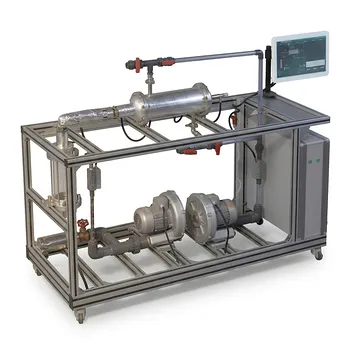
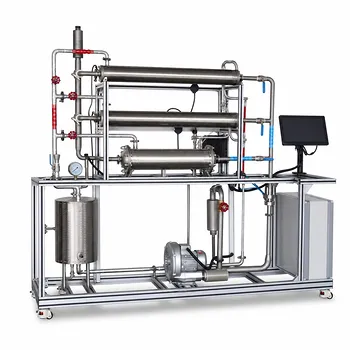
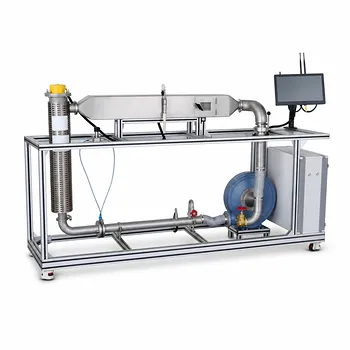
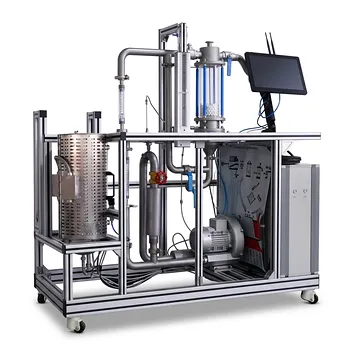
Looking to demonstrate advanced process control or achieve highly repeatable research data? LABPARK provides state-of-the-art Educational and Vocational Unit Operations Pilot Plants in chemical engineering, bioprocess & biotech, and environmental & water treatment designed specifically for universities, research institutes, and enterprises.
Our custom-engineered pilot systems feature advanced control loops—like cascade temperature-flow control—to ensure thermal precision, safety, and a superior learning environment.
Ready to upgrade your lab? Contact LABPARK today to find the perfect pilot plant solution for your needs!
Related Products
- Shell and Tube Heat Exchanger Heat Transfer Coefficient Determination Educational Pilot Plant
- Comprehensive Multi-Modal Heat Transfer Unit Operations Pilot Plant for Engineering Training
- Dual Mode Heat Transfer Pilot Plant for Unit Operations Training
- Three-Tube Heat Transfer Educational Pilot Plant for Unit Operations Training
- Comprehensive Heat Transfer Coefficient Determination Educational Unit Operations Pilot Plant
People Also Ask
- Why Apply LMTD Correction in Shell-and-Tube Pilot Plants & How to Determine It
- How is the fouling factor (Rd) evaluated? Key Pilot Plant Insights for Students
- How is fouling factor demonstrated using shell and tube pilot plants? Practical Lab Guide
- Why is simulating and calculating fouling factors crucial when operating educational heat exchanger pilot plants?
- Why Estimate Tube Wall Temp in Heat Exchangers? Master Pilot Plant Thermal Resistance