The criticality of thermal conductivity and heat capacity comes down to two competing operational needs: moving heat quickly versus resisting temperature change. In a chemical engineering training plant, thermal conductivity directly governs how fast you can transfer energy in a heat exchanger, while heat capacity acts as nature's shock absorber, stabilizing temperatures inside a reactor when things get chaotic. Selecting materials based on these twin properties is the fundamental difference between a stable, efficient process and one plagued by hotspots, thermal runaway, or sluggish control.
Balancing thermal conductivity and heat capacity is the core physical challenge of thermal management. Your heat exchanger demands a material that eagerly shuttles heat, while your reactor vessel often needs a material that stubbornly resists rapid temperature swings to maintain stability during variable reactions.
The Twin Pillars of Thermal Control: Speed vs. Stability
Understanding these two properties is not just academic; it's the practical key to designing and operating any chemical process. They represent a fundamental trade-off between dynamic response and steady-state stability.
How High Conductivity Dictates Heat Exchanger Speed
A heat exchanger's sole purpose is to move thermal energy from one fluid to another, and thermal conductivity is the property that enables this. The higher the material's conductivity, the less resistance there is to heat flow.
In a training plant, tubes made of copper (around 393 W/m K) allow for a near-instantaneous thermal response. This rapid transfer lets students directly correlate changes in flow rate or temperature with the rate of heat exchange, making the physics immediately observable. A material like stainless steel, with a much lower conductivity, would dampen this response, creating a sluggish system where the true dynamics are smeared out.
Why High Heat Capacity is a Reactor's Safety Net
Specific heat capacity is a material's ability to soak up energy without a significant temperature rise. For a reactor vessel, this is its primary defense against process instability.
Exothermic reactions, like those in a catalytic fixed bed, can suddenly spike in activity. A reactor wall with high heat capacity acts as a thermal buffer. It absorbs the excess heat pulse, buying precious time for the control system to respond and preventing a localized hotspot from triggering a dangerous runaway reaction. This thermal inertia is not inefficiency; it's a fundamental safety and stability feature.
Designing Out Danger: From Hotspots to Thermal Stress
The combined application of these properties goes beyond efficiency—it directly addresses the physical integrity and safety of the training plant, especially under extreme or fluctuating conditions.
Preventing the Cascade of Thermal Runaway
In a pilot-scale reactor, poor heat transfer creates a self-destruct sequence. A hotspot forms where thermal conductivity is too low to dissipate heat. This increases the reaction rate locally, which generates even more heat, quickly leading to thermal runaway.
This is why measuring the effective radial thermal conductivity of a catalyst bed is so critical. If the bed and its support materials can't shunt heat outward to the cooled vessel wall, safe operation is impossible. Selecting a high-conductivity metal for the reactor tube and catalyst support is a deliberate design choice to break this feedback loop.
Managing Thermal Gradients and Physical Stress
Materials don't just transfer heat; they physically deform in response to it. A steep temperature gradient across a reactor wall induces differential thermal expansion—the hot inner face tries to expand more than the cooler outer face.
This generates immense mechanical stress. Over repeated cycles, this leads to material fatigue, cracking, and eventual failure. Matching a material's thermal conductivity (to minimize the gradient) with its thermal expansion coefficient is essential to prevent your training plant's pressure boundary from literally tearing itself apart.
Understanding the Trade-offs
No single material wins on all fronts. Effective design requires an objective look at the inherent compromises.
- The Insulator's Dilemma: High-performance insulating ceramics, like alumina, have excellent chemical stability but poor thermal conductivity (~30 W/m K). Their high heat capacity can also mean slow thermal cycling. A composite design—using a thin alumina coating on a highly conductive nickel or copper substrate—marries chemical resistance with superior heat transfer.
- The Cost vs. Performance Trap: Cheap carbon steel might have acceptable heat capacity for a simple tank, but it lacks the corrosion resistance and high-temperature fatigue strength needed for aggressive service. Premium alloy steels provide the necessary safety margins but at a significantly higher cost.
- A False Constant: A critical pitfall is assuming thermal properties are constant. As temperature rises, the thermal conductivity of most solids decreases. A heat exchanger that performs beautifully at start-up may lose its edge at full operating temperature. Training plant calculations must account for this variation to avoid a baffling gap between theoretical predictions and experimental results.
Making the Right Choice for Your Training Goal
Your material selection must start with a brutally honest question: “What problem am I trying to solve in this specific unit operation?” The answer will dictate whether you prioritize speed or stability.
- If your primary focus is maximizing heat exchanger efficiency: Select a material with the highest possible thermal conductivity, like copper, to minimize resistance and make the physics of counter-current versus co-current flow instantly clear.
- If your primary focus is ensuring reactor stability and safety: Choose a vessel material with a high heat capacity and a reactor tube with high thermal conductivity. This combination buffers temperature fluctuations while efficiently dissipating heat to prevent hotspots.
- If your primary focus is validating scale-up models: You must use materials with precisely known, temperature-dependent thermal properties. Relying on a single handbook value for conductivity will introduce significant, scale-dependent errors in your energy balance calculations.
The goal is not to find a mythical perfect material, but to apply a clear, first-principles understanding of thermal conductivity and heat capacity to turn your training plant into a stable, responsive, and faithfully predictable scientific tool.
Summary Table:
| Property | Primary Operational Role | Key Training Plant Application | Example Materials |
|---|---|---|---|
| Thermal Conductivity | Governs heat transfer speed and dynamic response | Heat exchanger tubes (quick thermal response) | Copper, Stainless steel |
| Heat Capacity | Acts as a thermal buffer to resist temperature change | Reactor vessel walls (runaway prevention) | Alumina, Alloy steels |
Optimize Your Chemical Engineering Labs with LABPARK
Building a safe, stable, and highly educational training environment requires pilot plants engineered with precise thermal dynamics in mind. LABPARK provides state-of-the-art Educational and Vocational Unit Operations Pilot Plants in chemical engineering, bioprocess & biotech, and environmental & water treatment for universities, research institutes, and enterprises.
Whether you need to demonstrate complex heat transfer phenomena or ensure reactor stability during student experiments, our systems are built to industry-leading standards to deliver reliable, repeatable results.
Ready to upgrade your lab's training capabilities? Contact LABPARK today to discuss your custom pilot plant requirements!
Related Products
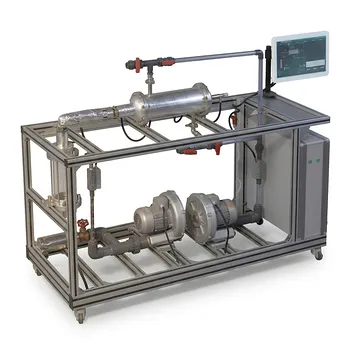
- Shell and Tube Heat Exchanger Heat Transfer Coefficient Determination Educational Pilot Plant
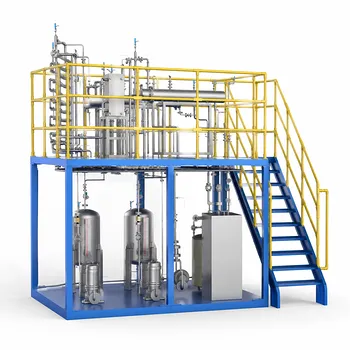
- Comprehensive Multi-Modal Heat Transfer Unit Operations Pilot Plant for Engineering Training
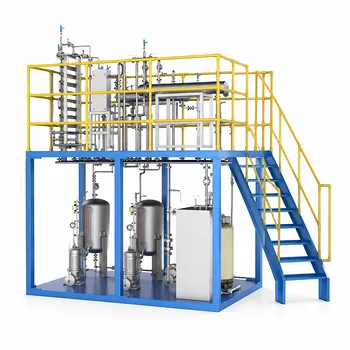
- Dual Mode Heat Transfer Pilot Plant for Unit Operations Training
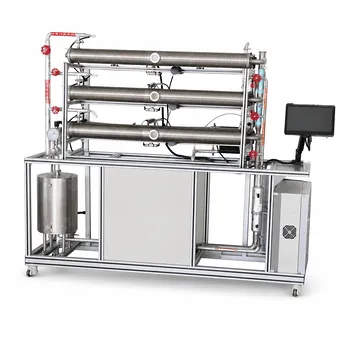
- Three-Tube Heat Transfer Educational Pilot Plant for Unit Operations Training
- Comprehensive Heat Transfer Coefficient Determination Educational Unit Operations Pilot Plant
People Also Ask
- Why Apply LMTD Correction in Shell-and-Tube Pilot Plants & How to Determine It
- How is the fouling factor (Rd) evaluated? Key Pilot Plant Insights for Students
- How is fouling factor demonstrated using shell and tube pilot plants? Practical Lab Guide
- Why is simulating and calculating fouling factors crucial when operating educational heat exchanger pilot plants?
- Why Estimate Tube Wall Temp in Heat Exchangers? Master Pilot Plant Thermal Resistance