Sizing a heat exchanger for a complex hydrocarbon mixture in an educational pilot plant doesn’t need a process simulator. You can reliably calculate the condensing or cooling duty using linear enthalpy interpolation based on average molecular weight or boiling point. Then apply a 10–15% safety margin to the calculated duty to select a standard, off‑the‑shelf exchanger—just as is done in preliminary industrial design.
For pilot‑plant teaching, the core insight is to estimate the mixture’s enthalpy change from dew point to bubble point using a simple interpolation method (typically within 2% of rigorous models) and then oversize by 10–15%. This balances thermodynamic rigor with classroom practicality, forming a bridge between textbook theory and real equipment selection.
The Enthalpy Challenge: From Dew Point to Bubble Point
Multicomponent hydrocarbon mixtures condense across a temperature range, not at a single temperature. The true thermal duty of a cooler or condenser is the difference between the vapor enthalpy at the dew point and the liquid enthalpy at the bubble point. That one‑step, aggregate duty is what must be removed to fully condense the stream.
Why a Single ΔH Value Works for Educational Plants
In an undergraduate unit operations lab, you can treat the entire condensation as a single block. Determine the mixture’s average molecular weight and then find a pure reference component with a similar value. This simplifies the energy balance and makes manual calculations feasible for a single lab session.
The Interpolation Method Students Can Execute by Hand
First, calculate the mixture’s average molecular weight, say 101.5 lb/lbmol. Then, at the operating pressure, look up the vapor and liquid enthalpies of the nearest pure reference components—like heptane (MW ~100) and octane (MW ~114). Linearly interpolate between their enthalpy values to obtain an estimated enthalpy for your mixture. Multiply the ΔH (Btu/lb) by the mass flow rate to get the total heat duty.
Accuracy That Builds Confidence
This interpolation method is not just a “black box” shortcut. It typically yields results within 2% of a rigorous, component‑by‑component simulation. That small deviation is an excellent teaching point: it validates that manual thermodynamic scaling works and reinforces why engineers use both hand calcs and simulators.
Adding the Safety Margin: Why Rounding Up Is Engineering Judgment
The calculated duty from the enthalpy difference is a theoretical ideal. In a real pilot plant—or a future industrial project—several factors demand a margin of safety.
The 10–15% Rule of Thumb in Practice
Uncertainties in mass flow measurement, minor feed composition shifts, and fouling over time all eat into the exchanger’s effective capacity. Adding a 10–15% oversize cushion is standard. For example, if your condenser duty calculates to 890,910 Btu/h, you would round up to a 1.0 mmBtu/h duty exchanger—a roughly 12% safety margin that ensures the unit won’t be undersized during startup or transient conditions.
From Theoretical Duty to a Teachable Equipment Decision
The safety margin directly connects the energy balance to real hardware selection. When students see that their calculated number gets inflated by 10% and then matched to the closest available exchanger size, they grasp that engineering is about managing uncertainty—not chasing theoretical perfection.
Understanding the Trade-offs
No simplified method is perfect. Being transparent about its limitations builds the trust that makes you a credible advisor.
Where the Simplified Approach Excels
- Narrow‑boiling mixtures that behave almost like a single component.
- Pilot‑scale experiments where the goal is to demonstrate principles, not to build an optimized industrial plant.
- Blends with average molecular weights that fall near common reference components.
When You Need Extra Caution
- Wide‑boiling mixtures with a large temperature glide can exhibit a non‑linear enthalpy release during condensation; a single ΔH may underpredict the required area.
- Mixtures containing very light or very heavy components can shift the average molecular weight into a region where interpolation error grows.
- Educational labs that want to teach multi‑segment condensation should break the mixture into narrow boiling cuts and sum the duties rather than using one global ΔH.
These scenarios are not reasons to abandon the simplified method—they are perfect opportunities to discuss why industrial designers eventually move to rigorous simulation.
How to Apply This to Your Pilot Plant Lab
Every teaching goal benefits from a slightly different emphasis. Use the decision guide below to tailor your approach.
- If your primary focus is teaching fundamental energy balances: Have students perform molecular‑weight‑based enthalpy interpolation, then apply a 10% safety margin. Compare the result to a process simulator output to make the ±2% error tangible.
- If your pilot plant uses a pre‑defined hydrocarbon fraction with measured average boiling point: Interpolate using boiling point from petroleum enthalpy tables. Add a 10% margin and explain how that covers both property uncertainty and future fouling.
- If you are integrating this into a cost‑estimating module: After sizing the duty with the margin, calculate the required area using an assumed overall heat transfer coefficient and LMTD, then apply modular installation factors to show how the exchanger cost feeds a total project estimate.
- If your goal is to keep the lab session within one class period: Pre‑compute the reference component enthalpies, provide the mixture’s average molecular weight, and ask students to calculate the duty and safety margin in 15 minutes—focusing the discussion on the “why” behind the 10% factor.
By combining a teachable enthalpy estimation method with a practical safety margin, you turn a potentially intimidating fluid into a clear, defensible equipment size—and you give students a scalable skill they will carry into industry.
Summary Table:
| Parameter / Step | Recommended Approach | Key Benefit / Detail |
|---|---|---|
| Enthalpy Calculation | Linear interpolation of MW or boiling point | Simplifies manual calculations; within 2% of rigorous models. |
| Safety Margin | Add 10% to 15% to calculated duty | Accounts for fouling, flow shifts, and minor composition changes. |
| Equipment Selection | Round up to the nearest standard size | Connects theoretical duty to real-world hardware procurement. |
| Best Suited For | Narrow-boiling mixtures & educational labs | Balances thermodynamic rigor with classroom practicality. |
Bring Industrial Realism to Your Engineering Lab
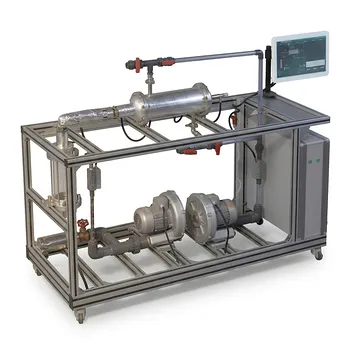
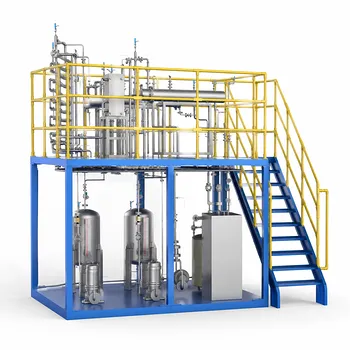
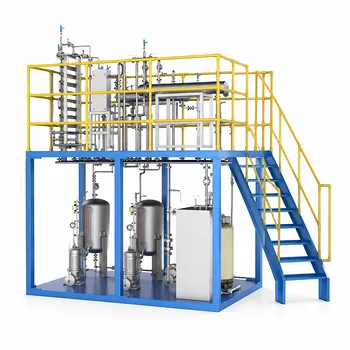
Setting up a unit operations lab requires balancing academic rigor with practical safety standards. LABPARK provides state-of-the-art Educational and Vocational Unit Operations Pilot Plants in chemical engineering, bioprocess & biotech, and environmental & water treatment. Designed specifically for universities, research institutes, and enterprises, our pilot plants help students bridge the gap between thermodynamic theory and real-world equipment sizing.
Ready to upgrade your lab's training capabilities? Contact LABPARK today to discover our custom pilot plant solutions and request a quote!
Related Products
- Shell and Tube Heat Exchanger Heat Transfer Coefficient Determination Educational Pilot Plant
- Comprehensive Multi-Modal Heat Transfer Unit Operations Pilot Plant for Engineering Training
- Dual Mode Heat Transfer Pilot Plant for Unit Operations Training
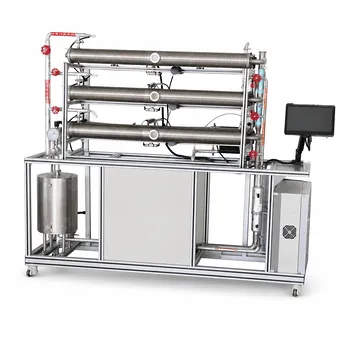
- Three-Tube Heat Transfer Educational Pilot Plant for Unit Operations Training
- Comprehensive Heat Transfer Coefficient Determination Educational Unit Operations Pilot Plant
People Also Ask
- Why Apply LMTD Correction in Shell-and-Tube Pilot Plants & How to Determine It
- How is the fouling factor (Rd) evaluated? Key Pilot Plant Insights for Students
- How is fouling factor demonstrated using shell and tube pilot plants? Practical Lab Guide
- Why is simulating and calculating fouling factors crucial when operating educational heat exchanger pilot plants?
- Why Estimate Tube Wall Temp in Heat Exchangers? Master Pilot Plant Thermal Resistance