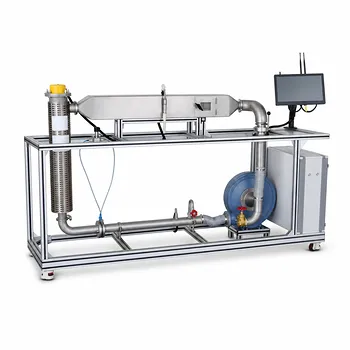
The choice hinges on the feed solution’s behavior and the pilot plant’s core mission.
When configuring an evaporation pilot plant, you must weigh three primary factors: the fluid’s tendency to foul or scale, the need for frequent cleaning between runs, and whether your goal is teaching basic principles or simulating industrial reality. A central circulation tube evaporator handles simple, clean fluids and illuminates natural convection fundamentals. An external heating evaporator prioritizes quick, thorough cleaning for multi-user labs. A forced circulation evaporator tames the most demanding streams—high viscosity, scaling, or crystallizing—to replicate real industrial conditions.
Choosing between a central circulation tube, external heating, and forced circulation evaporator is a strategic balance between feed complexity and operational simplicity. The right choice aligns the evaporator’s mechanical limits with your lab’s cleaning workflow and educational depth.
Understanding the Three Evaporator Configurations
Each design solves a distinct problem in pilot-scale evaporation. Knowing their core character makes the selection logic clear.
The Teaching Workhorse: Central Circulation Tube
This design uses a central downtake tube inside a heated vessel. Fluid circulates naturally—driven by density differences as it warms, rises, and cools in the central tube.
It is the most transparent model of natural convection. The simple geometry makes it easy to observe circulation patterns and calculate heat balances. However, its reliance on thermal buoyancy limits it to low-viscosity, non-scaling, and non-corrosive solutions. Any fouling quickly clogs the narrow central tube, and cleaning is cumbersome.
The Cleanability Champion: External Heating
Here, the heating chamber is physically separated from the evaporation vessel. Typically a shell-and-tube heat exchanger sits outside the main body, with connecting pipes for liquid and vapor.
This separation delivers a decisive practical advantage: accessibility. You can open, inspect, and mechanically clean the heating surfaces without dismantling the entire evaporator. It is the go-to choice for multi-user research labs where the same unit processes different feedstocks in quick succession. Circulation may still be natural, keeping the operating principle straightforward while vastly improving maintenance efficiency.
The Industrial Simulator: Forced Circulation
When a solution is highly viscous, crystallizes easily, or rapidly scales, this is the only reliable option. A dedicated external pump drives the liquid through the heating tubes at high velocities—typically 2 to 5 m/s.
That high shear force physically prevents deposits from forming on the tube walls. It also suppresses boiling inside the tubes by keeping the liquid pressurized, which stops in-situ crystallization—a common scaling mechanism. This configuration directly mirrors industrial-scale forced circulation units, making it ideal for advanced vocational training and process development where the student must master pump-assisted heat transfer and fouling mitigation.
Key Decision Factors for Your Pilot Plant
Beyond the evaporator type descriptions, three interconnected criteria will guide your final selection.
Feed Solution Properties
Viscosity is the first gate. A central circulation tube evaporator will fail if the liquid is too thick to circulate by natural convection alone. Forced circulation, with its pump, handles moderately high viscosities and fluids with particles in suspension.
Scaling and crystallization tendencies are equally critical. If the dissolved solids are prone to precipitate on hot surfaces, natural circulation designs (central tube or external heating) will quickly lose heat transfer performance and require frequent, harsh cleaning. Forced circulation’s high tube-wall shear and pressurized boiling zone make it the standard defense.
Cleaning and Maintenance Requirements
A pilot plant that serves multiple student groups or research projects will face frequent material changeovers.
A central circulation tube is the most difficult to clean—its internal geometry resists mechanical brushing and often demands chemical cleaning. An external heating evaporator shines here, as you can pull the tube bundle for hands-on cleaning. For the toughest scaling feeds, a forced circulation unit’s ability to self-clean during operation reduces the frequency of manual intervention, though cleaning the pump and high-velocity piping adds its own maintenance steps.
Educational and Training Objectives
The evaporator must also match the curriculum.
For teaching the bedrock principles of phase change and natural convection, a central circulation tube offers the clearest demonstration. If the goal is to train operators on industrial maintenance procedures and run a wide variety of test fluids, the external heating design provides real-world mechanical disassembly experience. When the pilot plant must simulate a modern production line handling aggressive chemicals or brines, forced circulation teaches students about pump curves, flow control, and the dynamics of anti-fouling strategies at process scale.
Understanding the Trade-offs
No single configuration wins on all fronts. An honest assessment of the limitations prevents costly misconfigurations.
Heat Transfer Efficiency vs. Complexity
Forced circulation achieves notably higher overall heat transfer coefficients—empirical data show ranges of 1,200–7,000 W/(m²·°C), compared to 600–3,000 W/(m²·°C) for natural circulation types like the central tube. This means a smaller heat exchanger can handle the same duty, saving bench space.
However, that gain comes at the cost of an external pump, frequency drives, and more sophisticated controls. If your lab simply doesn’t need that extra performance for basic teaching, the added complexity becomes a needless distraction and maintenance liability.
Energy Consumption and Operating Costs
The pump in a forced circulation loop consumes significant electrical power. In a pilot plant running for extended instructional periods, that operating cost can be meaningful.
Central circulation and external heating models, relying on natural flow, have lower utility demands. Yet, if an undersized natural-circulation unit fouls frequently, the downtime and cleaning chemicals can easily erase those energy savings. The true cost equation must factor in lost lab hours during cleaning.
Footprint and Auxiliary Equipment
A central circulation evaporator is often the most compact, with the heating surface integrated into the main column.
An external heating design extends horizontally, demanding slightly more bench or floor space for the detached heat exchanger and its connecting pipework. Forced circulation adds a pump, piping, and often a separate reservoir, making it the largest overall footprint. In a crowded pilot hall, that spatial cost might rule it out unless the feed complexity leaves no alternative.
Making the Right Choice for Your Lab
Map your pilot plant’s primary mission to one of these configurations. Your answer will follow naturally.
- If your primary focus is teaching basic mass and energy balances with clean water-like fluids: Choose a central circulation tube evaporator. Its transparent natural convection behavior is the clearest pedagogical tool, and the simplicity minimizes non-learning related downtime.
- If your primary focus is running multiple student groups with varied feedstocks that require fast turnaround: Choose an external heating evaporator. The detachable heating chamber makes cleaning quick and mechanical, letting you serve more users per day without relying on harsh chemicals.
- If your primary focus is simulating real industrial processes with viscous, scaling, or crystallizing solutions: Choose a forced circulation evaporator. The pump-driven high velocity is the only reliable way to prevent fouling and to replicate the process dynamics students will face in the field.
Ultimately, the best pilot plant evaporator is not the most advanced one—it is the one whose cleaning rhythm and operating principle align perfectly with the fluids you will actually run and the lessons you intend to teach.
Summary Table:
| Evaporator Type | Ideal Fluid Type | Cleanability | Heat Transfer Coeff. (W/m²·°C) |
|---|---|---|---|
| Central Circulation | Low-viscosity, clean fluids | Difficult (Requires CIP) | 600–3,000 (Natural) |
| External Heating | Multi-use, moderate fouling | Easy (Detachable chamber) | 600–3,000 (Natural) |
| Forced Circulation | Viscous, scaling, crystallizing | Moderate (High-shear self-cleaning) | 1,200–7,000 (Pump-driven) |
Configure Your Perfect Unit Operations Pilot Plant
Choosing the right evaporator configuration is key to matching your lab's research and teaching objectives. LABPARK provides high-quality Educational and Vocational Unit Operations Pilot Plants in chemical engineering, bioprocess & biotech, and environmental & water treatment tailored for universities, research institutes, and enterprises.
Let us help you design a pilot plant that meets your exact process specifications. Contact LABPARK today to get started!
Related Products
- Rising and Falling Film Evaporation Educational Unit Operations Pilot Plant
- Supercritical High-Gravity Flash Evaporation Educational Unit Operations Pilot Plant
- Natural Product Extraction Unit Operations Training Pilot Plant
- Thermal Desorption Exhaust Gas and Tail Water Treatment Educational Pilot Plant
- Continuous Batch Extractive Distillation Educational Pilot Plant
People Also Ask
- How to Select Natural vs. Forced Circulation Evaporators by Feed Type
- How do unit operation requirements differ between traditional chemical processes and bioprocesses? Build Better Pilot Plant Curricula
- How do educational unit operations pilot plants bridge theory and design? Bridge the Engineering Gap
- How do educational unit operations pilot plants bridge theory and industrial process development? Hands-On Learning
- How do educational unit operations pilot plants address safety and waste management when scaling up?