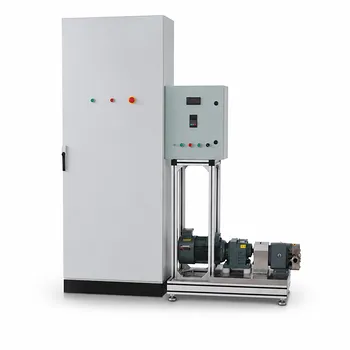
To effectively train students on batch process control, a pilot plant must be built on a robust, standardized foundation that mirrors real industrial practice. The core standard is IEC 61512 (ISA S88), which defines a hierarchical architecture separating physical equipment from the chemical recipes. The control strategy must seamlessly merge continuous regulatory controllers (for temperature, pressure, flow) with discrete sequential control, typically executed by a Programmable Logic Controller (PLC) that orchestrates recipe phases, valve sequencing, and data tracking.
A student-training pilot plant needs more than just working hardware—it requires a control system that clearly demonstrates the ISA S88 model, combines regulatory and sequence logic in a transparent way, and is designed with fundamental process rules that prevent confusion and unsafe operation. The best designs use a PLC to execute batch sequences, allow students to configure standard and custom control loops, and integrate real-time process analytical tools.
Anchoring the Plant in the ISA S88 Standard
The Hierarchical Model for Batch Thinking
The ISA S88 standard provides a structural hierarchy that is essential for teaching batch control because it decouples the equipment’s physical capabilities from the chemical recipe. This model moves from high-level scheduling down to individual device control. For a student, understanding this separation is as critical as learning to tune a PID loop—it is how modern pharmaceutical and chemical plants organize automation.
The hierarchy typically includes:
- Procedural control: The recipe, broken into procedures, unit procedures, operations, and phases.
- Physical model: The plant itself, divided into process cells, units, and equipment modules.
- Equipment control: The low-level actions (open valve, start motor) that a phase calls.
Why a PLC and Supervisory Layer Must Be Separate
In a training pilot plant, the PLC should handle the discrete sequential control of process phases—for example, opening an isolation valve, ramping a setpoint, and confirming a transfer is complete. The supervisory system (SCADA or DCS-type interface) then manages recipe parameters, schedules batches, and archives history. This separation lets students see the difference between real-time sequence execution and production management. Without this split, the educational value collapses into a black-box simulation.
Merging Regulatory and Sequential Control
The Role of the PLC as a Dual Executor
A single PLC must coordinate both continuous PID loops and the step-by-step logic of a recipe. For instance, during a reactor heating phase, the PLC may adjust the temperature controller’s setpoint while also starting an agitator and confirming that all drain valves are closed. This combination is what makes batch control more complex than continuous processing, and the pilot plant must expose both layers clearly. Students should be able to view the sequence flow and the live PID tuning in parallel.
Tracking Batch Data for Quality
Batch-specific data—such as reaction hold times, maximum temperatures, and dosing profiles—must be captured by the control system for each run. This historical record teaches students about critical quality attributes (CQAs) and how process variations influence the final product. The sequence logic itself should be designed to flag deviations, reinforcing the link between control and quality.
Control Loop Architectures for Hands-On Learning
Standard PID Building Blocks
The pilot plant software should provide pre-built PID algorithms for common loops: flow, liquid level, temperature, and pressure. Instructors must be able to quickly set up single-loop feedback control as a baseline. The educational value escalates when students can then configure more advanced structures.
Cascade, Feedforward, and Ratio Control
Teaching only single-loop control fails to prepare students for real industrial challenges. The plant should readily support cascade control—for example, regulating reactor jacket temperature based on an inner loop that reads the reactor’s internal temperature. Feedforward-feedback control should be demonstrable on streams where upstream disturbances can be measured. For dosing applications, ratio control (maintaining a flow rate proportion to another stream) is an invaluable exercise. These standard configurations should be accessible through the configuration software without forcing low-level coding.
Custom Control Logic for Advanced Learning
For advanced topics, a training pilot plant must allow users to write and download their own algorithms. Whether using graphical function blocks or a dedicated control programming language, students should be able to design custom control strategies—such as split-range heating/cooling or adaptive tuning—compile them, and test them on physical hardware. This capability bridges the gap between theory and industrial practice.
Design Rules That Prevent Misconceptions
The Single Control Valve Rule
On any process stream between unit operations, install only one control valve. Two valves with independent controllers on the same line create competing loops that fight each other, leading to instability and confusion. This rule is non-negotiable for a safe, educational environment where students are learning to associate a single signal with a single response.
Level Control and Valve Placement
Anywhere a gas-liquid or liquid-liquid interface must be maintained, use a level controller. In typical liquid discharge configurations (like the bottom of a distillation column), position the control valve on the pump’s discharge line—never the suction line. Correct hydraulic placement prevents pump cavitation and demonstrates sound engineering practice that is easy to teach but equally easy to get wrong.
Temperature and Material Balance Fundamentals
Temperature control should be achieved by modulating the flow rate of utility streams (steam, cooling water) or by using a bypass around a heat exchanger. The plant’s overall material balance is typically set by the flow regulator or ratio controller on the main feed stream. These rules embed fundamental process control principles into the plant’s physical design, letting students see the logic in the hardware before they ever write a line of code.
Integrating Process Analytical Technology (PAT)
From End-Product Testing to Real-Time Monitoring
A truly modern training pilot plant should include in-line sensors and automated data acquisition to demonstrate process analytical technology (PAT). Students can monitor reaction temperature, density, or pH in real time and learn how to program loops that respond to these signals. This shifts the quality paradigm from “test and release” to continuous process verification, mirroring the direction of regulated industries.
Using Pilot Plants to Establish Material Specifications
The same empirical control that maintains product quality despite raw material variability can be used in reverse. By systematically varying inputs and observing the required control actions, students learn how to establish raw material specifications. This is advanced process development thinking that turns a simple training reactor into a powerful R&D simulator.
Understanding the Trade-offs of Different Batch Operations
Pure Batch vs. Continuous vs. Fed-Batch
The operational mode you choose for the pilot plant creates different learning experiences—and each carries inherent trade-offs. Pure batch operation is the simplest to set up and teach, but it involves significant non-productive time (cleaning, charging, heating). This dead time can dilute a training session’s focus on control dynamics.
Continuous operation demonstrates steady-state kinetics and high productivity beautifully, but it demands extremely stable process conditions and introduces risks of contamination or drift that can derail a short student lab. Fed-batch operation (substrate addition over time) hits the educational sweet spot for advanced control. It is ideal for teaching how to regulate a critical parameter—such as glucose concentration to prevent unwanted byproduct formation—without overwhelming the student with start-up complexity. Choose fed-batch if your curriculum includes metabolic control or reaction dynamics; choose pure batch for foundational sequence logic.
Balancing Educational Complexity and Robustness
A pilot plant that tries to do everything becomes a maintenance burden. A design that crams in every possible sensor and custom algorithm can obscure the core concepts. The control system should start with a clean, well-documented standard configuration for the fundamental loops, then allow optional complexity for advanced modules. The goal is not a technology showcase, but a tool that makes the control strategy’s logic transparent.
Making the Right Choice for Your Training Goal
Your final control system architecture should be determined by what you need the students to learn. Use the following guidelines to align the plant’s design with your outcomes:
- If your primary focus is teaching batch sequencing and recipe management: Prioritize a PLC-based system that cleanly separates the procedural model from equipment control, strictly follows ISA S88 terminology, and requires students to write and debug recipe phases.
- If your primary focus is control loop tuning and stability: Ensure the software provides easy access to standard PID, cascade, and feedforward configurations, and includes a physical process that exhibits realistic dead time and non-linearity on which to practice.
- If your primary focus is modern quality-driven manufacturing: Integrate inline PAT sensors and data historians, and design experiments around how real-time parameter changes impact simulated critical quality attributes, using fed-batch operation as the primary vehicle.
- If your primary focus is safe, fundamental engineering practice: Apply the single-control-valve, level-control, and valve-placement rules rigorously; the plant’s physical design itself should reinforce hydraulics and material balance lessons without ambiguous or dangerous configurations.
A pilot plant that tightly couples a clear ISA S88 structure with accessible control loop configuration and sound design rules will transform batch process control from an abstract concept into a tangible, intuitive skill.
Summary Table:
| Aspect | Standard / Strategy | Educational Focus |
|---|---|---|
| Framework | ISA S88 Standard | Decouples physical hardware from chemical recipes for structured training |
| Control Execution | PLC & SCADA Separation | Teaches the difference between real-time sequence execution and batch management |
| Loop Architecture | Cascade, Feedforward, Ratio | Prepares students for advanced industrial control loop configuration and tuning |
| Physical Design | Single Control Valve Rule | Avoids competing loops to ensure safe operation and clear cause-effect learning |
| Advanced Tech | Process Analytical Technology (PAT) | Demonstrates real-time quality monitoring and continuous process verification |
Elevate Your Practical Engineering Education with LABPARK
Looking to bridge the gap between process control theory and real industrial practice?
LABPARK designs and delivers high-performance Educational and Vocational Unit Operations Pilot Plants across chemical engineering, bioprocess & biotech, and environmental & water treatment. Built for universities, research institutes, and enterprises, our systems feature robust ISA S88 compliance, industry-standard PLCs, and hands-on PID/SCADA configurations.
Help your students master batch control and process dynamics safely and effectively. Contact our technical experts today to find the perfect training solution for your lab!
Related Products
- Continuous Batch Extractive Distillation Educational Pilot Plant
- Multimodal Absorption and Desorption Pilot Plant for Unit Operations Training
- Multi Pump Fluid Transport Process Piping Unit Operations Training Pilot Plant
- Natural Product Extraction Unit Operations Training Pilot Plant
- Quantitative Dosing and Liquid Flow Control Educational Unit Operations Pilot Plant
People Also Ask
- Wilson vs. UNIQUAC: How to Choose the Right Thermodynamic Model for Your Pilot Plant
- How does the feed thermal state influence distillation pilot plant design and utility consumption?
- Why use non-ideal VLE calculations in distillation pilot plants? Ensure accurate scale-up & purity
- How to Configure a Distillation Pilot Plant? Key Steps for Multi-Mode Setup
- How to Integrate Spectroscopy in Distillation Pilot Plants for Advanced Process Control