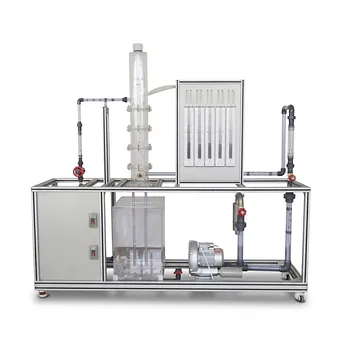
PHAs such as polyhydroxybutyrate (PHB) provide a practical model for designing and teaching sustainable polymer production in bioprocess pilot plants. Microorganisms accumulate PHB as an intracellular carbon and energy reserve, allowing pilot modules to demonstrate how fermentation conditions can direct cells toward biopolymer storage. The downstream process then connects cell disruption, polymer recovery, solvent handling, purification, and sheet formation into one integrated workflow.
PHB is valuable in pilot plants because it links microbial physiology, fermentation control, and polymer recovery in a single process. It demonstrates how biological production can replace or complement conventional routes while exposing the operational challenges that determine industrial feasibility.
Why PHB Fits Bioprocess Pilot Plant Training
It connects biology with process engineering
PHB production shows that a microorganism’s metabolism can be deliberately steered toward product accumulation. The polymer is not simply secreted into the fermentation broth; it is stored inside the cells, which makes the downstream recovery strategy an essential part of the process.
This creates a realistic pilot-scale problem: successful fermentation alone is not enough. The process must also recover a usable polymer efficiently and consistently.
It represents a biodegradable polymer platform
PHB belongs to the PHA family of biodegradable polyesters. Its biological origin and biodegradability make it a useful example when evaluating alternatives to persistent, fossil-derived plastics.
A pilot module can therefore examine sustainability as a complete production question, including feedstock use, fermentation performance, recovery requirements, solvent handling, and final material quality.
How the Fermentation Module Demonstrates PHB Synthesis
Nutrient limitation redirects cellular resources
PHB accumulation is commonly demonstrated by providing excess carbon while limiting nutrients such as nitrogen or phosphate. Under these conditions, cell growth becomes restricted while carbon continues to be available for storage polymer formation.
This teaches an important bioprocess principle: product formation may require conditions that differ from those that maximize biomass growth.
Process variables become measurable
A pilot plant can examine how carbon availability, nutrient ratios, cultivation time, aeration, agitation, temperature, and pH affect biomass and PHB accumulation. These variables help trainees distinguish between growing more cells and increasing the polymer content of those cells.
The resulting data can support mass balances, productivity calculations, and decisions about when to end the fermentation.
Scale changes the control problem
Conditions that work in a laboratory vessel may behave differently at pilot scale. Oxygen transfer, mixing, heat removal, foam formation, and feeding accuracy become more significant as equipment volume increases.
PHB fermentation therefore provides a manageable system for demonstrating how biological variability interacts with equipment design and operating strategy.
What the Downstream Module Teaches
Cell disruption is required for intracellular products
Because PHB is accumulated inside microbial cells, the harvested biomass must be disrupted before the polymer can be recovered. This introduces mechanical, chemical, or combined cell-disruption operations into the pilot workflow.
The module demonstrates why intracellular products often require more complex downstream processing than products released directly into the broth.
Extraction and solvent recovery affect feasibility
PHB extraction can be used to teach polymer recovery and purification, including the handling and recovery of process solvents where applicable. Solvent recovery is not merely an environmental consideration; it also influences material consumption, operating cost, safety, and process scalability.
A pilot plant makes these relationships visible because recovery equipment, containment, and operating procedures must be treated as part of the system rather than as laboratory afterthoughts.
Purification determines polymer quality
Residual cell material, contaminants, and processing residues can affect the appearance and performance of the recovered polymer. Purification operations therefore provide a direct lesson in how downstream choices influence product specifications.
The resulting PHB can be processed into clear biodegradable polymeric sheets, giving trainees a tangible way to evaluate the connection between process conditions and material quality.
Why PHB Supports Sustainable Polymer Development
It demonstrates a biological production route
PHB production uses microorganisms as the polymer-producing system. This allows a pilot module to explore how fermentation can generate a biodegradable material through controlled biological conversion of carbon.
The main sustainability lesson is not that PHB automatically eliminates environmental impacts. It is that the full process can be examined and improved using measurable engineering criteria.
It exposes the complete process burden
Producing a sustainable polymer requires more than selecting a biodegradable product. Carbon source preparation, cultivation, separation, purification, solvent management, energy consumption, and waste treatment all contribute to the process footprint.
PHB is useful precisely because its intracellular storage mechanism forces these upstream and downstream considerations into the same analysis.
It supports scale-up decisions
Pilot data can reveal whether a PHB process is sufficiently productive, controllable, recoverable, and repeatable for further development. It can also identify bottlenecks before larger investments are made.
In this role, the pilot plant is both a training environment and a process-development tool.
Understanding the Trade-offs
Biodegradability does not remove process complexity
PHB offers a biodegradable alternative, but its production still requires fermentation control and downstream recovery. Intracellular accumulation means that cell harvesting and disruption are unavoidable parts of the process.
A biodegradable product can therefore have demanding separation requirements.
Product accumulation may reduce growth performance
Nutrient stress can promote PHB storage, but stronger limitation may also reduce biomass formation or alter cell physiology. The optimum process must balance total biomass, PHB content, productivity, and recovery yield.
Maximizing one metric in isolation can produce a less effective overall process.
Solvent-based recovery requires careful assessment
Where solvents are used, the process must account for solvent safety, recovery efficiency, residual solvent, equipment compatibility, and emissions control. These requirements can offset some of the apparent simplicity of laboratory extraction.
Pilot modules should present solvent recovery as a core design and operations issue, not as a secondary cleanup step.
Laboratory clarity may not predict industrial economics
Producing clear PHB sheets is a useful demonstration of polymer quality, but visual clarity alone does not establish commercial viability. Cost, throughput, consistency, energy demand, feedstock availability, and end-of-life conditions also matter.
The pilot plant should use the sheet product as evidence of successful purification and processing, while evaluating feasibility with broader performance measures.
How to Apply This to Your Project
PHB is most valuable when the pilot module treats it as an integrated process rather than only as a fermentation product.
- If your primary focus is bioprocess training: Use PHB to teach the full sequence from nutrient-stress fermentation through cell disruption, extraction, solvent recovery, purification, and polymer forming.
- If your primary focus is fermentation optimization: Compare carbon excess with nitrogen or phosphate limitation to evaluate the balance between biomass growth and PHB accumulation.
- If your primary focus is downstream processing: Use PHB recovery to assess disruption efficiency, purification performance, solvent handling, yield, and polymer quality.
- If your primary focus is sustainable manufacturing: Evaluate the complete process, including feedstocks, energy use, solvent recovery, waste, and final biodegradability rather than treating biodegradability as the only criterion.
- If your primary focus is scale-up: Use pilot data to identify mixing, oxygen-transfer, recovery, and consistency constraints before considering larger production equipment.
PHAs such as PHB turn a pilot plant into a realistic demonstration of how biology, engineering, and sustainability must work together to produce a viable biodegradable polymer.
Summary Table:
| Process stage | What PHB demonstrates | Key evaluation factors |
|---|---|---|
| Fermentation | Nutrient limitation redirects carbon toward intracellular PHB storage | Carbon source, nitrogen or phosphate levels, pH, temperature, aeration, agitation, time |
| Scale-up control | Laboratory conditions may change at pilot scale | Oxygen transfer, mixing, heat removal, foam, feeding accuracy |
| Cell disruption | Intracellular PHB requires biomass processing before recovery | Disruption efficiency, energy use, polymer loss |
| Extraction and recovery | Solvent handling and recovery affect feasibility | Safety, recovery efficiency, emissions, equipment compatibility, cost |
| Purification | Downstream operations determine polymer quality | Contaminants, residues, purity, recovery yield |
| Polymer forming | PHB can be converted into clear biodegradable sheets | Appearance, consistency, material performance |
| Sustainability assessment | Biodegradability must be evaluated alongside process impacts | Feedstocks, energy, solvents, waste, throughput, end-of-life conditions |
Develop practical expertise in sustainable polymer production with LABPARK Educational and Vocational Unit Operations Pilot Plants. Our integrated systems help universities, research institutes, and enterprises study PHB and other bioprocesses from fermentation and nutrient control through cell disruption, extraction, solvent recovery, purification, and polymer forming. Generate meaningful pilot-scale data, train students and operators on real process challenges, identify scale-up bottlenecks, and evaluate productivity, recovery yield, material quality, safety, and environmental performance before larger investments. Contact LABPARK to discuss a pilot plant configured for your chemical engineering, bioprocess and biotech, or environmental and water treatment program.
Related Products
- Fixed-Bed Chemical Reaction and Gas Dust Tar Removal Unit Operations Pilot Plant
- Polymerization Granulation and Pellet Processing Educational Unit Operations Pilot Plant
- Bio-fermentation Ethanol Production Practical Training Unit Operations Pilot Plant
- Two Phase Flow Pattern Velocity Resistance Measurement Educational Pilot Plant
- High-Gravity Emulsification and Mass Transfer Educational Pilot Plant
People Also Ask
- When to transition from PID to adaptive control in pilot plants? Key process indicators.
- How do deviations in estimating latent heat impact pilot plant thermal systems? Avoid hardware mis-sizing.
- Why Compare Predicted and Experimental Excess Enthalpy? Key to Accurate Pilot Plant Scale-up
- How can pilot plants demonstrate a control strategy in a design space? Practical QbD implementation.
- Why Use PTFE & Hastelloy in Chemical Pilot Plants? Prevent Corrosion & Ensure Safety