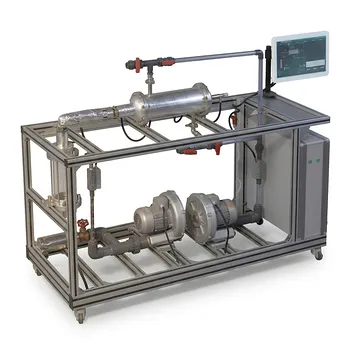
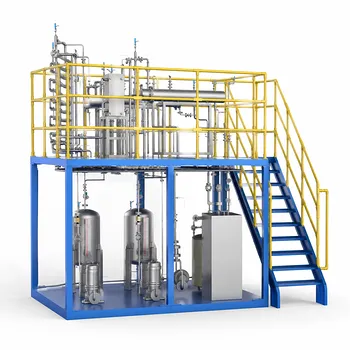
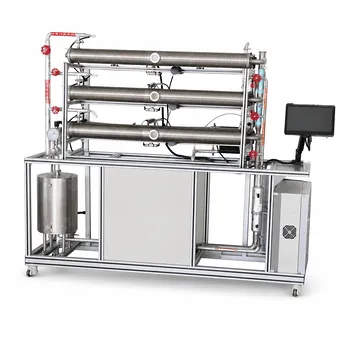
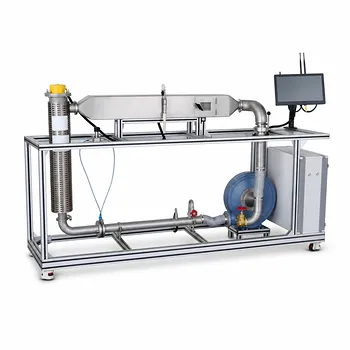
For immediate relief from high ambient temperatures, the three most direct mechanical modifications to a pilot plant’s air-cooled heat exchanger are adding extra tube rows, installing higher-capacity fans, and deploying an evaporative water spray pre-cooling system. Each of these approaches tackles the root cause—a smaller temperature driving force between the process fluid and the hotter air—by either increasing the heat transfer surface area, boosting the air flow rate, or artificially lowering the inlet air temperature. The selection depends on your tolerance for fouling, power consumption, and capital cost.
While ambient temperature is uncontrollable, you can restore cooling performance by increasing the exchanger’s UA (surface area × overall heat transfer coefficient) or by reducing the effective inlet air temperature. Each modification, however, introduces its own economic and operational trade-off: more surface area raises pressure drop, stronger fans consume more energy, and water sprays accelerate air-side fouling. A systematic evaluation of these options—often combined with intelligent fan control—is the difference between a quick fix and a sustainable, high-performance pilot plant.
Why High Ambient Temperatures Cripple Cooling Performance
The Vanishing Temperature Driving Force
An air-cooled heat exchanger relies on the temperature difference between the hot process fluid and the cooling air. That differential is captured by the logarithmic mean temperature difference (LMTD). As the ambient dry-bulb temperature climbs, the LMTD shrinks. This directly reduces the overall heat transferred Q for a given exchanger size.
The Domino Effect on Pilot Plant Operation
A diminished LMTD forces the hot fluid to exit at a higher temperature, potentially violating process safety or product quality limits. In a unit operations pilot plant, this manifests as unstable column pressures, off-spec product streams, or a reactor temperature runaway. The only way to restore the target cooling duty is to increase the effective UA or to lower the air temperature through engineered intervention.
Mechanical Modifications to Increase Cooling Capacity
Adding Tube Rows: More Surface, Higher Pressure Drop
This is the most fundamental way to raise UA. By integrating extra tube rows, you present the cooling air with a larger finned surface. In pilot-plant terms, this is often a bolt-on bundle extension.
The catch is air-side pressure drop. Each additional row increases the static pressure the fan must overcome. That relationship is quantified by DPAT = N_rows × (DPA / DR), where DR corrects air density for elevation and temperature. If you do not also upgrade the fan, the air flow rate will drop, partially negating the benefit of the new surface.
Installing More Powerful Fans: Moving More Air at a Cost
A higher-capacity fan directly increases the air mass flow rate WA, which raises the air-side heat transfer coefficient and provides more “sink” capacity. Even a modest increase in fan speed can significantly offset a reduced LMTD because Q is roughly proportional to the product of airflow and temperature rise.
This option, however, is rarely as simple as swapping a motor. The existing fan housing, electrical supply, and supporting structure must handle the higher torque and power draw. In a pilot plant, this is a realistic and measurable modification: students can record fan power consumption and compare it against the actual cooling gain to compute the energy efficiency.
Implementing an External Water Spray System: Evaporative Pre-Cooling
Spraying a fine water mist into the incoming air stream uses evaporative cooling to approach the ambient wet-bulb temperature, not just the dry-bulb. Because the wet-bulb can be 5–15°C lower in arid climates, this can dramatically increase the LMTD.
The method is simple to rig on a pilot skid with a small pump and atomizing nozzles. However, it comes with a significant operational penalty: over time, the water’s dissolved solids precipitate as scale on the finned surfaces, and dirt accumulates to form a fouling layer. This fouling increases the air-side thermal resistance and the pressure drop, slowly degrading the very performance you sought to boost.
Control Strategy Upgrades That Maximize Air Flow
Variable Frequency Drive (VFD) Motors: Precision and Efficiency
A VFD-based motor lets you continuously adjust fan speed to exactly match the process demand. Under high ambient conditions, the VFD can be commanded to run at 100%—or even a short-term overload—while reverting to lower speeds at night or during cooler seasons.
From a pilot-plant educational perspective, VFD control demonstrates the best energy efficiency because fan power varies with the cube of the speed. Its higher initial cost is a teachable trade-off against manual louver control or simple on/off cycling.
Variable-Pitch Fan Blades: Mechanical Airflow Tuning
Instead of changing the motor speed, variable-pitch fans alter the blade angle to adjust the airflow rate and direction. In a pilot plant suffering periodic heat waves, you can manually or automatically increase the pitch to push more air through the bundle.
This approach requires less complex electronics than a VFD but introduces moving mechanical parts in the hub that need maintenance. It is a reliable way to “overclock” an existing fan without replacing the motor, so long as the motor has sufficient power reserve to handle the increased aerodynamic load.
Louvers: The Low-Cost, Low-Efficiency Option
Automated or manual louvers restrict the air path to control outlet temperature. While they can redirect flow, they do not reduce fan power consumption and, critically, they cannot increase the maximum airflow capacity. During extreme heat, wide-open louvers simply expose the same limited fan capacity—they offer no supplemental boost. Their primary use is winterization or part-load trimming, not debottlenecking a heat wave.
The Psychrometric Ceiling on Pre-Cooling
Dry-Bulb vs. Wet-Bulb: The Real Limit
A water spray system is governed by psychrometrics. The coldest possible air temperature after spraying is the wet-bulb temperature, which depends on both the dry-bulb reading and the relative humidity. On a muggy day with high humidity, evaporative cooling nearly stalls because the air is already saturated.
In the pilot plant, this is a powerful lesson: the cooling gain from the spray is not fixed but highly climate-dependent. You can have students plot the local weather data on a psychrometric chart to predict when the spray will be effective and when it merely wastes water.
Practical Operational Ceiling
Even under ideal dry conditions, the actual pre-cooled air temperature will be at least 2.8°C (5°F) above the wet-bulb due to incomplete evaporation and heat gain in the spray zone. This gap is a real limit, not a theoretical curiosity, and it must be factored into any design calculation that promises a certain fluid outlet temperature.
Understanding the Trade-offs
Choosing a modification without weighing its secondary effects can turn a heat transfer problem into a maintenance nightmare or an energy budget disaster.
- Added tube rows versus fan power: More rows raise the required fan static pressure, demanding a larger motor. If you add rows without a fan upgrade, the air flow rate drops, and the UA improvement may be far less than expected.
- Water spray versus long-term reliability: The immediate cooling boost is undeniable, but the progressive air-side fouling demands a rigorous cleaning schedule. In a teaching pilot plant, this means additional operating cost and downtime for chemical or high-pressure washing.
- VFD versus capital cost: A VFD delivers the best part-load efficiency and control precision, but the upfront electronics cost can be difficult to justify on a small-scale educational rig unless energy savings over several years are factored in.
- Variable-pitch fans versus mechanical complexity: They avoid complex power electronics, but the hub mechanisms are susceptible to sticking, especially in a dusty environment, and still need a motor capable of higher output.
Making the Right Choice for Your Pilot Plant Goal
Start by defining whether you prioritize maximum experimental flexibility, minimal operating cost, or the lowest capital outlay. The optimal set of modifications follows directly from that goal.
- If your primary focus is maximum cooling capacity at any ambient condition: Combine all three mechanical modifications—add tube rows, upgrade to a high-static-pressure fan with a VFD, and install a water spray system. Accept the higher power bills and scheduled descaling as part of the envelope.
- If your primary focus is energy efficiency and teaching optimal control: Retrofit only the fan system with a VFD-controlled high-efficiency motor, and leave the bundle size unchanged. Use the VFD’s ability to run at exactly the required speed to demonstrate how to minimize fan power while still meeting the process temperature target.
- If your primary focus is a low-cost, rugged retrofit: Install a larger fixed-speed fan or add variable-pitch blades to the existing motor. Avoid water spray unless your climate is consistently arid and you can commit to a frequent cleaning protocol. Do not rely on louvers as a capacity solution; use them only for part-load trimming.
- If your primary focus is demonstrating real-world industrial constraints: Implement the water spray system alongside a rigorous fouling monitoring experiment. Have students measure air-side pressure drop and outlet process temperature degradation over time to quantify the scaling impact and to calculate the true total cost of ownership.
Every modification to an air-cooled pilot-plant exchanger is a lesson in balancing thermodynamics, mechanical limits, and long-term operability—choose the combination that best teaches those principles while keeping your process in control.
Summary Table:
| Modification | Primary Benefit | Key Trade-Off / Limit |
|---|---|---|
| Adding Tube Rows | Increases heat transfer surface area (UA) | Higher air-side pressure drop |
| Higher-Capacity Fans | Boosts air mass flow rate and heat transfer | Increased power draw and mechanical stress |
| Water Spray Pre-cooling | Lowers inlet air temperature via evaporation | Causes fin fouling, scaling, and water consumption |
| VFD Motor Control | Matches airflow to demand with high efficiency | Higher upfront electronics and capital cost |
Elevate Your Engineering Lab with LABPARK
Are you looking to enhance hands-on training and research? LABPARK provides state-of-the-art Educational and Vocational Unit Operations Pilot Plants in chemical engineering, bioprocess & biotech, and environmental & water treatment.
Whether you are upgrading heat exchangers or designing a complete pilot-scale facility, our systems are built to help universities, research institutes, and enterprises bridge the gap between theory and industrial practice.
Contact LABPARK today to discuss your laboratory requirements and request a customized quote!
Related Products
- Shell and Tube Heat Exchanger Heat Transfer Coefficient Determination Educational Pilot Plant
- Comprehensive Multi-Modal Heat Transfer Unit Operations Pilot Plant for Engineering Training
- Dual Mode Heat Transfer Pilot Plant for Unit Operations Training
- Three-Tube Heat Transfer Educational Pilot Plant for Unit Operations Training
- Circulating Wind Tunnel Drying and Convective Heat Transfer Coefficient Determination Educational Pilot Plant
People Also Ask
- Why Apply LMTD Correction in Shell-and-Tube Pilot Plants & How to Determine It
- How is the fouling factor (Rd) evaluated? Key Pilot Plant Insights for Students
- How is fouling factor demonstrated using shell and tube pilot plants? Practical Lab Guide
- Why is simulating and calculating fouling factors crucial when operating educational heat exchanger pilot plants?
- How do tube pitches affect equivalent shell diameter (De)? Math & pilot plant impact explained.