Microbial contamination and reagent waste are two silent killers of long-term bioprocess pilot plant runs. To prevent contamination in automated flow analysis, flush the tubing with a 3% mucasol solution immediately after every sample. To control reagent waste, integrate programmed washing cycles between measurements and reuse the solid-phase affinity matrix—such as immobilized Protein G—by implementing controlled elution and re-equilibration cycles. These three measures together safeguard data integrity and operational economy during cultivations that can exceed 140 hours.
The core strategy for reliable long-term monitoring is a disciplined cleaning-and-cycling protocol. A post-sample chemical flush with 3% mucasol stops biofilm in its tracks, while intelligent reduction of rinse steps and repeated use of affinity cartridges directly cut reagent consumption and consumable costs—all without compromising sterility or measurement accuracy.
Why Automated Flow Systems Become Vulnerable in Long-Term Runs
Pilot plant bioprocess runs that stretch past 100 hours create a perfect storm for microbial growth and reagent waste. The continuous liquid path of a flow injection or automated sampling system can turn into a protected habitat if not managed correctly.
The 140-Hour Threshold: A Turning Point
Long cultivation runs easily exceed 140 hours. At that timescale, even minor lapses in cleanliness or flow control compound, risking both biological contamination and uneconomical reagent burn rates.
Biofilm Formation and Data Drift
Nutrient-rich sample remnants inside tubing fuel rapid microbial growth. A thin biofilm can form and shed cells into subsequent samples, distorting analyte measurements and potentially back-contaminating the bioreactor itself.
Reagent Waste as a Hidden Cost Driver
Automated systems often run continuous flows of costly reagents, washing buffers, or regeneration solutions. Without deliberate programming, large volumes are discarded between samples, silently eroding the pilot plant’s budget.
The First Line of Defense: Post-Sample Chemical Flushing
Stopping contamination starts with what happens the moment a sample has been injected. A rapid, targeted chemical flush is far more effective than passive rinsing.
Why a 3% Mucasol Solution is the Standard
A 3% mucasol solution acts as a potent cleaning agent that denatures proteins and disrupts microbial cells. It is aggressive enough to strip nascent biofilms yet, at this concentration, remains compatible with the typical polymer tubing used in flow analysis systems.
Timing is Everything: Flush Immediately After Every Sample
The flush must be triggered right after each sample has passed the detector. Delaying even by a few minutes allows microbial adhesion to begin. Integrating this as an automated step in the sequence removes operator variability and guarantees consistency over the entire 140+ hour run.
Ensuring the Entire Flow Path is Treated
The washing step must reach every segment from the autosampler needle to the flow injection manifold. This means the flush volume and contact time must be validated against the system’s total internal dead volume, leaving no stagnant corners untreated.
Smart Cycle Design to Slash Reagent Consumption
Microbial control should not come at the cost of excessive reagent use. The system’s method sequence itself can be engineered to minimize waste.
Programmed Washing Cycles Between Measurements
Instead of running a continuous flow of buffer or cleaning solution, insert precisely timed washing cycles that activate only when needed. A short cleaning pulse between two consecutive samples can slash reagent usage by up to 50% compared to a perpetual flow setup.
Matching Flush Volumes to Tubing Dead Volumes
Over-flushing is a common source of waste. Program the wash volume to slightly exceed the internal volume of the lines, without large safety margins. This fine-tuning is possible because automated systems deliver reproducible, computer-controlled volumes.
Automated Rinse Protocols vs. Continuous Flow
Switch from a default “keep flowing” mentality to a “stop-and-rinse” protocol. Valves and pumps can be programmed to stop flow entirely between samples, then execute a rapid rinse sequence. This approach dramatically reduces consumption of expensive mobile phases and regeneration buffers.
Extending the Life of Solid-Phase Affinity Matrices
One of the largest line items in automated bioprocess monitoring is the consumable affinity cartridge. Reusing these matrices is a powerful cost lever.
Controlled Elution and Re-equilibration Cycles
A solid-phase affinity matrix, such as immobilized Protein G, can be regenerated multiple times. After each sample binding step, a precise elution pulse strips away the captured target, followed by a re-equilibration cycle that prepares the cartridge for the next sample—all without disconnecting the flow path.
Immobilized Protein G: A Prime Example
Protein G cartridges used for antibody quantification are expensive but remarkably robust when handled correctly. By automating elution and re-equilibration, a single cartridge can serve hundreds of samples, reducing per-sample consumable costs to a fraction of single-use approaches.
Maintaining Sterility Across Reuse Cycles
The same mucasol flush that protects the tubing also preserves the cartridge inlet and outlet. As long as the elution and wash buffers are sterile, the matrix itself remains contamination-free, because the cleaning agent passes through the entire flow path, including the cartridge.
Understanding the Trade-offs and Pitfalls
These measures are powerful, but they must be implemented with a clear-eyed view of their limitations.
Chemical Aggressiveness vs. Material Compatibility
A 3% mucasol solution is effective but not universally benign. Prolonged exposure can degrade some peristaltic pump tubing or seals. Validate the cleaning cycle duration and frequency for all wetted materials before locking in the protocol.
Risk of Carryover with Matrix Reuse
Reusing an affinity cartridge demands absolute confidence in the elution efficiency. Incomplete stripping of the previous sample will cause carryover, corrupting the next measurement. Every reuse cycle must be validated with blank runs to confirm a return to baseline.
The Hidden Cost of Poor Cycle Programming
An overly aggressive washing schedule intended to prevent contamination can paradoxically increase reagent waste. A cycle that flushes too frequently or for too long erases the savings. Design cycles based on actual risk data, not blanket assumptions.
Making the Right Choice for Your Pilot Plant Operations
Your specific operational priorities will determine how you weight these measures. Use the guide below to tailor the strategy.
- If your primary focus is preventing contamination-driven run failures: Make the 3% mucasol post-sample flush your non-negotiable standard, and ensure the flush volume covers the complete flow path without fail.
- If your primary focus is minimizing reagent costs: Invest time in optimizing programmed washing cycles—stop constant flow, validate minimal flush volumes, and sequence rinses only when needed.
- If your primary focus is extending the life of expensive affinity cartridges: Implement automated elution and re-equilibration protocols, and validate full elution recovery to safely reuse cartridges across the entire long-term run.
Mastering the combination of chemical discipline and intelligent automation turns a long-duration pilot plant run from a contamination and waste liability into a smooth, cost-efficient source of trustworthy data.
Summary Table:
| Measure | Key Action | Primary Benefit |
|---|---|---|
| Post-Sample Flush | 3% mucasol wash immediately after each sample | Denatures proteins, stops biofilm, and protects tubing |
| Programmed Washing | Switch to stop-and-rinse cycles matching dead volumes | Reduces reagent and buffer consumption by up to 50% |
| Matrix Regeneration | Automate elution/re-equilibration of affinity cartridges | Extends consumable life (e.g., Protein G) across long runs |
Optimize Your Bioprocess Scale-Up with LABPARK
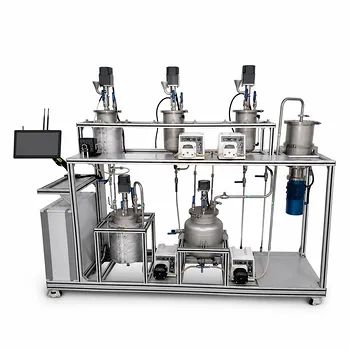
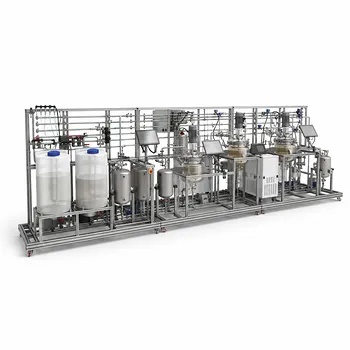
Maintaining sterility and controlling costs in long-term runs requires robust equipment and smart engineering. LABPARK provides premium Educational and Vocational Unit Operations Pilot Plants in chemical engineering, bioprocess & biotech, and environmental & water treatment. Tailored for universities, research institutes, and enterprises, our systems ensure maximum reliability and operational economy.
Contact LABPARK today to find the perfect pilot plant solution for your facility!
Related Products
- Bio-fermentation Ethanol Production Practical Training Unit Operations Pilot Plant
- Natural Product Extraction Unit Operations Training Pilot Plant
- Continuous Batch Extractive Distillation Educational Pilot Plant
- Electrolyte Distillation Purification and Formulation Educational Pilot Plant
- High-Gravity Emulsification and Mass Transfer Educational Pilot Plant
People Also Ask
- Why Use PTFE & Hastelloy in Chemical Pilot Plants? Prevent Corrosion & Ensure Safety
- Why Compare Predicted and Experimental Excess Enthalpy? Key to Accurate Pilot Plant Scale-up
- Why is the chemical plant startup schedule crucial? De-risk scale-up with pilot plants.
- When to transition from PID to adaptive control in pilot plants? Key process indicators.
- Why must batch and fed-batch fermentation pilot plants be designed to accommodate changing rheological conditions?