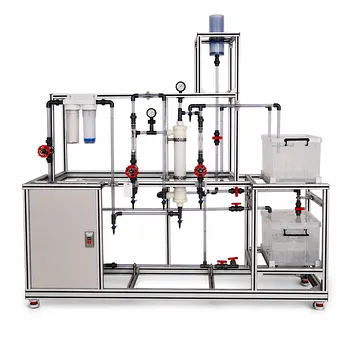
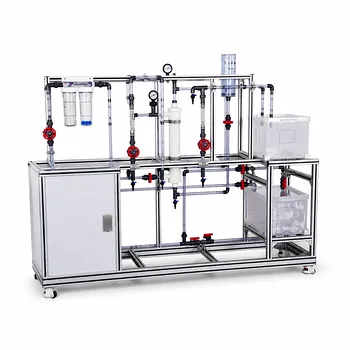
The low-fouling nature of cellulose ultrafiltration membranes in bioprocess pilot plants starts with the polymer itself: its regular, hydroxyl-rich structure creates a tightly hydrogen-bonded, highly hydrophilic surface that resists foulant adsorption.
This intrinsic property directly addresses the greatest operational hurdle in biomolecule separations—membrane fouling—by minimizing the interactions that cause proteins and other macromolecules to stick and form a gel layer. For pilot-scale work, a composite design combining a cellulose coating on a mechanically robust PVDF support delivers both the low-fouling chemistry and the durability required to test and validate scalable processes.
Cellulose membranes are uniquely suited for low-fouling bioprocess separations because their abundant hydroxyl groups and strong hydrogen bonding confer exceptional hydrophilicity and chemical stability. This creates a surface that naturally repels protein adsorption and withstands the cleaning protocols essential in pilot plant environments, making them a reliable tool for teaching, research, and process development.
The Chemical Foundation of Low Fouling
The Role of Hydrophilicity in Fouling Resistance
Fouling in ultrafiltration is largely driven by the tendency of hydrophobic patches on proteins to adsorb onto membrane surfaces.
Cellulose, with its dense array of hydroxyl (–OH) groups, strongly binds water molecules through hydrogen bonds.
This forms a stable, dynamic hydration layer right at the membrane surface. The bound water acts as a physical and energetic barrier, making it thermodynamically unfavorable for proteins to displace the water and make direct contact.
The result is a dramatically reduced rate of solute adsorption and pore blocking during concentration, fractionation, or diafiltration runs.
Chemical and Structural Stability Under Process Conditions
The hydroxyl groups don’t just attract water—they also form intermolecular hydrogen bonds that give cellulose a rigid, semi-crystalline structure.
This makes the membrane practically insoluble in most common solvents, providing robust stability in both aqueous buffers and some organic media used in downstream processing.
A chemically stable surface is critical for low-fouling operation in a pilot plant because it prevents the surface degradation and roughening that would otherwise create more sites for foulants to anchor.
Why the Composite Membrane Design Matters
Pure cellulose membranes lack the mechanical strength to withstand the pressure and cross-flow velocities of a pilot system.
The practical solution is a composite membrane: a thin, defect-free cellulose layer cast on a porous polyvinylidene fluoride (PVDF) support.
This architecture leverages the PVDF substructure for dimensional stability and burst strength, while the cellulose top layer provides the low-fouling, highly stable active surface. For researchers optimizing a bioprocess, this means you can test realistic hydrodynamic conditions without compromising the anti-fouling chemistry.
How This Translates to Pilot Plant Performance
Controlling Concentration Polarization and Gel Layer Formation
In any UF process, solutes accumulate at the membrane surface, creating a boundary layer where concentration can exceed the bulk solution by an order of magnitude.
If this surface concentration reaches a critical gel concentration, a viscous, gel-like layer forms that sharply limits permeate flux.
Cellulose membranes mitigate this process from two angles. First, the hydration layer reduces the initial protein adsorption that seeds the gel layer. Second, their chemical resilience allows you to operate with higher cross-flow velocities to sweep the surface clean, without risking structural damage.
Compatibility with Aggressive Cleaning Regimes
Pilot plants are used to prove economic viability, which necessitates repeated cycles of use and cleaning.
Effective cleaning often involves acids, bases, surfactants, or oxidants—chemicals that can degrade many polymeric membranes.
Cellulose’s strong hydrogen-bond network and solvent resistance give it a wide chemical compatibility window. You can implement robust Clean-in-Place (CIP) protocols using agents that effectively remove adsorbed proteins without rapidly deteriorating the membrane, maintaining low-fouling performance over many cycles.
Demonstrating Scalable Operating Envelopes
A key purpose of a pilot plant is to find the limits of achievable concentration.
As feed viscosity and osmotic pressure rise, the maximum concentration factor is often dictated by the point where the gel layer becomes unmanageable.
Because cellulose membranes stay “cleaner” inherently, they allow you to deconvolve the physics of the process from the artifacts of rapid membrane fouling. The observed flux and retention are more representative of the system’s true hydrodynamic and thermodynamic constraints, leading to more accurate scale-up predictions.
Understanding the Trade-offs and Limitations
Mechanical and Physical Constraints
Without a support layer, cellulose is brittle and prone to swelling, making pure cellulose membranes unsuitable for the pressures and shears of a typical cross-flow module.
The composite design solves this, but it introduces a cost variance and a potential for delamination under extreme back-pressure or thermal cycling. Always match the composite’s specifications to your expected operating pressures and chemical soaks.
Sensitivity to Biological and Chemical Attack
While chemically resistant to many solvents, cellulose is a natural polymer and can be degraded by cellulolytic enzymes if such activity is present in the feed stream.
This makes cellulose membranes a poor choice for processes involving cellulases or contaminated, unpasteurized feeds. In standard bioprocess streams (e.g., monoclonal antibodies, recombinant proteins), this is rarely an issue, but it must be considered in your risk assessment.
Cleaning Agent Compatibility Nuances
Though generally robust, strong oxidizing agents like concentrated hydrogen peroxide or hypochlorite at elevated temperatures can cleave the cellulose polymer backbone over time.
Always consult the manufacturer’s chemical compatibility guide and design your CIP protocol to stay within the safe pH, temperature, and concentration window. A slightly less aggressive clean with adequate rinsing often yields a longer campaign life.
Making the Right Choice for Your Pilot Plant Study
The selection of a cellulose-based membrane should align with the specific goals of your pilot trial. Use the following guide to direct your decision.
- If your primary focus is minimizing protein-product fouling and maximizing yield recovery: A composite cellulose membrane is the strongest candidate. Its hydrophilic, low-adsorption surface keeps more product in the retentate or permeate stream and less stuck inside the module.
- If your primary focus is modeling and scaling up a high-shear, high-pressure process: Choose a PVDF/cellulose composite and verify its pressure rating. It gives you the low-fouling benefit with the mechanical integrity needed to push cross-flow limits and generate reliable scale-up data.
- If your primary focus is economic longevity through aggressive CIP cycles: Validate the specific membrane against your planned cleaning agents. Cellulose composites generally tolerate acids and bases well, but testing for oxidant compatibility will define your maximum cleaning frequency.
- If your primary focus is a broad-spectrum evaluation including cellulase-containing streams: Cellulose is contraindicated. Consider a fully synthetic, hydrophilic membrane (like modified polyethersulfone) as a safer alternative for that particular bioprocess.
Understanding the molecular-level advantage of cellulose allows you to turn a low-fouling material into a strategic pilot-plant tool, ensuring that the separation you develop is not just efficient at the bench, but truly ready for the manufacturing floor.
Summary Table:
| Feature | Practical Benefit | Key Limitation |
|---|---|---|
| Hydrophilic Hydroxyl Surface | Prevents protein adsorption and gel layer formation | Susceptible to degradation by cellulolytic enzymes |
| Composite Design (PVDF Support) | Delivers high physical strength and durability under pressure | Risk of delamination under extreme thermal cycling |
| Strong Hydrogen Bonding | High chemical stability and organic solvent resistance | Sensitive to strong oxidants at elevated temperatures |
Are you looking to scale up your separation processes with reliable, low-fouling pilot systems? LABPARK provides state-of-the-art Educational and Vocational Unit Operations Pilot Plants in chemical engineering, bioprocess & biotech, and environmental & water treatment. Designed specifically for universities, research institutes, and enterprises, our systems offer the durability and precision needed to validate scalable processes. Contact us today to discuss your pilot plant requirements!
Related Products
- Ultrafiltration Membrane Separation Educational Pilot Plant
- Multifunctional Membrane Separation Educational Pilot Plant with Ultrafiltration, Nanofiltration, Reverse Osmosis
- Hollow Fiber Ultrafiltration Membrane Separation Educational Pilot Plant
- Multi-Functional Membrane Separation Educational Pilot Plant for Unit Operations Lab
People Also Ask
- Pervaporation vs. Vapor Permeation: Handling Suspended Solids in Membrane Pilot Plants
- How do PEI, PVDF, and PSU membranes compare in pilot plants? Find the best fit.
- How do membrane pilot plants demonstrate synthetic vs biological membrane advantages?
- Why Use a Membrane Separation Pilot Plant vs. Lab Testing? Avoid Costly Scale-Up Failures
- Isotropic vs. Anisotropic Membranes: How to Choose the Best Pilot Plant Modules