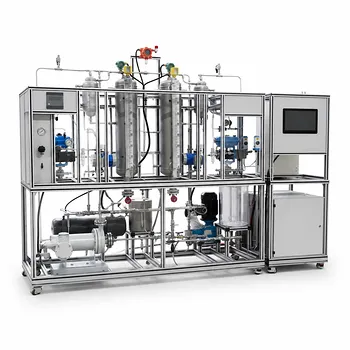
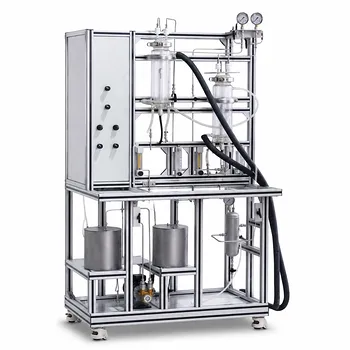
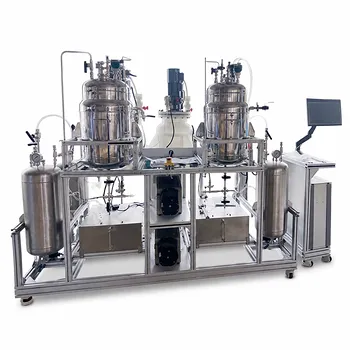
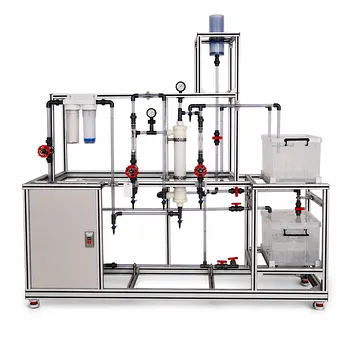
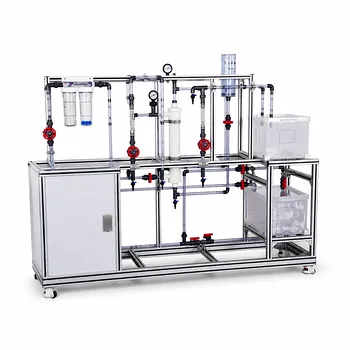
Electrodialysis membranes must satisfy three non-negotiable properties: high ion selectivity, resistance to swelling, and robust mechanical strength. These membranes are the functional core of environmental pilot plants that turn brackish water into potable supply or recover valuable organic acids and amino acids from wastewater. In a well‑designed unit‑operations lab, students and researchers use such plants to quantify ion migration, current efficiency, and membrane fouling under realistic flow and voltage conditions.
The foundation of a successful electrodialysis pilot plant is a membrane that combines precise charge‑based separation, dimensional stability when wet, and the physical endurance to survive repeated cycles. Integrating these materials into a working stack transforms textbook electrochemistry into hands‑on water treatment and resource‑recovery demonstration.
Essential Membrane Properties for Reliable Electrodialysis
High Permselectivity – The Heart of Ion Transport
An electrodialysis membrane must discriminate strongly between cations and anions. This selectivity arises from fixed charged groups embedded in the polymer matrix, which allow only ions of opposite charge to migrate while repelling co‑ions.
In practice, selectivity is quantified by ion transference numbers – the fraction of current carried by a specific ion. A high transference number for the target ion (close to 1.0) means the membrane efficiently moves that ion while minimizing leakage of the opposite species. This property is fundamental to achieving clean separation of salts from water and to teaching the connection between electrochemical potential and mass flow.
Swelling Resistance – Maintaining Dimensional Integrity
Membranes must absorb a controlled amount of water to keep ionic groups mobile, but excessive swelling destroys the polymer structure. Moderate, stable swelling – often called solubility resistance – ensures the membrane stays pliable without losing its fixed charges.
The hydration is driven by the water‑loving nature of the fixed ions and their counter‑ions. Although small ionic‑form changes have little effect, letting a membrane dry out completely is catastrophic: cracks form, conductivity plummets, and the carefully engineered selectivity is permanently lost. That is why proper wet‑storage protocols are as critical in a teaching pilot plant as the membranes themselves.
High Mechanical Strength – Enduring Real‑World Operation
Pilot plants rarely treat pristine solutions. Strong membranes resist tearing, abrasion, and the pressure differentials caused by pumping and fouling layers. In a stack that may contain dozens of alternating membranes, any weakness can lead to punctures that short‑circuit the separation (internal leak of concentrate into diluate).
Mechanical stability also permits the use of turbulence‑promoting spacers that thin the diffusion boundary layer. These spacers improve mass transfer but exert local stresses on the membrane surface, so only a robust material can balance the benefits of better hydrodynamics against the risk of physical damage.
Integrating Electrodialysis into Environmental Pilot Plants
From an Electrical Stack to Clean Water
An electrodialysis pilot plant is built around a stack of alternating cation‑ and anion‑exchange membranes placed between an anode and a cathode. When a direct‑current electric field is applied, cations move toward the cathode and anions toward the anode, creating alternating compartments of concentrated brine and desalinated water.
For environmental training, the simplest demonstration is brackish water desalination. Students set concentrate and diluate flow rates, adjust voltage, and watch the conductivity of the product stream drop. This live feedback transforms abstract ion‑migration theory into a tangible “before‑and‑after” measurement of water quality.
Real‑Time Monitoring for Deeper Learning
Integration isn’t just hardware – it’s the ability to track key performance indicators. Operators measure applied DC voltage and current to calculate power consumption, while monitoring conductivity in both streams to determine salt removal efficiency. These data let students evaluate current efficiency – the fraction of electrical current that actually moves target ions.
More advanced investigations target the limiting current density ($i_{lim}$), the point at which ion concentration at the membrane surface drops to zero. By ramping current until a sharp rise in stack resistance is observed, trainees identify the onset of concentration polarization – a lesson that directly links fundamental transport phenomena to plant limits.
Probing Mass Transfer and Energy Economics
Pilot‑plant curricula often include measurement of specific membrane and solution resistances ($\chi_m$, $\chi$). These values control the voltage drop across the stack and therefore the energy cost of desalination. Combining them with spacer‑factor geometries ($K_s$, chamber thickness $d_0$) shows how turbulence promotion can raise $i_{lim}$ while keeping pumping energy within an acceptable envelope. This trade‑off between electrical and hydraulic energy is a core unit‑operations insight.
Beyond Desalination – Resource Recovery with Bipolar Membranes
In a more specialized configuration, bipolar membranes are sandwiched between conventional ion‑exchange membranes to split water into H⁺ and OH⁻. When a salt solution is fed, the hydroxide recombines with cations to form a base, while the protons form an acid. This mechanism allows a pilot plant to generate pure organic acids or amino acid concentrates from fermentation broths without adding external chemicals, demonstrating a zero‑chemical recovery loop. The water‑splitting interface, often catalyzed by metal groups, operates at an exceptionally low potential drop (≈0.8 V), making the process energy‑competitive for teaching sustainable chemical production.
Understanding the Trade‑offs and Operational Pitfalls
The Limiting Current Danger Zone
Pushing current beyond $i_{lim}$ triggers water splitting at the membrane surface. The resulting H⁺ and OH⁻ ions not only waste energy but also shift local pH, leading to precipitation of hardness‑scale (CaCO₃, Mg(OH)₂) on the concentrate side. In a pilot plant, students learn to identify this point by a sudden increase in stack voltage or by monitoring pH changes, then apply spacer‑enhanced hydrodynamics to postpone the limit.
Fouling and Scaling – The Inevitable Performance Drain
Real wastewater brings organic colloids, proteins, and multivalent ions that deposit on the membrane surface, raising resistance and reducing selectivity. This fouling can mask true membrane properties and confound measurements of current efficiency. Pilot‑plant protocols therefore incorporate cleaning‑in‑place cycles and long‑term monitoring of pressure drop to teach operators that membrane performance is always a dynamic balance between separation and surface degradation.
Never Let a Membrane Dry Out
A damage mechanism unique to ion‑exchange membranes is embrittlement upon dehydration. When the bound water leaves the polymer network, the structure collapses, creating micro‑cracks that permanently destroy selectivity. Educational plants must enforce strict wet‑storage routines – membranes kept in sealed bags with preservatives – because the same physical integrity that allows high pressures and spacers is lost the moment a membrane dries.
Applying Electro‑dialysis Knowledge in Your Pilot Plant
Your objective determines which membrane attributes and operational parameters deserve the closest attention.
- If your primary focus is demonstrating basic desalination: Choose membranes with proven high permselectivity and dimensional stability. Keep the exercises centered on conductivity drop, current efficiency, and the immediate link between voltage and salt removal.
- If your primary focus is resource recovery or acid/base production: Integrate bipolar membrane stacks and emphasize swelling resistance under varying ionic forms. Have students quantify the acid concentration output relative to energy input, using the low water‑splitting potential as a benchmark.
- If your primary focus is training operators for industrial troubleshooting: Build hands‑on sessions around identifying the limiting current density, optimizing spacer selection, and executing systematic fouling‑clean‑and‑store protocols to preserve membrane lifetime.
Master these membrane‑driven relationships, and you transform a bench‑top stack of polymers into a powerful teaching tool that confronts real environmental separation challenges head‑on.
Summary Table:
| Key Membrane Property | Primary Function | Operational Impact in Pilot Plants |
|---|---|---|
| High Permselectivity | Discriminates between cations & anions via fixed charges | Ensures high salt removal and current efficiency. |
| Swelling Resistance | Maintains dimensional integrity when wet | Prevents cracking and permanent loss of selectivity. |
| Mechanical Strength | Resists tearing, abrasion, and pressure differences | Allows turbulence spacers and prevents internal leaks. |
Bring Hands-On Separation Technology to Your Institution
Are you looking to bridge the gap between electrochemical theory and practical engineering? LABPARK provides premium Educational and Vocational Unit Operations Pilot Plants in chemical engineering, bioprocess & biotech, and environmental & water treatment.
Designed specifically for universities, research institutes, and enterprises, our pilot systems empower students and researchers to master electrodialysis, water purification, and resource recovery with industry-grade equipment.
Equip your laboratory with the tools to train tomorrow's environmental experts—contact us today to discuss your custom pilot plant configuration!
Related Products
- Alkaline Membrane Water Electrolysis Educational Pilot Plant Unit Operations Training System
- Photocatalytic Membrane Separation and Degradation Unit Operations Pilot Plant
- Water Electrolysis Hydrogen Production and Storage Educational Pilot Plant
- Multi Functional Membrane Crystallization Educational Unit Operations Pilot Plant
- Ultrafiltration Membrane Separation Educational Pilot Plant
People Also Ask
- How do chemical engineering pilot plants demonstrate electrolysis? Bridge Theory & Industrial Scale
- Why is the selection of electrode materials critical when configuring or operating educational electrolysis pilot plants?
- Bipolar vs Monopolar Electrolysis: Key Configuration Details to Analyze in Pilot Plants
- Which Electrolysis Pilot Plant Parameters Ensure Safety & Efficiency? Key Controls Explained
- Diaphragm vs Membrane Electrolysis Pilot Plant: Which is Best for Chemical Engineering Education?