Knowledge Environmental and Water Treatment Education What is the function of chemical conditioners in water treatment training? Optimize Deposit Control
Author avatar

Tech Team · LABPARK

Updated 3 weeks ago

What is the function of chemical conditioners in water treatment training? Optimize Deposit Control


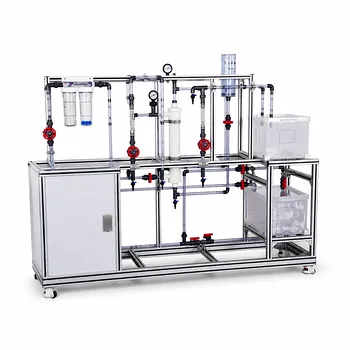
Chemical conditioners are the workhorses of deposit control in a water treatment training system. In a chemical engineering unit operations setting, tannins and sulfonated lignins are used to demonstrate how to manipulate the physical state of suspended solids and scale-forming ions. Tannins function primarily as coagulants, bridging together calcium carbonate and magnesium hydroxide into a dense, non-sticky floc that’s easy to remove. Sulfonated lignins act as dispersants, wrapping themselves around particles like phosphates and iron oxides to keep them from agglomerating, so they exit the system through continuous blowdown.

The core lesson is that these organic conditioners prevent the two root causes of heat transfer failure: insulating scale that reduces efficiency, and porous deposits that trigger galvanic corrosion. The training system shows operators precisely how to dose each chemical to maintain clean surfaces under varying boiler pressures.

The Two Distinct Mechanisms of Deposit Control

To manage water chemistry effectively, an operator needs both a broom and a shield. Tannins and sulfonated lignins provide exactly those complementary tools, addressing two different paths that lead to harmful deposits.

How Tannins Coagulate Scale-Forming Hardness

Tannins are high-molecular-weight organic acids that act as a bridging coagulant, especially in low- to medium-pressure boilers. They don’t just change the charge on particles; they physically link them.

When calcium carbonate or magnesium hydroxide begins to precipitate, the tannin molecules latch onto multiple particles at once. This creates a dense, tight floc that is non-adherent—meaning it won’t stick to heat transfer surfaces. The floc either settles in a mud drum or is blown down, removing the hardness before it can form a hard, bonded scale layer.

In the training system, you visually observe the floc formation and its rapid settling. This demonstrates a key operational principle: effective coagulation prevents scale crystallization right at the nucleation stage, rather than trying to remove an already-formed scale layer later.

How Sulfonated Lignins Disperse Fine Suspended Solids

Sulfonated lignins solve a different problem. They are superb dispersants for phosphates and iron oxides, two of the most troublesome deposit formers in boiler water. Their mechanism is purely surface-based—each lignin molecule adds a negative charge and a physical coating to the particle.

This coating prevents particles from sticking together. The phosphate or iron particle remains in a stable, colloidal suspension that flows freely with the boiler water. Because the particle is no longer sticky, it cannot accumulate on tube walls. It simply circulates until it is removed in the continuous blowdown stream.

The training unit showcases this beautifully: you can spike the feedwater with iron and then demonstrate how a small dose of sulfonated lignin keeps the water clear and the boiler surfaces clean. The lesson is that maintaining a clean surface relies on constant particle removal, not just one-time chemical addition.

Why Preventing Porous Deposits is Critical

The deep need here isn’t just about clean tubes—it’s about preventing a catastrophic corrosion mechanism that operators often overlook.

Porous deposits are the silent killer of boiler metallurgy. When a layer of precipitated sludge or scale builds up on a heat transfer surface, it creates a micro-environment. The pores in this deposit trap concentrated boiler water, which becomes drastically different in chemistry from the bulk water. This localized concentration can rapidly deplete oxygen or increase corrosive ion levels, initiating undercut corrosion and galvanic cells.

Tannins and sulfonated lignins stop this chain of events before it starts. Tannins prevent the formation of the initial porous matrix by making hardness sludges fluid and mobile. Sulfonated lignins keep iron oxides dispersed so they can’t settle into a porous mat. In the training system, you can induce a deposit and then measure the downstream corrosion potential, making the link between chemical conditioning and long-term asset integrity explicit.

Understanding the Trade-offs and Application Limits

Operating a training unit provides a safe space to learn what these chemicals cannot do—a crucial part of real-world competence.

  • Tannins are pressure-limited. They begin to thermally decompose at around 250°C (roughly 40 bar). In high-pressure boilers, tannins break down into organic acids that reduce pH and can accelerate corrosion, so they are strictly a tool for lower-pressure systems.
  • Sulfonated lignins demand precise blowdown control. Because they keep particles suspended, their use increases the solids loading in the boiler water. If the blowdown rate isn’t adjusted correctly, you’ll simply concentrate the suspended solids until they eventually agglomerate and deposit anyway.
  • Overdosing creates its own deposits. Too much tannin can combine with calcium to form a sticky, varnish-like organic coating on tubes. Too much sulfonated lignin adds excess organic carbon, which can degrade into carbon dioxide in the steam, leading to condensate system corrosion.
  • They don’t work in isolation. These conditioners are always part of a coordinated program with phosphate, oxygen scavengers, and pH control. The training system emphasizes that chemical conditioners enhance a proper chemical foundation but can’t substitute for it.

How to Apply This to Your Operational Goals

The training system’s value lies in translating these mechanisms into actionable procedures for different plant priorities.

  • If your primary focus is preventing scale on heat transfer surfaces: Rely on tannin coagulation in low-pressure boilers to agglomerate hardness into an easily blowdown form. Monitor floc quality and adjust dosing to achieve a dense, non-sticky sludge.
  • If your primary focus is managing iron oxide and phosphate carryover: Deploy sulfonated lignin as your primary dispersant. Verify its effectiveness by checking for any rise in settled sludge in the mud drum, and increase blowdown proportionally.
  • If your primary focus is avoiding under-deposit corrosion: Use both chemistries together as a preventive barrier. Tannins keep bulk hardness from forming a porous mat, while sulfonated lignins ensure fine metal oxides remain mobile and unable to settle into a crevice.

Mastery of these conditioners is ultimately about controlling the interface between water and metal. In a well-conditioned system, that interface remains clean, thin, and unreactive, preserving both thermal efficiency and structural integrity.

Summary Table:

Chemical Conditioner Primary Mechanism Target Impurities Key Operating Limit
Tannins Coagulation (physically links particles into non-sticky floc) Calcium carbonate, magnesium hydroxide Temperature limit of ~250°C (approx. 40 bar)
Sulfonated Lignins Dispersion (adds negative charge to prevent sticking) Phosphates, iron oxides Demands precise control of blowdown rates

Bring hands-on chemical engineering principles to life in your laboratory. LABPARK provides industry-grade Educational and Vocational Unit Operations Pilot Plants in chemical engineering, bioprocess & biotech, and environmental & water treatment. Designed specifically for universities, research institutes, and enterprises, our advanced training systems empower operators to master critical processes like deposit control, scale prevention, and water chemistry management in a safe, controlled environment. Ready to upgrade your training capabilities? Contact LABPARK today to find the perfect pilot plant solution for your institution.

Related Products

People Also Ask

Related Products

Electrochemical Water Treatment Educational Unit Operations Pilot Plant

Electrochemical Water Treatment Educational Unit Operations Pilot Plant

Enhance engineering education with this pilot-scale electrochemical water treatment plant. Designed for hands-on learning of efficient salt removal, electrolytic reactions, and real-time data acquisition. Features multi-mode control, corrosion-resistant PVC, low-voltage safety, and wireless connectivity for modern teaching labs.

Alkaline Membrane Water Electrolysis Educational Pilot Plant Unit Operations Training System

Alkaline Membrane Water Electrolysis Educational Pilot Plant Unit Operations Training System

Hands-on educational pilot plant for alkaline membrane water electrolysis hydrogen production, integrating unit operations training with industrial PLC control, real-time data logging, customizable design, durable 316L stainless steel construction, explosion-proof safety, and modern 5G connectivity for university laboratories.

Ion Exchange Water Purification Educational Pilot Plant for Engineering Unit Operations

Ion Exchange Water Purification Educational Pilot Plant for Engineering Unit Operations

This bench-scale ion exchange pilot plant trains engineering students in water purification. Dual transparent columns simulate industrial softening and demineralization. Students observe fluid dynamics, perform resin regeneration, and analyze breakthrough curves. The corrosion-resistant frame ensures durability in unit operations experiments.

Water Electrolysis Hydrogen Production and Storage Educational Pilot Plant

Water Electrolysis Hydrogen Production and Storage Educational Pilot Plant

Integrated pilot-scale training system for higher education engineering labs. Features AWE/PEM electrolysis, adjustable DC power, PLC controls, gas-liquid separation, and pressurized hydrogen storage. Hands-on learning in green hydrogen, process control, and safety, ideal for chemical and energy departments.

Multi-Modal Distillation Unit Operations Training Pilot Plant

Multi-Modal Distillation Unit Operations Training Pilot Plant

Multi-modal distillation pilot plant for practical unit operations training in chemical engineering education. Features real, analog, and semi-physical simulation modes, industrial construction, customizable for university labs. Hands-on fractionation columns, SCADA control, safety systems. Includes sight glasses, sampling ports, closed-loop recycling.

Multi-Functional Membrane Separation Educational Pilot Plant for Unit Operations Lab

Multi-Functional Membrane Separation Educational Pilot Plant for Unit Operations Lab

The Multi-functional Membrane Separation Educational Unit Operations Pilot Plant is an integrated bench-scale laboratory system designed for teaching undergraduate engineering education. It features Ultrafiltration, Nanofiltration, and Reverse Osmosis modules in a compact, mobile unit for practical hands-on learning.

Electrolyte Distillation Purification and Formulation Educational Pilot Plant

Electrolyte Distillation Purification and Formulation Educational Pilot Plant

Integrated bench-to-pilot scale educational pilot plant for electrolyte distillation, purification, and formulation with borosilicate glass construction, PLC automation, touchscreen HMI, and advanced industrial safety features for hands-on chemical process training, ideal for chemical engineering and materials science curricula.

Thermal Desorption Exhaust Gas and Tail Water Treatment Educational Pilot Plant

Thermal Desorption Exhaust Gas and Tail Water Treatment Educational Pilot Plant

Bench-scale educational pilot plant for treating thermal desorption exhaust gas and tail water integrates condensation, Fenton oxidation, precipitation, filtration, and carbon adsorption. Ideal for chemical engineering and environmental labs, teaching unit operations, process control, and real-time data analysis.

Multi Pump Fluid Transport Process Piping Unit Operations Training Pilot Plant

Multi Pump Fluid Transport Process Piping Unit Operations Training Pilot Plant

Industrial-scale multi-pump pilot plant for unit operations training in fluid transport and process piping, featuring real-material and semi-physical simulation modes, comprehensive pump and flowmeter calibration, and safety-enhanced two-tier platform, bridging academic theory and industrial practice for chemical engineering education.

Continuous Batch Extractive Distillation Educational Pilot Plant

Continuous Batch Extractive Distillation Educational Pilot Plant

Versatile pilot plant for continuous, batch, and extractive distillation training. High-borosilicate glass column for visualizing hydraulics, 15.6-inch touchscreen with data logging, precise reflux ratio control 1-99, and durable corrosion-resistant frame. Ideal for chemical engineering education and process research.

Multi Functional Membrane Crystallization Educational Unit Operations Pilot Plant

Multi Functional Membrane Crystallization Educational Unit Operations Pilot Plant

Integrated bench-scale membrane crystallization pilot plant for engineering education. Provides hands-on training in advanced separation technologies, combining membrane distillation crystallization and process intensification. Features variable scaling vessels, industrial-grade flow control, and interactive digital data acquisition. Customizable for university labs.

Liquid-Liquid Mass Transfer Coefficient Determination Educational Pilot Plant

Liquid-Liquid Mass Transfer Coefficient Determination Educational Pilot Plant

This bench-scale educational pilot plant for liquid-liquid mass transfer coefficient determination offers precise control of phase boundary, temperature, and agitation, enabling hands-on study of transport phenomena and unit operations in chemical engineering labs for teaching.

Centrifugal Pump Performance Determination Educational Unit Operations Pilot Plant

Centrifugal Pump Performance Determination Educational Unit Operations Pilot Plant

This lab system determines centrifugal pump performance curves for unit operations. Students configure dual pumps in series or parallel for hands-on learning. Includes industrial controls, clear piping, and data logging. Customizable for chemical, mechanical, and environmental engineering programs.

Ultrafiltration Membrane Separation Educational Pilot Plant

Ultrafiltration Membrane Separation Educational Pilot Plant

This ultrafiltration membrane separation educational pilot plant enables undergraduate students to process PVA solutions, study hollow fiber membrane dynamics, and perform quantitative analysis with spectrophotometry for hands-on learning of unit operations and industrial maintenance and membrane cleaning protocols.

Fluid Transport and Piping Dynamics Practical Training Unit Operations Pilot Plant

Fluid Transport and Piping Dynamics Practical Training Unit Operations Pilot Plant

This industrial-scale fluid transport and piping dynamics training pilot plant provides essential hands-on experience with pump operations, cavitation, piping resistance, flow metering, and process control. Customizable to fit specific academic engineering curricula.

Orifice and Venturi Flowmeter Calibration Educational Pilot Plant for Fluid Mechanics Laboratory

Orifice and Venturi Flowmeter Calibration Educational Pilot Plant for Fluid Mechanics Laboratory

Enhance fluid dynamics education with the Orifice and Venturi Flowmeter Calibration Educational Unit Operations Pilot Plant, featuring transparent orifice and Venturi meters, industrial sensors, touchscreen interface for real-time data analysis and automatic coefficient calculations in engineering student laboratories.

Chemical Pipeline Assembly and Fluid Transport Practical Training Unit Operations Pilot Plant

Chemical Pipeline Assembly and Fluid Transport Practical Training Unit Operations Pilot Plant

Integrated skid-mounted engineering training pilot plant for university labs offers hands-on experience in chemical pipeline assembly, fluid transport, centrifugal pump operation, and pressure testing. Customizable system bridges academic theory and industrial practice with digital pre-lab resources and comprehensive tools.

Quantitative Dosing and Liquid Flow Control Educational Unit Operations Pilot Plant

Quantitative Dosing and Liquid Flow Control Educational Unit Operations Pilot Plant

Explore industrial fluid transport and automated process control with this quantitative dosing and liquid flow control educational pilot plant, featuring local and remote control cabinets, variable speed metering pump, high-precision flow sensors, and PLC-based SCADA integration for engineering students.

Carbon Material Thermal Pretreatment Multiphase Separation Educational Pilot Plant

Carbon Material Thermal Pretreatment Multiphase Separation Educational Pilot Plant

Educational pilot plant for carbon material thermal pretreatment and multiphase separation. Features jacketed agitated reactor, separation column, and modern controls for hands-on unit operations training in heat transfer, fluid flow, and process safety with industrial-grade materials and wireless data acquisition.

Hollow Fiber Ultrafiltration Membrane Separation Educational Pilot Plant

Hollow Fiber Ultrafiltration Membrane Separation Educational Pilot Plant

Explore our hollow fiber ultrafiltration membrane separation educational pilot plant for hands-on learning of industrial ultrafiltration processes, flux analysis, fouling mitigation, and process control. Compact, customizable, and built for engineering labs.


Leave Your Message