The core job of a moderator is to enable a controlled nuclear chain reaction. It takes the high-energy neutrons born from fission and, through repeated collisions, strips away their speed until they are moving slowly enough to cause new fissions efficiently. This process is the physical heartbeat of a reactor, and fluids like heavy water are chosen for this role because they can slow neutrons down without gobbling them up.
Before a nuclear reactor can generate power, it must first solve a fundamental speed problem. Moderators solve that problem at the atomic level. But engineering those moderator fluids—purifying them, keeping them cool, and handling them safely—is a chemical engineering challenge in its own right, and that’s exactly where environmental pilot plants become an indispensable training ground.
The Moderator’s Job: Slow Neutrons, Sustain the Chain Reaction
A nuclear reactor core is an environment of brutal, high-speed physics. Every fission event spits out neutrons with energies measured in millions of electron volts. Left unchecked, those fast neutrons would mostly miss their target nuclei or be captured unproductively, and the chain reaction would fizzle out.
The Physics of Neutron Moderation
Moderation is a game of billiards played with subatomic particles. When a high-energy neutron collides with the nucleus of a light atom—like the deuterium in heavy water—it transfers a large fraction of its kinetic energy. After a dozen or so collisions, the neutron’s energy drops to the “thermal” range, where it has the highest probability of triggering another fission.
Why Heavy Water is a Superior Moderator
Heavy water’s nearly magic touch comes from two properties: low neutron absorption and excellent slowing-down power. Ordinary water also slows neutrons, but its hydrogen atoms greedily capture neutrons. Deuterium, the hydrogen isotope in heavy water, is far less absorbent. That means heavy-water reactors can use natural, unenriched uranium, a huge strategic advantage.
From Reactor Physics to Process Engineering: The Critical Demands on Heavy Water
Slowing neutrons is just the beginning. For a heavy-water reactor to operate safely and for decades, the moderator fluid itself must be an ultra-pure, thermally stable medium. That’s where the environmental and chemical engineering disciplines intersect.
Purity is Non-Negotiable
Even trace contaminants in heavy water—dissolved salts, organic matter, or isotopic dilution—can turn a moderator into a neutron poison. Maintaining isotopic purity (above 99.75% D₂O) and removing ionic impurities is a continuous industrial task. The technologies involved are classic unit operations: ion exchange, membrane filtration, and distillation.
Thermal Management Keeps the Reactor Safe
A moderator like heavy water absorbs not just neutron energy but also gamma radiation, heating up in the process. Its thermal behavior—heat capacity, viscosity under flow, and heat transfer coefficients—dictates how efficiently you can remove that heat. Getting this wrong doesn’t just hurt efficiency; it’s a core safety issue.
Using Pilot Plants to Study Purification and Thermal Behavior
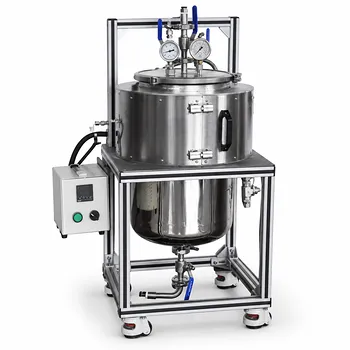
No one learns to fly a reactor-grade purification system by reading a manual. Environmental and chemical engineering pilot plants shrink the industrial scale down to a safe, observable format. They let engineers, technicians, and students replicate the exact unit operations that govern a moderator’s lifecycle.
Water Treatment Pilot Plants for Purification Studies
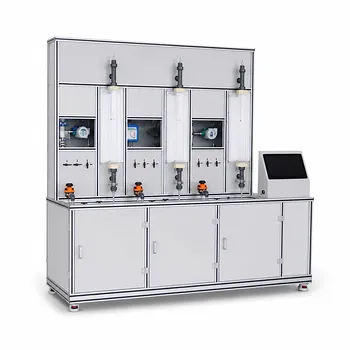
A water treatment pilot plant equipped with ion exchange columns and reverse osmosis membranes becomes a surrogate for heavy-water polishing loops. Students can dose the feed water with specific contaminants, then measure breakthrough curves and regeneration efficiencies. It’s the same thinking required to keep a reactor’s moderator chemically spotless, just with a non-radiological substitute.
Heat Transfer Training Units for Thermal Dynamics
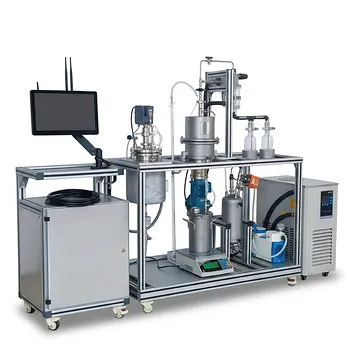
A heat transfer training unit—typically a closed loop with a heating element, a shell-and-tube exchanger, and precise instrumentation—directly mirrors the challenge of cooling a moderator. By running the unit with water (or a safe simulant) and varying flow rates or heat inputs, you develop an instinct for Reynolds numbers, Nusselt correlations, and the critical role of turbulent flow in keeping a moderator from boiling locally.
Understanding the Trade-offs of Pilot-Scale Learning
Pilot plants are powerful teachers, but they come with inherent limitations you must acknowledge.
- Simplified Chemistry: Educational units often use benign salts or dyes as contaminants. Real heavy-water systems face radiation-induced chemistry and tritium management that cannot be replicated in a classroom.
- Scale-Down Distortion: Fluid dynamics do not scale linearly. A pump impeller or a heat exchanger passage in a pilot unit can mask fouling or flow maldistribution issues that plague a full-size reactor.
- Material Differences: Pilot plants typically use stainless steel or clear acrylic. Genuine heavy-water systems require materials compatible with long-term deuterium exposure and low neutron activation. The core physics lesson holds, but the materials science gap is real.
Making the Right Choice for Your Training Goal
When you are ready to apply pilot plants to moderator-related studies, align your choice of equipment with your objective.
- If your primary focus is purification chemistry: Prioritize a water treatment pilot plant that offers both ion exchange and membrane modules. Measure conductivity and pH before and after each stage to understand polishing logic.
- If your primary focus is thermal behavior: Invest in a heat transfer training unit with variable-speed pumps and multiple heat exchanger configurations. Log temperature differentials under laminar, transitional, and turbulent flow to connect textbook theory to real operation.
- If your goal is system integration: Link a small treatment loop to a thermal loop, simulating how purification directly impacts heat exchanger fouling. This closes the gap between two isolated unit operations and mirrors the reality of a reactor’s auxiliary systems.
When a well-designed pilot plant teaches you how to purify and cool a process fluid, you’re not just learning about pumps and resins—you’re internalizing the engineering discipline that keeps nuclear promises safe, clean, and brilliantly predictable.
Summary Table:
| Aspect | Reactor Role / Challenge | Pilot Plant Application |
|---|---|---|
| Moderation | Slows neutrons to sustain fission (e.g., D₂O) | Simulate fluid flow & thermal dynamics |
| Purification | Maintain >99.75% D₂O, remove neutron poisons | Ion exchange & membrane filtration units |
| Thermal Control | Prevent local boiling, manage high heat load | Shell-and-tube heat transfer training loops |
Optimize Your Engineering Lab with LABPARK
Are you looking to bridge the gap between classroom theory and industrial reality? LABPARK provides state-of-the-art Educational and Vocational Unit Operations Pilot Plants in chemical engineering, bioprocess & biotech, and environmental & water treatment. Designed specifically for universities, research institutes, and enterprises, our pilot systems empower students and researchers to master purification, heat transfer, and process control in a safe, controlled environment.
Ready to elevate your training and research capabilities? Contact us today to discover how LABPARK can customize the perfect pilot-scale solution for your institution!
Related Products
- Two Phase Flow Pattern Velocity Resistance Measurement Educational Pilot Plant
- Multi-Functional Special Distillation Educational Pilot Plant
- Multifunctional Membrane Separation Educational Pilot Plant with Ultrafiltration, Nanofiltration, Reverse Osmosis
- Supercritical High-Gravity Flash Evaporation Educational Unit Operations Pilot Plant
- Continuous Batch Extractive Distillation Educational Pilot Plant
People Also Ask
- How to update chemometric calibration models in pilot plants? Best practices for process engineers.
- Why Correct Sig Figs & Rounding Matter in Educational Pilot Plants: Ensure Data Accuracy
- How does nuclear yield inefficiency translate to chemical engineering education? Optimize kinetics with pilot plants.
- How can educational pilot plants be used to teach process safety and risk assessment in chemical engineering curricula?
- How to identify two-phase gas-liquid flow patterns? Master fluid dynamics with pilot plants