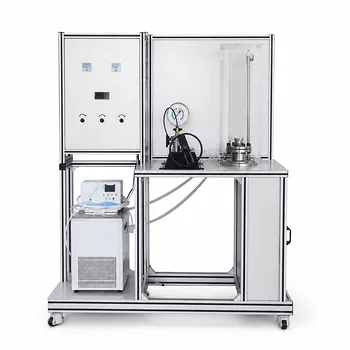
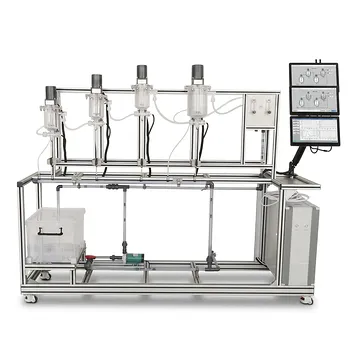
Coulometric titration is more than just a measurement technique—it’s a direct, hands-on lesson in bridging fundamental electrochemistry with automated industrial monitoring. When integrated into chemical engineering and bioprocess pilot plants, it teaches students to apply Faraday’s laws of electrolysis to generate titrants in real time, eliminating manual standard‑solution preparation and enabling unmatched precision for trace‑component analysis. This experience equips future engineers with the skills to design, operate, and interpret the online analytical systems that are now standard in modern pharmaceutical, fine‑chemical, and biomanufacturing facilities.
Core Takeaway: The primary educational value lies in transforming abstract electrochemical principles into tangible process‑control competencies. Students learn to manage current efficiency, configure generator/indicator electrodes, and handle real‑time analytical data—skills that directly translate to the automated quality‑by‑design environment of today’s pilot plants and production lines.
Bridging Theory and Industrial Practice
Coulometric titration is a perfect vehicle for connecting textbook concepts to real‑world process analytics. In an educational pilot plant, students see how electrochemical laws directly govern industrial sensors and automation.
From Stoichiometry to Process Control
Traditional manual titration teaches core stoichiometry and pipette handling, but it stops short of modern automation. Coulometry transforms the concept of titration into a continuous, automated measurement that feeds directly into plant control systems. Students learn why modern facilities abandon batch‑mode manual assays in favor of in‑situ titrant generation that never degrades and never needs recalibration with standard solutions.
Direct Application of Faraday’s Laws
At its heart, coulometric titration relies on Faraday’s law: the amount of substance reacted is proportional to the electrical charge passed. By generating titrant electrolytically—for example, iodine to quantify Vitamin C—students directly connect charge measurement to concentration determination. This experimental verification cements their understanding of current efficiency and stoichiometric equivalence in a way that purely computational exercises cannot.
Understanding Electrode Configurations
The technique also forces students to differentiate between generator electrodes, where the titrant is produced, and indicator electrodes, which detect the endpoint. They learn to optimize electrode placement, interpret Nernstian potential changes, and troubleshoot issues like electrode fouling. This hands‑on experience is the first step toward designing robust electrochemical sensors for any process stream.
Preparing Students for the Modern Bioprocess Landscape
Bioprocess pilot plants present unique analytical challenges—complex media, fragile biomolecules, and a need for contamination‑free monitoring. Coulometric titration answers these challenges while teaching industry‑ready skills.
Real‑Time Monitoring of Bioreactor Performance
In a bioprocess setting, tracking concentrations of active pharmaceutical ingredients, vitamins, or metabolic byproducts is critical. Coulometric sensors can be configured to measure these trace components directly in the culture broth, without sample withdrawal or reagent addition. This gives students a clear picture of how online analytics drive decisions about feeding strategies, harvest timing, and product quality.
Automation and Quality Control
Manual assays are too slow and error‑prone for real‑time process control. By integrating coulometric systems into the pilot plant’s data acquisition framework, students experience the shift from periodic lab sampling to continuous, automated monitoring. They learn to set alarm thresholds, validate sensor signals, and appreciate how measurement precision directly impacts reject rates and compliance in regulated industries.
Managing Trace Component Analysis
Moisture determination is a classic coulometric application, vital for solvent drying, lyophilization, and fuel processing. When students use a pilot‑scale dryer or distillation column equipped with a coulometric Karl Fischer titrator, they see how µg‑level accuracy prevents off‑specification product. This practical exposure builds an intuitive feel for why trace analysis is often the linchpin of process safety and product stability.
Understanding the Trade‑offs
Even the most elegant technique has limitations. An honest assessment of these trade‑offs is essential for developing critical thinking in engineering students.
When Precision Meets Practical Limits
Coulometric titration excels at trace levels but becomes impractical for bulk concentrations, where large currents and long generation times introduce errors. Students must learn to select the right analytical method based on expected concentration ranges—a key decision‑making skill in process development.
Current Efficiency and Side Reactions
Not every electron passed generates the desired titrant. Side reactions at the generator electrode can consume current without producing titrant, or the generated titrant may react with unintended species in the sample. Teaching students to identify and mitigate these interferences—through proper electrolyte selection, membrane separation, or potential control—builds a deeper understanding of the electrochemical cell as a reactive system.
Maintenance and Robustness
Online coulometric sensors are precise but not maintenance‑free. Electrode fouling, membrane clogging, and drift in the indicator system all require attention. Integrating these sensors into a busy pilot plant teaches students the operational reality that even the best analytical instruments need systematic calibration checks and cleaning protocols to remain reliable.
How to Maximize Educational Value in Your Pilot Plant
The academic benefit of coulometric integration depends entirely on how you frame the learning objectives. Tailor the experience to your specific curriculum goals.
- If your primary focus is fundamental electrochemistry: Design experiments around current‑efficiency measurement and electrode kinetics. Have students build a simple generator‑indicator circuit before using a commercial instrument.
- If your primary focus is bioprocess analytics: Integrate coulometric sensors for vitamin or metabolite tracking and require students to correlate analytical data with bioreactor performance indicators (yield, productivity).
- If your primary focus is process automation: Embed the coulometric system into a supervisory control and data acquisition (SCADA) environment. Task students with writing control logic that responds to real‑time concentration data.
- If your primary focus is quality‑by‑design and regulatory training: Use the system to demonstrate analytical method validation, measurement uncertainty, and data integrity—pillars of the pharmaceutical industry.
Equip your students with the analytical instruments that mirror industrial reality. When coulometric titration becomes a natural part of your pilot plant curriculum, you are no longer teaching measurement in isolation; you are cultivating the process‑analytical mindset that defines tomorrow’s chemical and bioprocess engineers.
Summary Table:
| Educational Focus | Core Concept Taught | Industrial Relevance |
|---|---|---|
| Electrochemistry | Faraday's Laws & current efficiency | Understanding automated in-situ titrant generation |
| Sensor Design | Electrode configurations (generator vs. indicator) | Troubleshooting electrode fouling & signal drift |
| Process Analytics | Real-time trace component monitoring | Quality-by-design (QbD) & automated bioreactor control |
Elevate Your Engineering Curriculum with LABPARK
Ready to bridge the gap between textbook electrochemistry and industrial automation? LABPARK provides state-of-the-art Educational and Vocational Unit Operations Pilot Plants in chemical engineering, bioprocess & biotech, and environmental & water treatment.
Specifically designed for universities, research institutes, and enterprises, our pilot plants empower your students and researchers to master hands-on process monitoring, sensor integration, and real-time data analysis.
Equip your lab with industry-standard technology today — contact our experts now to customize your pilot plant solution!
Related Products
- Carbon Dioxide PVT Curve Determination Educational Unit Operations Pilot Plant
- Multi-Stage Stirred Tanks in Series Residence Time Distribution and Mixing Performance Determination Educational Pilot Plant
People Also Ask
- How do temperature variations affect CO2 transport models in pilot plants? Model vs Reality
- What unit operations are critical for CCUS training pilot plants? Build hands-on engineering expertise.
- What are the applications and limitations of the Virial EOS? Enhance Your Pilot Plant Lab
- What precautions prevent sample loss when volatilizing silica with HF? Crucial Steps for Safe Lab Training
- Why is selecting the correct EOS critical in pilot plants? PR vs. SRK compared.