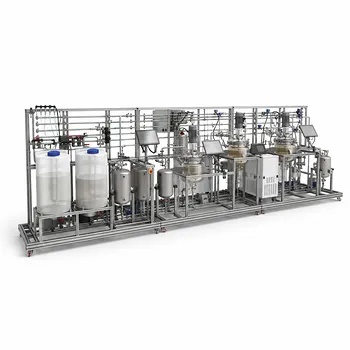
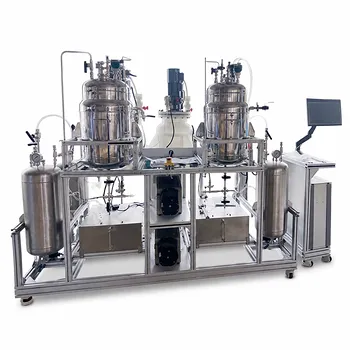
The bedrock of compliance is cGMP and a systemic, lifecycle-wide safety analysis. For bioprocess pilot plants handling food, cosmetic, or pharmaceutical-grade products, you are not merely running experiments; you are legally and ethically obligated to validate that your equipment, processes, and environment control contamination risk and guarantee product quality from the very first concept sketch. This mandate translates into a dual requirement: formally documented design controls under a Current Good Manufacturing Practice (cGMP) quality system, and a rigorous, phased hazard analysis that governs both mechanical design and operational procedure.
Designing for compliance means shifting your mindset from building a "research tool" to commissioning a miniature, flexible manufacturing facility. The core challenge is that pilot plants lack the fixed, validated state of a commercial line but carry the same regulatory burden for the batches produced. Success hinges on integrating intrinsic safety, cGMP design principles, and comprehensive operational documentation into a closed-loop system before any material enters the vessel.
The Design Phase: Engineering a Compliant System from the Ground Up
Before construction begins, your engineering specifications must become legal documentation. Regulators view the system’s architecture as direct evidence of your commitment to quality and safety.
Documenting the Quality System and Material Integrity
Any component that contacts the product stream, or whose failure could introduce contamination, must be vetted. This process starts with a deep dive into material safety data sheets and chemical compatibility.
A fundamental safety review must occur at the conceptual design stage. This isn't a simple check-box exercise; it requires verifying that every chemical principle and physical interaction in your process has been evaluated for toxic potential and reaction hazards. For cGMP, this review morphs into a material qualification agenda, demanding corrosion-resistant, non-leaching surfaces like 316L stainless steel and validated clean-in-place (CIP) geometries.
Applying Intrinsic Safety to Hazardous Environments
The process of de-risking a pilot plant often hinges on how you manage the control architecture. In environments where flammable solvents, powders, or volatile raw materials are present, standard electrical installations become ignition sources.
Your detailed engineering review must stipulate the integration of intrinsic safety barriers. These devices limit the electrical energy entering the hazardous zone, keeping it below the threshold that could cause an explosion. This design choice dictates the entire control system layout, from the selection of explosion-proof operator stations to the exact specifications of terminal boards and relay modules, ensuring field connections are both safe and maintainable.
Incorporating Redundancy and Control Margins
Compliance is also about proving your process can stay within safe operating limits. This is mirrored directly in the control hardware specification.
Your design must determine the exact number of input/output (I/O) modules—analog and digital—required to monitor all critical process parameters. Crucially, a safety margin must be factored in. This spare capacity is not for convenience; it is a design control that allows for the future addition of novel sensors or safety instruments without requiring a fundamental re-validation of the hardware architecture, a costly and time-consuming regulatory burden.
The Operational Phase: Translating Design Safety into Validated Practice
A perfectly designed system fails its compliance audit if operational protocols don't mirror the engineering rigor. Operation is the phase where cGMP truly materializes through strict quality and contamination control procedures.
Executing the Phased Safety Review
The safety analysis initiated during design must remain a living document that extends into commissioning and operation. This means your team must conduct post-installation verification walks and ongoing procedural audits.
These reviews confirm that the detailed engineering intent wasn't compromised during assembly and that standard operating procedures (SOPs) effectively mitigate residual risks. For pharmaceutical-grade products, this also involves demonstrating aseptic technique and environmental monitoring, proving the pilot plant can achieve the required cleanroom classification during active fermentation or synthesis.
Hardware Configuration for Maintenance and Troubleshooting
Operational compliance relies on the ability to quickly identify and rectify faults without compromising the batch or the plant's validated state. This capability is designed into the system but executed daily.
The selection of specific terminal boards and relay modules during the design phase pays off here. Properly specified field instrument connections allow technicians to rapidly troubleshoot analog input loops or digital output failures. In a cGMP environment, this speed prevents extended downtime in non-validated conditions and supports the deviation investigation process by providing clear, modular points for diagnostic testing.
Common Pitfalls to Avoid
The transition from bench-scale science to pilot-scale compliance is often where critical errors are made. Recognizing these trade-offs is essential for credible planning.
Treating the Pilot Plant as an "Engineering Free Zone"
The most severe mistake is underestimating the regulatory footprint. Researchers often mistake a pilot plant for a large laboratory apparatus, postponing safety and quality considerations.
This approach overlooks the fact that if a batch has economic or medical use, the regulatory imperative exists. Failing to submit detailed design and operational documentation or to prepare for inspections from the outset inevitably leads to retroactive fixes that are ten times more expensive and technically fragile.
Overlooking the Physical Space in the Control Strategy
Another frequent oversight is specifying cabinets, power modules, and operator stations without fully integrating them into the lab’s physical and human-factor constraints. The supplementary hardware must match the physical space.
If an operator station is positioned in a hazardous zone, it requires specific cleanability and possibly an explosion-proof housing. If it's located outside but in a tight corridor, its ergonomics can cause operational errors during critical phases like inoculation or harvest. Ignoring these factors compromises both safety and the aseptic integrity demanded by the cGMP framework.
Failing to Build in Analytical Buffer
Designing a control system with zero spare I/O capacity is a gamble against the very nature of process development. Pilot plants exist precisely because processes are not fixed.
Skimping on a safety margin for future sensor additions means that incorporating a new regulatory-required monitoring probe later will require a complete control panel redesign. This triggers a major cGMP change control process that can stall projects for months, all because a few extra slots weren't initially installed.
Making the Right Choice for Your Goal
Compliance strategy depends on the product's final destination and risk profile. Tailor your approach from the ground up.
- If your primary focus is food-grade production: Prioritize hygienic design and material traceability under a Hazard Analysis Critical Control Point (HACCP) framework, ensuring surfaces are cleanable and non-toxic.
- If your primary focus is cosmetic-grade production: Focus on ISO 22716 Good Manufacturing Practices, emphasizing batch record integrity and strict cross-contamination controls for shared equipment.
- If your primary focus is pharmaceutical-grade production: Implement a full, auditable cGMP framework with a comprehensive process hazard analysis (PHA), validated sterilization, and intrinsic safety controls that cover every electrical pulse entering a hazardous zone.
Operational success is defined by your ability to prove—through documented engineering and procedural discipline—that quality is built into every droplet your pilot plant produces.
Summary Table:
| Product Grade | Regulatory Framework | Key Compliance Focus |
|---|---|---|
| Food-Grade | HACCP | Hygienic design, material traceability, cleanable non-toxic surfaces |
| Cosmetic-Grade | ISO 22716 GMP | Batch record integrity, strict cross-contamination controls |
| Pharma-Grade | Full cGMP / PHA | Validated sterilization, intrinsic safety, comprehensive process hazard analysis |
Ready to Build a Compliant Bioprocess Pilot Plant?
Designing a pilot plant that meets strict cGMP, HACCP, or ISO standards requires precision engineering. LABPARK provides state-of-the-art Educational and Vocational Unit Operations Pilot Plants in chemical engineering, bioprocess & biotech, and environmental & water treatment tailored for universities, research institutes, and enterprises. We ensure your system is built for safety, compliance, and seamless scalability.
Contact LABPARK today to discuss your project requirements and let our experts design your compliant pilot solution!
Related Products
- Bio-fermentation Ethanol Production Practical Training Unit Operations Pilot Plant
- Natural Product Extraction Unit Operations Training Pilot Plant
- Electrolyte Distillation Purification and Formulation Educational Pilot Plant
- High-Gravity Emulsification and Mass Transfer Educational Pilot Plant
- Continuous Batch Extractive Distillation Educational Pilot Plant
People Also Ask
- Why Use PTFE & Hastelloy in Chemical Pilot Plants? Prevent Corrosion & Ensure Safety
- Why Compare Predicted and Experimental Excess Enthalpy? Key to Accurate Pilot Plant Scale-up
- Why is the chemical plant startup schedule crucial? De-risk scale-up with pilot plants.
- When to transition from PID to adaptive control in pilot plants? Key process indicators.
- Why must batch and fed-batch fermentation pilot plants be designed to accommodate changing rheological conditions?