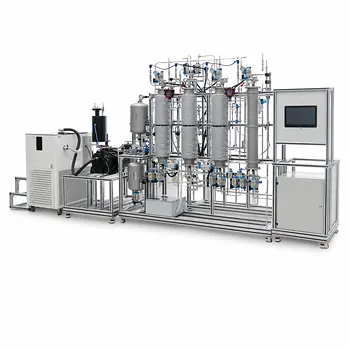
A fortress of fluorine atoms. The extraordinary suitability of Polytetrafluoroethylene (PTFE) for corrosive-fluid pilot plants comes down to a single chemical feature: every hydrogen atom on its carbon backbone is replaced by a fluorine atom. This complete substitution creates a dense, negatively charged electron cloud that shields the carbon‑carbon bonds so effectively that PTFE remains inert even when exposed to concentrated sodium hydroxide, aqua regia, or aggressive industrial cleaning chemicals. That molecular-level armor is what lets PTFE components—valves, gaskets, tubing, pump linings—operate safely in environmental and water treatment rigs for years without chemical degradation.
PTFE’s unparalleled resilience stems from carbon‑fluorine bonds that form an impenetrable electron shield. This architecture repels almost every corrosive agent, making PTFE the definitive material for pilot‑plant components that must survive aggressive acid washes, caustic clean‑in‑place cycles, and high‑purity analytical streams without losing structural integrity or leaching contaminants.
The Molecular Shield: How Fluorine Defends Against Corrosion
The Carbon-Fluorine Bond: A Fortress of Stability
In most plastics, the carbon‑carbon backbone is vulnerable because hydrogen atoms leave the chain exposed. PTFE replaces every hydrogen with fluorine. The carbon‑fluorine bond is one of the strongest single bonds in organic chemistry, and its strength does not diminish when surrounded by aggressive chemicals. This means the polymer chain itself resists being torn apart by acids or bases.
The Electronegative Shielding Effect
Fluorine is the most electronegative element. It pulls electrons tightly around itself, creating a sheath of negative charge that repels other reactive species. Because the fluorine atoms are large and packed densely along the carbon chain, they physically block corrosive molecules from reaching the carbon‑carbon backbone. The result is a chemically inert surface that refuses to donate or accept electrons—the fundamental requirement for a corrosion reaction.
A Demonstrated Resistance to Extreme Agents
This shielding translates into real‑world invincibility. PTFE withstands prolonged contact with concentrated sulfuric acid, boiling nitric acid, and even aqua regia—a mixture that dissolves gold. It also resists highly caustic solutions like 50% sodium hydroxide, and it remains stable when exposed to the aggressively fluorinating agent uranium hexafluoride. No laboratory‑grade polyolefin (PE or PP) can claim this breadth of pH immunity.
Thermal and Mechanical Properties That Complement Chemical Inertness
Wide Operating Temperature Range
Chemical attacks often accelerate at elevated temperatures. PTFE remains mechanically sound and non‑reactive from -200°C up to 250°C. In pilot plants, this spans the entire range from cold‑temperature sampling loops to hot chemical cleaning cycles, ensuring a single material can serve multiple duty points without softening or becoming brittle.
Low Friction, Self‑Lubricating Surfaces
PTFE’s fluorine‑rich surface also makes it exceptionally slippery. The low coefficient of friction reduces stick‑slip in valve seats and prevents biological or inorganic scale from adhering to tubing walls. This self‑lubricating character simplifies cleaning and reduces the risk of biofilm formation—critical when maintaining representative samples in water treatment studies.
Why These Properties Matter in Water Treatment and Environmental Pilot Plants
Components That Face the Most Aggressive Conditions
Pilot‑plant rigs for membrane filtration, advanced oxidation, or ion exchange routinely circulate corrosive regenerants (strong acids and bases), chlorine‑based disinfectants, and aggressive cleaning chemicals. Gaskets, valve diaphragms, and pump linings made from PTFE survive these cycles without swelling, cracking, or introducing leachates that would invalidate experimental data.
Preserving Sample Integrity and Trace Metal Accuracy
When analyzing trace metals or organic contaminants, even minute leaching from polymeric components can ruin results. PTFE’s near‑total chemical inertness makes it the material of choice for sample lines, flow‑through cells, and storage vessels in ultra‑trace analytical loops. It does not add background metals or organic carbon, helping pilot plants generate defensible, high‑integrity data.
Avoiding Costly Leaks and Downtime
Corroded seals or degraded tubing lead to leaks, cross‑contamination, and unsafe working conditions. Because PTFE resists the chemical attack that quickly embrittles standard plastics, it dramatically extends the service life of critical fluid‑handling parts. In pilot plants where a single unplanned shutdown can derail a multi‑month research budget, that reliability is non‑negotiable.
Understanding the Trade‑offs: When Chemical Resistance Is Paramount
PTFE’s molecular armor is not a universal panacea. The same structure that makes it chemically inert also gives it relatively low mechanical strength and a tendency to cold‑flow (creep) under constant load. In high‑pressure flanges, pure PTFE gaskets can deform over time, requiring periodic re‑torquing or a switch to filled‑PTFE composites. It is also expensive and difficult to bond, which complicates fabrication.
Nevertheless, in pilot‑plant applications where aggressive chemicals are the dominant threat, these trade‑offs are far outweighed by the avoidance of catastrophic material failure. When a component must handle 20% caustic at 80°C or a cocktail of strong oxidizers, the choice is simple: PTFE’s creep can be managed; corrosion‑induced rupture cannot.
Making the Right Choice for Your Pilot Plant
Your material selection strategy should balance chemical exposure, pressure requirements, and data quality objectives. Use the following guideposts:
- If your primary focus is handling highly acidic or caustic process streams: Choose PTFE for all wetted seals, gaskets, and linings. Its C‑F bond structure ensures long‑term integrity where polyolefins would fail in hours.
- If you need to maintain ultra‑low trace‑metal or organic‑carbon background levels: Rely on PTFE sample lines and storage vessels. Its non‑leaching surface prevents contamination that would compromise analytical accuracy.
- If your system cycles through hot chemical cleaning (CIP) or operates over a wide temperature range: Specify PTFE components that remain stable from sub‑zero storage to steam‑clean conditions, eliminating the need for multiple material types.
- If budget constraints push you toward lower‑cost polymers: Reserve PTFE for the most critical, high‑corrosion zones (e.g., acid feed lines, ozone injection quills) and use compatible materials like PP or PVDF elsewhere, but never substitute directly in a corrosive stream.
Your pilot plant’s data and safety rest on the materials that contain the chemistry. The dense fluorine shield of PTFE gives you a surface that simply refuses to react—and that refusal is exactly what makes complex water treatment experiments possible.
Summary Table:
| Key Property | Chemical/Physical Basis | Pilot Plant Advantage |
|---|---|---|
| Carbon-Fluorine Bond | High electronegativity & dense electron shield | Prevents degradation from strong acids, bases, and CIP chemicals. |
| Thermal Stability | Operates reliably from -200°C to 250°C | Endures hot chemical cleaning cycles and cold sampling loops. |
| Low Friction Surface | Slippery, self-lubricating boundary layer | Prevents mineral scaling and bio-fouling on tubing and valve seats. |
| Chemical Inertness | Zero electron exchange with reactive species | Eliminates sample contamination to ensure accurate trace analysis. |
Build Safer, More Reliable Pilot Plants with LABPARK
When handling corrosive fluids in environmental and water treatment research, material selection is critical to ensuring safety and data integrity. LABPARK provides advanced Educational and Vocational Unit Operations Pilot Plants in chemical engineering, bioprocess & biotech, and environmental & water treatment. We help universities, research institutes, and enterprises build robust systems using high-performance materials like PTFE to minimize downtime and prevent contamination.
Ready to custom-design your next pilot plant? Contact LABPARK today to collaborate with our engineering experts!
Related Products
- Polymerization Granulation and Pellet Processing Educational Unit Operations Pilot Plant
- Educational Pressure Swing Adsorption Ethylene Capture Unit Operations Pilot Plant
- Multi-Functional Special Distillation Educational Pilot Plant
- Multifunctional Membrane Separation Educational Pilot Plant with Ultrafiltration, Nanofiltration, Reverse Osmosis
- Tubular Reactor Flow Characteristics Determination Educational Unit Operations Pilot Plant
People Also Ask
- How to configure a polymerization pilot plant for molecular weight control? Key Setup Guide
- How do educational unit operations pilot plants address safety and waste management when scaling up?
- How do educational unit operations pilot plants bridge theory and industrial process development? Hands-On Learning
- How do unit operation requirements differ between traditional chemical processes and bioprocesses? Build Better Pilot Plant Curricula
- How do educational unit operations pilot plants bridge theory and design? Bridge the Engineering Gap