For any water treatment pilot unit, real-time, in‑situ monitoring of dissolved oxygen and ions is not a luxury—it’s a necessity. Optical sensor probes (optodes) answer this need by using immobilized chemical indicators at the tip of a fiber‑optic cable. For dissolved oxygen, they measure how oxygen molecules quench the luminescence of a metal‑ligand complex, following the well‑established Stern‑Volmer relationship. For pH and key ions like calcium (Ca²⁺), magnesium (Mg²⁺), and potassium (K⁺), they employ resonance energy transfer (RET) to generate a concentration‑dependent signal. Together, these extrinsic luminescence‑based sensors provide continuous, direct readings right inside the process stream, eliminating the need for grab samples and manual analysis.
Optical optodes overcome the most stubborn limitation of pilot‑scale water treatment: the trade‑off between data richness and manual effort. By embedding luminescent chemistry onto a robust fiber‑optic tip, these probes deliver real‑time dissolved oxygen and ion measurements directly in the process stream, enabling rapid decisions on aeration, nutrient dosing, and process stability without ever pulling a sample.
How Optical Optodes Work: The Principles
The optodes described here are extrinsic sensors—they carry a sensitive chemical layer that interacts with the target analyte, while the fiber itself only transmits light. This design separates the sensing chemistry from the optical path, allowing for robust, miniaturized probes that can be inserted directly into pilot reactors, pipes, or monitoring wells.
The Extrinsic LIF Setup: A Chemically Smart Tip
At the heart of these optodes is a laser‑induced fluorescence (LIF) arrangement. An excitation light source (typically a laser or high‑intensity LED) sends light through an optical fiber to the probe tip. There, a thin layer of an immobilized chemical agent is held against the process water by a gas‑permeable or ion‑permeable membrane. When the agent absorbs the excitation light, it emits luminescence at a longer wavelength. This emission travels back up the same or a separate fiber to a detector, where its intensity or decay time is analyzed.
Oxygen Sensing: The Stern‑Volmer Quenching Relationship
For dissolved oxygen, the immobilized agent is a metal‑ligand complex (often a ruthenium or platinum compound) whose luminescence is dynamically quenched by oxygen molecules. The process is collision‑based: when an oxygen molecule encounters an excited luminescent complex, it steals the energy, preventing the emission of a photon. The degree of quenching follows the Stern‑Volmer equation, which linearly relates the ratio of unquenched to quenched luminescence intensity (or lifetime) to the oxygen concentration. A simple calibration translates this optical signal into a direct dissolved oxygen reading.
Ion and pH Monitoring: Resonance Energy Transfer (RET)
For ions like Ca²⁺, Mg²⁺, K⁺, and for pH, the probe uses a resonance energy transfer (RET) sensor. Here, the immobilized chemistry works like a proximity‑activated switch. A donor fluorophore and an acceptor chromophore are combined in a sensing layer. The target ion (or pH) alters the conformation of an ion‑selective molecule, changing the distance or orientation between the donor and acceptor. This modulates the efficiency of non‑radiative energy transfer from donor to acceptor, producing a change in the emission spectrum that directly correlates with the ion concentration. Because the RET mechanism is designed around specific ionophores, each probe can be tuned for a particular ion.
Why Pilot Systems Rely on These Optodes
Pilot units live in the gap between laboratory precision and full‑scale reality. Traditional spot sampling introduces time delays, sample handling errors, and a fragmented view of the process. Optodes solve these problems by becoming a permanent, live sensor inside the system.
Real‑Time, In‑Situ Monitoring Without Manual Sampling
The single most transformative advantage is direct, continuous measurement. Optodes are immersed in the process stream—no pumps, no sample conditioning, and no daily technician visits. In activated sludge pilots, for instance, a dissolved oxygen optode gives a continuous aeration‑basin profile, revealing dead zones or over‑aeration moments that a single daily Winkler titration would miss. For ion monitoring, a RET‑based probe can track calcium levels during a softening pilot or potassium dynamics in a biological nutrient removal study, all logged automatically.
A Window into Biological and Chemical Processes
Because the data stream is truly continuous, operators and researchers see dynamic behaviors for the first time. The oxygen uptake rate (OUR) can be estimated from the real‑time DO slope during aeration shut‑off. pH‑sensitive optodes can follow nitrification‑induced acidification. Ion‑selective optodes allow on‑line stoichiometric monitoring—for example, tracking Mg²⁺ as a co‑factor in biological phosphorus removal—without ever disrupting the process. The result is a far more accurate and timely process fingerprint.
Understanding the Trade‑offs
Like any sensor technology, optical optodes come with boundaries that must be managed. Ignoring these leads to erroneous data and mistrust in the pilot results. Honest acknowledgment of the limitations is what separates a robust monitoring strategy from a flawed one.
Immobilized Reagent Stability and Photobleaching
The immobilized chemical layer is the sensor’s active ingredient, and it degrades over time. Prolonged exposure to excitation light causes photobleaching, where the fluorophore permanently loses its ability to emit. This slowly reduces the signal‑to‑noise ratio, and if not corrected through regular recalibration, can appear as a baseline drift. In long‑term pilot campaigns, probe life and replacement intervals must be factored into the maintenance schedule.
Calibration and Sensor Drift
The Stern‑Volmer relationship for oxygen and the RET response for ions are not eternal constants. Membrane fouling, temperature fluctuations, and gradual loss of the immobilized reagent all shift the calibration curve. A multi‑point calibration before deployment and periodic single‑point verifications are mandatory. Many of the most common errors in pilot reporting stem from a “set‑and‑forget” mentality—a calibrated optode left unattended for weeks will eventually report wrong numbers with high apparent precision.
Interferences and Selectivity
For oxygen optodes, the main interferent is high ambient light if the probe tip is not well‑shielded. For ion‑selective RET sensors, the Achilles’ heel is cross‑sensitivity. A calcium‑tuned ionophore may also respond to magnesium to some degree, and pH changes can alter the RET signal if not compensated. In complex wastewater matrices, selectivity must be verified against reference methods before trusting absolute ion concentrations. The continuous nature of the data is still extremely valuable for trend analysis, but absolute accuracy demands careful matrix matching.
Making the Right Choice for Your Pilot Project
How you deploy these optodes should be shaped by what you urgently need to know. Here is a goal‑focused guide drawn from the working principles just discussed.
- If your primary focus is aeration efficiency and oxygen dynamics: Deploy dissolved oxygen optodes at multiple depths in your bioreactor. Use the continuous signal to calculate oxygen transfer rates and to adjust blower speed in near‑real time. Remember that a clean, frequently calibrated sensor is the only gateway to reliable energy optimization.
- If your primary focus is nutrient removal or chemical softening: Use RET‑based ion optodes for ammonium, calcium, or magnesium to monitor breakthrough, reaction completion, and dosing accuracy. Pair them with pH optodes to account for the pH‑sensitivity of the RET signal, and always confirm a few daily readings with an ion‑selective electrode or lab spectrophotometer.
- If your primary focus is long‑term, low‑maintenance monitoring: Invest in probes designed for extended lifetime and consider a regular cleaning schedule to mitigate membrane fouling. Build a calibration verification routine—perhaps once per week with a standard solution—to catch drift early, because even the cleverest quenching or RET mechanism cannot compensate for a fouled or depleted sensing layer.
Optical sensor probes are not a black box; they are a transparent, physics‑based toolset that, when understood and respected, can turn a pilot unit from a series of guess‑driven batch samples into a rich, continuous, and fully data‑driven process optimization platform.
Summary Table:
| Parameter / Probe Type | Working Principle | Key Advantage | Main Challenge / Limitation |
|---|---|---|---|
| Dissolved Oxygen (DO) | Stern-Volmer Luminescence Quenching | Continuous in-situ profiling without manual sampling | Photobleaching & ambient light interference |
| Ions (Ca²⁺, Mg²⁺, K⁺, pH) | Resonance Energy Transfer (RET) | Real-time stoichiometric tracking and chemical dosing control | Cross-sensitivity & calibration drift |
Optimize Your Water Treatment Research with LABPARK
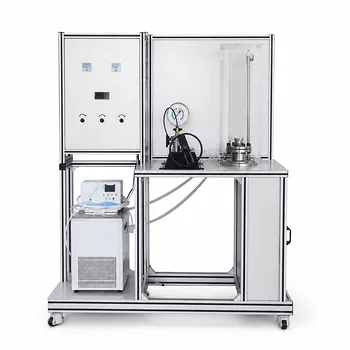
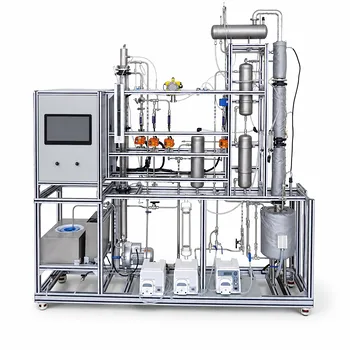
Achieving precise, real-time monitoring is critical for validating process stability and scaling up water treatment technologies. LABPARK provides premium Educational and Vocational Unit Operations Pilot Plants across chemical engineering, bioprocess & biotech, and environmental & water treatment sectors.
Designed specifically for universities, research institutes, and enterprises, our pilot plants integrate advanced sensing capabilities to eliminate manual sampling errors, reduce labor, and deliver high-fidelity continuous data.
Ready to elevate your lab's research and training capabilities? Contact us today to explore our customizable pilot plant solutions!
Related Products
- Carbon Dioxide PVT Curve Determination Educational Unit Operations Pilot Plant
- Carbon Dioxide Absorption and Desorption Educational Pilot Plant for Carbon Capture Studies
People Also Ask
- How do temperature variations affect CO2 transport models in pilot plants? Model vs Reality
- What unit operations are critical for CCUS training pilot plants? Build hands-on engineering expertise.
- What are the applications and limitations of the Virial EOS? Enhance Your Pilot Plant Lab
- What precautions prevent sample loss when volatilizing silica with HF? Crucial Steps for Safe Lab Training
- Why is selecting the correct EOS critical in pilot plants? PR vs. SRK compared.