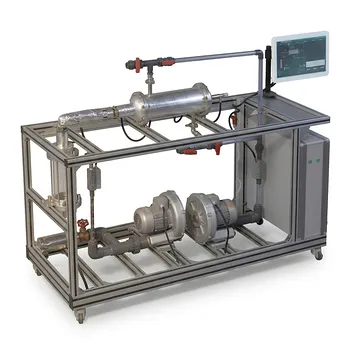
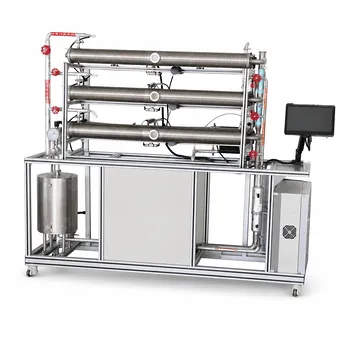
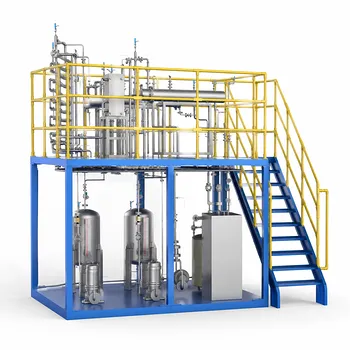
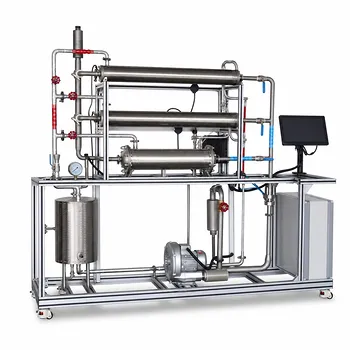
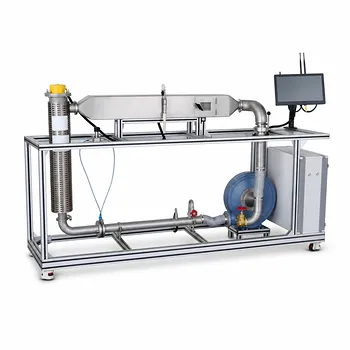
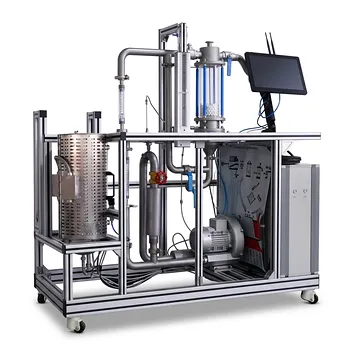
While sophisticated multi-pass and plate exchangers dominate modern plants, the simplest designs often provide the richest learning experience. Double-pipe and jacketed heat exchangers deliver unmatched didactic clarity, allowing students to see, touch, and modify core heat transfer principles directly. Yet these same strengths come with operational limitations—low thermal duties, poor scalability, and mechanical constraints—that define exactly where they belong in a training system and where more advanced hardware becomes necessary.
These exchangers transform abstract transport theory into tangible experiments, enabling direct measurement of temperature profiles, flow rates, and pressure drops. Their core educational value is tied to small-scale, low-throughput operation, making them ideal for demonstrating first principles but inherently limited for showing high-efficiency or large-capacity industrial scenarios.
The Pedagogical Strengths of Simple Exchanger Designs
Making Invisible Heat Transfer Visible
Double-pipe and jacketed exchangers strip away complexity. Their linear, unobstructed flow paths let students trace exactly what happens from inlet to outlet.
There are no internal baffles, corrugated plates, or multiple passes to obscure the physical picture. This transparency is crucial when teaching the differences between co-current and counter-current flow for the first time.
Hands-on Validation of Engineering Fundamentals
Both designs are built from standard, durable components that students can easily disassemble and inspect. Their simple geometry means the governing equations—for heat transfer coefficients and pressure drops—can be applied directly without empirical corrections.
A student can compute a theoretical value on paper and then immediately measure the same value on the pilot plant, building an intuitive bridge between the model and the real world. This cycle of prediction and verification is a powerful pedagogical tool.
Inside the Double-Pipe Heat Exchanger: A Clear Window into Flow Fundamentals
Demonstrating Pure Co-current and Counter-current Flow
The double-pipe (concentric tube) design is one of the purest ways to show how flow arrangement drives thermal performance. With two concentrically mounted pipes and a single return bend, the unit clearly establishes either co-current or counter-current profiles without interference.
Students observe that counter-current flow achieves a higher overall temperature change and requires less surface area—a principle they can measure right at the pilot plant. No other simple exchanger makes this so physically obvious.
Modifying Area and Observing the Consequences
A major teaching advantage is the ability to alter the heat transfer area on the fly. By adding or removing 180° return bends and extra pipe runs, students directly manipulate the surface area and document the resulting change in heat duty.
This active experimentation reinforces the universal relationship Q = U A ΔTₘ in a way that a fixed-area plate exchanger cannot. The student learns that surface area is not a fixed design parameter but a variable to be tuned—a lesson that sticks because it was built by their own hand.
Durability and Ease of Direct Calculation
Constructed from standard pipes (for example, an inner tube of 50 mm and an outer shell of 75 mm), the double-pipe unit is pressure-resistant and mechanically robust. It can handle corrosive simulation fluids like NaOH or HCl when appropriate tube materials (carbon steel or graphite/Karbate) are selected.
Because the geometry is so regular, students can directly calculate convective heat transfer coefficients and pressure drops using film theory and friction factor methods. They then validate these calculations with measured temperature profiles and manometer readings—connecting fluid properties (specific heat, density, thermal conductivity, viscosity) to tangible outcomes.
Inside the Jacketed Heat Exchanger: Bridging Batch Processes and Heat Transfer
Teaching Batch Temperature Control Dynamics
In pilot-plant training, the jacketed vessel is not just a heat exchanger—it is a batch reactor model. Its simple construction (an outer jacket welded around a vessel) lets students focus on the non-steady-state behavior typical of chemical production.
They learn to track how the jacket fluid temperature dictates the reactor wall temperature and, with agitation, the bulk fluid temperature over time. This slow, dynamic response is exactly what they will encounter when scaling up batch processes, making it an essential introductory tool.
Highlighting the Role of Forced Convection
The jacketed design intentionally suffers from a low natural heat transfer coefficient. In educational settings, this is turned into a strength: students rapidly see the plateau in heat removal when the reactor contents are stagnant.
Adding a stirrer or an internal cooling coil then demonstrates forced convection as the primary mechanism for boosting heat transfer. The jump in performance is dramatic, cementing the lesson that jacket-side resistance alone cannot deliver fast thermal control—you need fluid motion on the process side.
Understanding the Trade-offs and Limitations
The Double-Pipe’s Low Area and Mechanical Sagging
The most immediate operational limitation is a very low heat transfer area per unit length. To achieve a meaningful temperature change, you need multiple pipe runs, which makes the unit long and bulky for the duty performed.
If unsupported runs become too long, sagging occurs, creating low points that trap fluid and cause uneven distribution. This maldistribution degrades the very flow purity you were trying to teach, so educational units must remain compact, capping the achievable duty.
The Jacket’s Poor Heat Transfer and Limited Surface
Jacketed exchangers share the problem of limited heat transfer area—you cannot arbitrarily increase the jacket surface without making the vessel enormous. The heat transfer coefficients are poor, especially without agitation, which means temperature control is sluggish.
This makes them unsuitable for demonstrating high-throughput, continuous processes. In an educational setting, the jacket alone rarely suffices for tight temperature regulation, which is why they are typically supplemented with internal coils.
When Simple Designs Fall Short for Advanced Learning
Both exchangers hit a pedagogical ceiling. Once students grasp the basics, they need to encounter the trade-offs that drive industrial choice—high-efficiency units, compact footprints, and the ability to handle large flow volumes. Double-pipe and jacketed units cannot demonstrate multi-pass arrangements, true counter-current flow with high temperature crosses, or the effect of enhanced surfaces found in plate-and-frame exchangers.
A training program that relies solely on these designs risks leaving graduates unprepared for the low approach temperatures and high K-values (up to 7000 W/(m²·°C)) achievable in modern plant equipment. They are a gateway, not the final destination.
Making the Right Choice for Your Training Program
Whether you incorporate double-pipe, jacketed, or both depends on which concept you need students to internalize first. Use their strengths to your advantage and plan for the gap they will leave.
- If your primary focus is teaching the fundamentals of continuous flow and temperature profiles: Use a double-pipe unit for its unmatched visibility into co-current versus counter-current behavior and its ability to let students manipulate heat transfer area directly.
- If your primary focus is immersing students in batch process control and reaction engineering: Start with a jacketed vessel—its inherent sluggishness forces students to understand the critical role of agitation and forced convection.
- If your primary focus is bridging to industrial reality: Follow these simple units with a plate or multi-pass shell-and-tube pilot plant, explicitly contrasting the high efficiency and compactness against the limitations they have just observed.
By deliberately choosing these designs, you give students the rare gift of seeing exactly why more complex equipment exists—because they have lived through the shortcomings of the simple first.
Summary Table:
| Exchanger Type | Core Teaching Benefits | Key Operational Limitations |
|---|---|---|
| Double-Pipe | Demonstrates pure co-current/counter-current flow; adjustable heat transfer area; simple convective calculations. | Low heat transfer area per unit length; risk of mechanical sagging; not suitable for high-throughput training. |
| Jacketed | Teaches batch process dynamics; clearly illustrates the impact of natural vs. forced convection (agitation). | Sluggish thermal response; limited jacket surface area; requires internal coils for realistic cooling. |
Elevate Your Unit Operations Training with LABPARK
Ready to bridge the gap between heat transfer theory and industrial reality? LABPARK designs and manufactures premium Educational and Vocational Unit Operations Pilot Plants across chemical engineering, bioprocess & biotech, and environmental & water treatment.
We empower universities, research institutes, and enterprises with hands-on, robust training systems that make complex transport phenomena tangible for students and researchers alike.
Contact LABPARK today to customize your laboratory pilot plants!
Related Products
- Shell and Tube Heat Exchanger Heat Transfer Coefficient Determination Educational Pilot Plant
- Dual Mode Heat Transfer Pilot Plant for Unit Operations Training
- Three-Tube Heat Transfer Educational Pilot Plant for Unit Operations Training
- Comprehensive Multi-Modal Heat Transfer Unit Operations Pilot Plant for Engineering Training
- Comprehensive Heat Transfer Coefficient Determination Educational Unit Operations Pilot Plant
People Also Ask
- Why Apply LMTD Correction in Shell-and-Tube Pilot Plants & How to Determine It
- How is the fouling factor (Rd) evaluated? Key Pilot Plant Insights for Students
- How is fouling factor demonstrated using shell and tube pilot plants? Practical Lab Guide
- Why is simulating and calculating fouling factors crucial when operating educational heat exchanger pilot plants?
- Why Estimate Tube Wall Temp in Heat Exchangers? Master Pilot Plant Thermal Resistance