The core structural design is largely identical, but the active layer material is fundamentally different. Both hydrophilic and organophilic membranes for unit operations are thin-film composites built on a porous support and textile carrier. The defining distinction lies in the chemistry of that ultra-thin separating layer: hydrophilic membranes employ highly polar, water-attracting polymers that often require crosslinking, while organophilic membranes use hydrophobic, rubbery silicones optimized for organic vapor permeation.
The real differentiator is the active layer's chemical affinity. Hydrophilic membranes use crosslinked polar polymers like PVA to pull water from organics; organophilic membranes use silicones like PDMS to extract organics from water or air. The identical composite architecture provides mechanical robustness, but the separation is governed entirely by this surface chemistry. Understanding both the material science and the practical flux/selectivity trade-off is essential for specifying the right membrane in a pilot or production plant.
The Universal Composite Architecture
In chemical engineering unit operations, almost all modern membranes share a layered “thin-film composite” (TFC) design. This engineered structure decouples mechanical strength from separation performance, enabling high flux and durability.
The Textile Carrier and Porous Substrate
The foundation is a polyester nonwoven material that acts as a tough, flexible backing. On top of this, a microporous substrate—often made of polysulfone, polyimide, polyacrylonitrile, or PVDF—is cast. This asymmetric layer provides a smooth, defect-free surface and prevents the thin separating layer from collapsing under pressure.
The Ultra-Thin Separating Layer
Crowning the structure is a dense, pore-free coating typically only 0.5 to 10 µm thick. This is where the membrane’s personality lives. The substrate offers no real selectivity; that job belongs to this polymer film. Whether designed to pull water out of a solvent or strip VOCs from a gas stream, the TFC skeleton remains the same. Only the chemistry of this top layer changes.
Hydrophilic Membranes: Trapping Water with Polar Polymers
When the goal is dewatering an organic stream, the membrane must have a powerful attraction to water molecules. This is achieved through a dense layer rich in polar functional groups.
The Chemistry of Affinity
Hydrophilic membranes use polymers containing hydroxyl (–OH), ester (–COOR), ether (–O–), or carboxylic (–COOH) groups. These polar sites form hydrogen bonds with water, pulling it through the membrane while rejecting non-polar organics. Common materials include polyvinylalcohol (PVA) , certain polyimides, and the biopolymer chitosan.
The Critical Need for Crosslinking
These water-loving polymers have a fatal flaw: they would dissolve in many of the very process streams they’re meant to treat. To survive, they must be chemically crosslinked. This locks the polymer chains into a three-dimensional network, rendering them insoluble and mechanically stable. Crosslinking is not optional—it is a fundamental manufacturing requirement for hydrophilic pervaporation or vapor permeation membranes.
Organophilic Membranes: Capturing Organics with Rubbery Silicones
For recovering volatile organic compounds (VOCs) from water or gas, the membrane’s top layer must be organophilic. Here, the solution is a family of rubbery silicone polymers.
Silicones as the Selective Barrier
The workhorse material is polydimethylsiloxane (PDMS) , a crosslinked silicone with a high free volume that readily sorbs organic molecules. For demanding separations requiring sharper rejection, a modified variant—polymethyl octyl siloxane (POMS) —replaces some methyl groups with longer octyl side chains. Both are hydrophobic, highly permeable elastomers that reject liquid water and permanent gases while letting organics pass through.
The Flux-Selectivity Tango
PDMS delivers high flux with sufficient selectivity for many standard VOC recovery applications. However, when higher product purity is needed, POMS offers superior selectivity at the cost of lower permeability. This trade-off directly impacts equipment sizing. A POMS membrane may reduce the required membrane area and allow the pilot plant to run with smaller, more cost-effective vacuum pumps and compressors. Material selection thus becomes an economic optimization.
Understanding the Trade-offs
No single membrane chemistry dominates; each carries hidden costs that affect process economics and operational stability.
Swelling and Plasticization Risks
Hydrophilic membranes can swell excessively in high-water-activity streams, altering their separation properties. Organophilic silicone membranes can similarly plasticize when exposed to high concentrations of certain solvents, causing selectivity loss. Both phenomena demand careful feed conditioning and membrane pre-treatment.
Crosslinking as a Double-Edged Sword
While crosslinking prevents dissolution of hydrophilic polymers, it also reduces flux by tightening the polymer network. Over-crosslinking can choke the membrane’s productivity. The art lies in balancing insolubility with permeability, often requiring proprietary curing formulations that are closely guarded by membrane manufacturers.
Matching the Membrane to the Process Fluid
A hydrophilic PVA membrane will excel at drying a solvent like ethanol but will fail catastrophically if used on a stream containing water as a co-solvent that dissolves the PVA backbone. Conversely, applying a PDMS organophilic membrane to a stream with fine suspended solids may foul the rubbery surface. The universal composite structure helps—the carrier and substrate offer chemical resistance—but the active layer remains the limiting factor.
Making the Right Choice for Your Separation Goal
Selecting a membrane starts with identifying which component permeates, then navigating the material-specific trade-offs to match your process economics.
- If your primary focus is dewatering organic solvents: Choose a crosslinked hydrophilic membrane (PVA, polyimide, or chitosan) that exploits polar hydrogen-bonding to preferentially transport water. Ensure the feed’s composition will not dissolve or excessively swell the active polymer.
- If your primary focus is recovering high-value VOCs from water or air: Start with PDMS for its high flux and operational simplicity. Only switch to POMS if you need higher product purity and are willing to accept a permeability penalty, potentially downsizing downstream vacuum equipment.
- If your process demands both mechanical durability and chemical resistance: Trust the thin-film composite architecture with a polyester carrier and inert microporous substrate. The structural backbone is nearly identical across hydrophilic and organophilic designs, letting you safely focus your specification effort entirely on the active layer chemistry.
Every successful membrane-based unit operation hinges on this single truth: the structure supports, but the surface chemistry selects.
Summary Table:
| Feature | Hydrophilic Membranes | Organophilic Membranes |
|---|---|---|
| Primary Application | Dewatering organic solvents | Recovering VOCs from water or air |
| Active Layer Polymer | Polar polymers (PVA, Chitosan, Polyimides) | Rubbery silicones (PDMS, POMS) |
| Key Chemical Need | Crosslinking (to prevent dissolution) | High free volume (for organic transport) |
| Operational Risk | Swelling in high-water environments | Plasticization in high-solvent streams |
| Base Architecture | Thin-Film Composite (TFC) on PVDF/PSU | Thin-Film Composite (TFC) on PVDF/PSU |
Scale Up Your Separation Processes with LABPARK
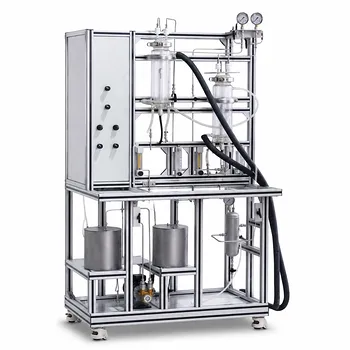
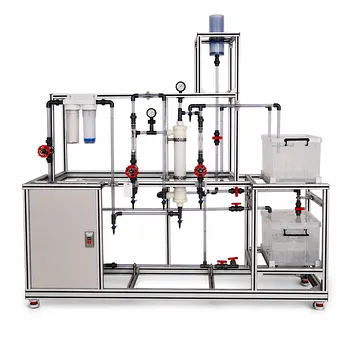
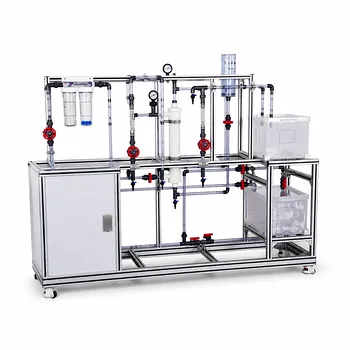
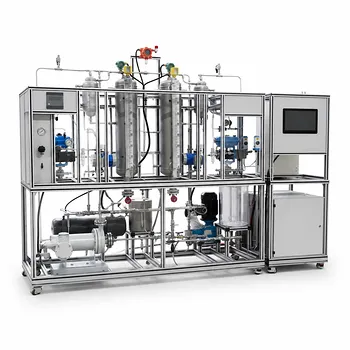
Choosing the right membrane chemistry is critical for efficient chemical separation. LABPARK provides premium Educational and Vocational Unit Operations Pilot Plants in chemical engineering, bioprocess & biotech, and environmental & water treatment designed specifically for universities, research institutes, and enterprises.
Equip your lab with pilot systems that replicate real-world industrial conditions. Contact our technical experts today to find the perfect pilot plant solution for your educational or research needs!
Related Products
- Multifunctional Membrane Separation Educational Pilot Plant with Ultrafiltration, Nanofiltration, Reverse Osmosis
- Multi Functional Membrane Crystallization Educational Unit Operations Pilot Plant
- Photocatalytic Membrane Separation and Degradation Unit Operations Pilot Plant
- Multi-Functional Membrane Separation Educational Pilot Plant for Unit Operations Lab
- Ultrafiltration Membrane Separation Educational Pilot Plant
People Also Ask
- How do PEI, PVDF, and PSU membranes compare in pilot plants? Find the best fit.
- Pervaporation vs. Vapor Permeation: Handling Suspended Solids in Membrane Pilot Plants
- What are the trade-offs of polymer vs inorganic membranes in teaching pilot plants? Key laboratory comparison.
- What are the advantages of membrane separation in pilot plants? Efficient Organic Vapor Recovery
- How can operators optimize operating conditions and cleaning protocols in membrane separation pilot plants to mitigate fouling?