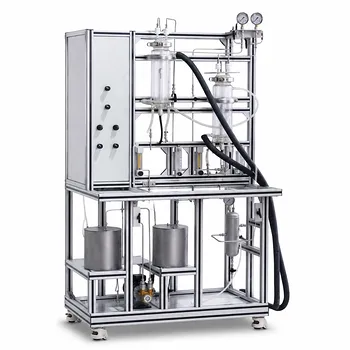
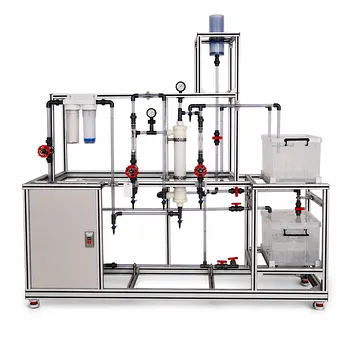
Perovskite oxygen ion transport membranes answer the call for safer, simpler, and more efficient gas separation in high-temperature chemical processes. In pilot plant units, their three primary industrial applications center on syngas production via partial oxidation of methane, supplying hot oxygen for IGCC power plants, and providing oxygen-enriched air for ammonia synthesis, the Claus process, and FCC catalyst regeneration. Operationally, these dense ceramic membranes selectively shuttle oxygen ions (O²⁻) using either a partial pressure gradient or an external electrical potential—all while requiring sustained temperatures above 800 K to achieve commercially relevant oxygen flux.
The true value of integrating perovskite membranes into a pilot plant goes far beyond simple air separation. They become a process-intensification engine, combining membrane-based oxygen separation with catalytic chemical reactions inside a single unit. This can slash capital and operating costs by over 30% compared to conventional autothermal reforming while creating a safer physical barrier between combustible hydrocarbons and air.
Understanding the Operational Mechanisms
A perovskite oxygen ion transport membrane is a dense, non-porous ceramic that conducts nothing but oxygen ions. Its operational mystery disappears once you focus on the material’s unique defect structure.
The Ion Transport Principle
At high temperatures, oxygen vacancies in the perovskite crystal lattice become mobile. Oxygen molecules from the air side adsorb onto the membrane surface, dissociate into ions, and hop from vacancy to vacancy through the lattice. On the permeate side, the ions reassociate into oxygen gas or immediately participate in a chemical reaction.
Driving Forces: Pressure vs. Electrical Potential
The migration of O²⁻ ions is not passive—it requires a driving force. In most pilot plant configurations, a partial pressure gradient is the workhorse. A high oxygen partial pressure on the feed side and a much lower pressure (or a reactive chemical consuming oxygen) on the permeate side create the gradient. Alternatively, an external electrical potential can be applied, directly pumping oxygen ions across the membrane. Both mechanisms allow precise control over oxygen flux, a crucial lever in pilot-scale experimentation.
The Critical Role of High Temperature
Temperature is the master variable. Below about 800 K, oxygen ion conductivity becomes negligible. Once the operating temperature crosses that threshold, the oxygen flux increases exponentially. Pilot plant engineers therefore invest significant design effort into thermal management—keeping the membrane assembly uniformly hot while minimizing heat loss—to unlock membrane performance without excessive energy consumption.
Key Industrial Applications in Pilot Plant Units
Once scaled into a chemical engineering pilot plant, the membrane’s ability to deliver pure oxygen on demand transforms into a tangible competitive advantage.
Syngas Production via Partial Oxidation of Methane
In this application, the membrane acts as both a separator and a safety barrier. Methane (and often steam) flows on the permeate side while air is supplied to the feed side. The transported oxygen ions immediately react with methane in a partial oxidation reaction, yielding syngas (CO + 2H₂). Because the membrane physically separates the fuel from air, the risk of an explosive mixture is eliminated—an invaluable feature in a learning or development environment.
Hot Oxygen Supply for IGCC Power Plants
Integrated Gasification Combined Cycle plants thrive on high-temperature oxygen. The membrane delivers hot oxygen directly into the gasifier, avoiding the energy penalty of cooling and reheating that plagues conventional cryogenic air separation units. Pilot plants demonstrate how this thermal integration raises overall plant efficiency and simplifies the heat-exchange network.
Oxygen-Enriched Air for Chemical Processes
Many bulk chemical processes—ammonia synthesis, sulfur recovery via the Claus process, and FCC catalyst regeneration—perform better with oxygen-enriched air rather than pure oxygen. A perovskite membrane unit produces a continuous, adjustable stream of enriched air, enabling pilot plant researchers to study the effect of oxygen concentration on reaction kinetics, yield, and catalyst longevity without installing multiple bottled-gas supplies.
The All-in-One Oxygen Membrane Reforming Unit
An advanced pilot plant configuration merges the membrane with a reforming catalyst in a single vessel. Here, the membrane’s reaction side hosts a catalyst bed where natural gas and steam are reformed into syngas. The process eliminates the need for an external air separation unit entirely, combining oxygen separation and syngas generation in one step. This configuration becomes a textbook example of process intensification, allowing students and researchers to study simultaneous diffusion, reaction kinetics, and advanced membrane materials in a single, compact rig.
Understanding the Trade-offs
No membrane is without its challenges, and a pilot plant is precisely where those limitations are exposed and optimized.
Thermal Management and Materials Stability
Sustained operation above 800 K places enormous stress on seals, module housings, and the membrane itself. Perovskite materials can undergo phase changes or chemical destabilization, especially in the presence of CO₂ or sulfur species. Pilot plants often confront the tension between high flux at extreme temperatures and the risk of mechanical failure or degradation over long campaigns.
Flux vs. Selectivity Challenges
The membrane’s selectivity for oxygen over nitrogen is nearly infinite in theory, but surface reaction kinetics and bulk diffusion limitations govern the actual flux. If the membrane’s surface cannot dissociate oxygen molecules fast enough, the flux plateaus even when driving forces increase. Pilot-scale research constantly balances membrane thickness, surface activation catalysts, and operating pressure to hit flux targets without sacrificing selectivity.
Integration Complexity and Scale-Up
While the all-in-one reforming unit slashes equipment count, it introduces a steep control challenge. The oxygen flux must precisely match the reaction stoichiometry; too little oxygen and the catalyst fouls, too much and the synthesis gas ratio degrades. Translating a laboratory disk into a pilot-scale module often reveals dead zones and non-uniform temperature profiles that are invisible at smaller scales.
How to Apply This to Your Pilot Plant Project
The right operational mode and application depend entirely on what you aim to learn, demonstrate, or commercialize. Use these goal-oriented guidelines to steer your pilot plant design.
- If your primary focus is demonstrating a safer syngas production route: Choose a methane partial oxidation configuration. The membrane’s inherent physical barrier eliminates pre-mixing risks and turns a fundamental safety principle into a teachable, measurable advantage.
- If your primary focus is maximizing energy efficiency in gasification: Integrate the membrane as a hot oxygen delivery system for IGCC simulation. Focus pilot-plant experiments on heat integration and membrane durability under realistic syngas impurity loads.
- If your primary focus is researching process intensification: Build the combined oxygen membrane reforming unit. It compresses the flowsheet dramatically and serves as a powerful platform for studying catalyst-membrane synergy, dynamic flux control, and techno-economic trade-offs.
- If your primary focus is supply flexibility for multiple chemical syntheses: Deploy the membrane in oxygen-enriched air mode. A single pilot unit can then feed a range of downstream processes—from Claus sulfur recovery to FCC regeneration—while you map performance across oxygen partial pressures.
A perovskite oxygen ion transport membrane pilot plant is not just a gas separator; it is a high-temperature reaction laboratory in miniature—an incredibly efficient, inherently safe tool for mastering the future of integrated chemical processing.
Summary Table:
| Application | Operational Mechanism | Key Benefit in Pilot Plants |
|---|---|---|
| Syngas Production | Methane partial oxidation via pressure gradient | Eliminates explosion risks by physically separating fuel and air. |
| IGCC Power Plants | Direct hot oxygen delivery at >800 K | Increases energy efficiency; eliminates cooling and reheating steps. |
| Oxygen-Enriched Air | Adjustable O²⁻ flux via vacancy diffusion | Enables precise study of oxygen concentration on reaction kinetics. |
| Combined Reforming Unit | Membrane integrated with catalyst bed | Achieves process intensification by merging separation and reaction. |
Bring Advanced Process Intensification to Your Lab with LABPARK
Are you looking to integrate advanced separation and reaction technologies into your curriculum or research? LABPARK provides state-of-the-art Educational and Vocational Unit Operations Pilot Plants in chemical engineering, bioprocess & biotech, and environmental & water treatment.
Designed specifically for universities, research institutes, and enterprises, our pilot plants deliver hands-on learning, precise control, and industrial-grade scalability.
Ready to elevate your research and training capabilities? Contact our engineering experts today to customize the perfect pilot plant system for your facility!
Related Products
- Photocatalytic Membrane Separation and Degradation Unit Operations Pilot Plant
- Ultrafiltration Membrane Separation Educational Pilot Plant
- Multifunctional Membrane Separation Educational Pilot Plant with Ultrafiltration, Nanofiltration, Reverse Osmosis
People Also Ask
- What are the key differences in membrane configurations? Choose the Right Unit Operations Pilot Plant
- How Do Pervaporation, Vapor, and Gas Permeation Differ in Pilot Plants? Key Comparison
- What are the structural & performance trade-offs of flat-sheet, spiral-wound, & hollow-fiber membrane modules?
- How do PEI, PVDF, and PSU membranes compare in pilot plants? Find the best fit.
- Pervaporation vs. Vapor Permeation: Handling Suspended Solids in Membrane Pilot Plants