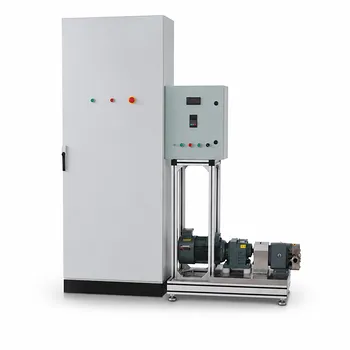
Slugging and roller compaction are two distinct dry granulation methods, differing fundamentally in their process continuity and the form of the compressed material they produce. Slugging is a batch operation that compresses a powder blend into large, flat compacts (slugs) using a heavy-duty tablet press, then mills them into granules. Roller compaction is a continuous process that feeds powder between two counter-rotating rollers to form a dense ribbon or sheet, which is subsequently milled. This distinction—batch versus continuous—defines their operational philosophy, equipment design, and the way students learn them in a pilot plant setting.
Mastery of dry granulation comes not just from knowing the definitions, but from experiencing how each machine translates mechanical pressure into granule properties. Unit operations pilot plants give students the irreplaceable opportunity to move beyond theory and directly manipulate process parameters, visually trace material transformations, and build an intuitive feel for the interplay between equipment, powder, and final granule quality.
The Core Mechanical Differences Between Slugging and Roller Compaction
Understanding how each unit operation physically works is the first step to mastering the process. The dissimilarities in mechanism explain why they respond differently to the same powder and why they suit different manufacturing strategies.
Slugging: Batch Compression into Large Compacts
Slugging relies on a standard tablet press that uses high tonnage to compress powder into large, flat tablets or “slugs,” often 1–2 inches in diameter.
Because it is a batch process, each compact is formed individually. The slugs are then collected and milled into granules of a desired size. This discrete formation creates a different stress history in the powder compared to a continuous ribbon, often resulting in harder starting compacts that may require higher milling forces.
Roller Compaction: Continuous Pressure into a Ribbon
Roller compaction forces powder between two counter-rotating rollers to form a continuous, densified ribbon.
The process is inherently continuous—new powder is drawn in and compacted as the rollers turn. The compacted ribbon is then milled directly into granules. The roller gap, pressure, and feed screw speed become critical levers that determine ribbon density, thickness, and uniformity, and eventually granule flow and tabletability.
How Pilot Plants Turn Theoretical Knowledge into Operational Mastery
Hearing about batch and continuous processes is one thing; standing in front of a slugging press and a roller compactor is another. Pilot plants bridge this gap by transforming abstract principles into tangible, controllable experiments.
Visualizing the Process Transformation
Students can physically trace how a loose powder blend becomes a compact and then granules. On a slugging press, they see individual slugs ejected and later broken down in a mill. On a roller compactor, they observe the powder being drawn between rollers, emerging as a ribbon, and immediately sucked into an integrated mill. This direct observation cements the workflow and material handling differences—slugging’s discrete batches versus roller compaction’s seamless flow.
Hands-On Manipulation of Critical Process Parameters
The real learning begins when students adjust the machine themselves. In a roller compaction pilot plant, they can vary:
- Roller pressure – directly affects ribbon density and granule strength.
- Roller speed – changes the compaction dwell time and the ribbon’s thickness/porosity.
- Gap width – defines the ribbon’s maximum thickness and alters the pressure distribution.
- Feed screw speed – controls the mass flow of powder into the nip region and prevents air entrainment.
When they change one variable, they immediately see the ripple effect on granule size distribution, flowability, and friability. This teaches the interdependence of parameters: a high roller speed combined with low compaction force reduces granule flow, increases friability, and yields smaller granules, while a smaller gap with high pressure can produce larger, denser granules that may later lose tablet strength due to work hardening.
Comparative Analysis for Deeper Insight
A well-equipped pilot plant includes both dry granulation units. This allows students to run the same formulation on slugging equipment and on a roller compactor, then compare the resulting granule densities, particle sizes, and compaction behaviors. They learn when the batch flexibility of slugging is valuable (e.g., for early development or toxic materials) and when the efficiency and scalability of continuous roller compaction become critical. The side‑by‑side experience also highlights why dry granulation is the route of choice for moisture‑sensitive APIs that cannot tolerate wet massing or drying.
Understanding the Trade-offs and Common Pitfalls
Mastering a process means knowing its limitations. Pilot plant training that ignores trade-offs fails to prepare students for real industrial decisions.
- Batch vs. throughput trade-off: Slugging offers a simple, quick‑to‑set‑up batch process but is slower at scale and can produce less uniform granules if the slug quality varies. Roller compaction delivers consistent output but demands tighter control of feed and roller parameters to avoid ribbon splitting or density gradients.
- Work hardening risk in roller compaction: Over‑compaction during ribbon formation can damage the material’s ability to re‑bond during tableting, leading to weaker final tablets. Students often discover that maximizing ribbon density does not always yield the best tablet hardness—a key lesson that pilot‑scale experiments bring to life.
- Operational pitfalls: Uneven roller gap or misaligned feed can cause powder leakage and air pockets, producing non‑uniform granules. In slugging, inconsistent weight or dwell time on the press can lead to variable milled granule sizes. The pilot plant is the safe environment to witness these failures and learn corrective actions without risking production batches.
How to Apply Pilot Plant Learning to Your Educational Goals
Maximizing the benefit of a unit operations pilot plant depends on what you aim to teach. Tailor the hands-on exercises to the learning objective.
- If your primary focus is understanding the shift from batch to continuous manufacturing: Run the same formulation through both the slugging press and the roller compactor, then compare product output, equipment footprint, and process control complexity.
- If your primary focus is parameter interdependency and Quality by Design: Use the roller compactor extensively; design experiments that map roller pressure, speed, and gap width to granule flow and tablet tensile strength. Introduce fault conditions like intentional feed screw mismatch to observe ribbon defects.
- If your primary focus is formulation development for moisture-sensitive drugs: Start with dry granulation to avoid liquid binders, then compare granules from slugging and roller compaction to select the process that best preserves compactability and yields optimal dissolution.
- If your primary focus is holistic process understanding: Allow students to visually trace and contrast the entire dry granulation workflow (blend → compact → mill → tablet) against the longer wet granulation path (blend → wet mass → dry → mill → tablet). This reveals why dry granulation often means a simpler equipment train and floor layout.
Ultimately, the pilot plant is the bridge between a textbook diagram and a confident, problem-solving engineer who can tune a roller compactor or troubleshoot a slugging press with equal fluency.
Summary Table:
| Feature | Slugging (Batch) | Roller Compaction (Continuous) |
|---|---|---|
| Process Flow | Discrete, batch-by-batch | Continuous, seamless flow |
| Material Form | Large flat compacts (slugs) | Densified ribbons or sheets |
| Key Parameters | Compression force, milling speed | Roller speed, pressure, gap width, feed rate |
| Educational Value | Demonstrates batch variability | Teaches parameter interdependence & QbD |
Equip Your Lab with Advanced Pilot Plants
Enhance practical learning and research with LABPARK. We provide premium Educational and Vocational Unit Operations Pilot Plants in chemical engineering, bioprocess & biotech, and environmental & water treatment for universities, research institutes, and enterprises. Help your students transition from theory to operational mastery—contact LABPARK today to discuss your laboratory setup!
Related Products
- Multi-Functional Drying Educational Unit Operations Pilot Plant
- Natural Product Extraction Unit Operations Training Pilot Plant
- Continuous Sieve-Plate Distillation Pilot Plant for Unit Operations Laboratory Education
- Multimodal Absorption and Desorption Pilot Plant for Unit Operations Training
- Three-Tube Heat Transfer Educational Pilot Plant for Unit Operations Training
People Also Ask
- How to study gasification in pilot plants? Compare exit gas composition & efficiency
- Why is the chemical plant startup schedule crucial? De-risk scale-up with pilot plants.
- How do deviations in estimating latent heat impact pilot plant thermal systems? Avoid hardware mis-sizing.
- Why Use PTFE & Hastelloy in Chemical Pilot Plants? Prevent Corrosion & Ensure Safety
- When to transition from PID to adaptive control in pilot plants? Key process indicators.