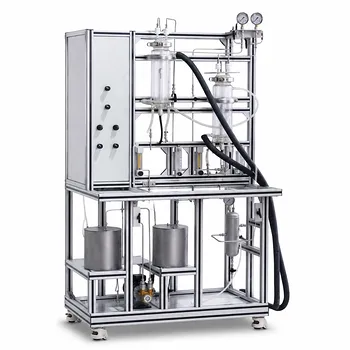
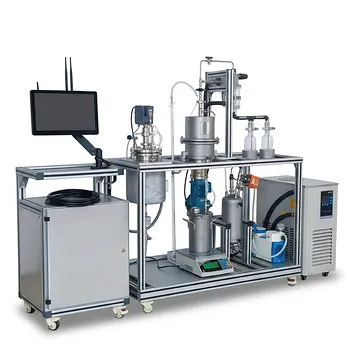
Photoreactor integration transforms chemical engineering pilot plants into platforms for high-selectivity, low-energy chemistry—but only if you master the light.
Integrating photoreactor systems into unit operations pilot plants delivers exceptional reaction selectivity, minimal side reactions, and the ability to conduct liquid-phase transformations that are thermodynamically impossible by heat alone, all while operating near ambient temperature. The flip side: designers must confront the absence of standardized scaling models, the complexity of light-path dynamics, and the thermal constraints imposed by transparent, poorly conductive reactor materials.
Photoreactor pilot plants unlock an expanded chemical space and profound process intensification, but their success hinges on aggressive control over light distribution, heat dissipation, and material compatibility. Closing the gap between academic photochemistry and industrial reality demands real‑time radiometric data, modular microstructured hardware, and a willingness to grapple with incomplete kinetic models.
The Unique Advantages of Photoreactor Integration in Pilot Plants
Enabling Reactions That Thermal Methods Cannot Touch
Photoreactors directly input photon energy to drive reactions, making thermodynamically uphill processes accessible. The primary reference highlights the ability to perform liquid‑phase operations unfeasible via traditional thermal routes, all while maintaining low operating temperatures and minimal side reactions.
Equally powerful is the instant control that light provides. In a series‑parallel reaction network—such as a chlorination—the radiation field can be tuned so that the first pathway operates under a diffusional subregime while the second stays kinetically limited. The moment the desired intermediate reaches near‑complete conversion, switching off the UV source freezes the product distribution. No thermal reactor can match this level of “stop‑on‑command” selectivity, a feature that turns the pilot plant into a tunable synthesis tool.
Process Intensification Through Microstructured Photoreactors
Because photon penetration depth is inherently limited, practical photoreactors almost always adopt microchannel or thin‑film architectures. This design choice brings the full power of microreactor technology into the mix. The high surface‑area‑to‑volume ratios guarantee exceptional heat and mass transfer, enabling pilot plants to safely run highly exothermic or photosensitive reactions at ambient temperatures—eliminating the need for cryogenic cooling systems that would otherwise push pre‑reaction conditions to –60 °C or below.
Furthermore, these photochemical microsystems operate as modular, continuous‑flow assemblies. Researchers can plug together microreactors, inline separators, and analytical sensors on a bench‑top footprint, rapidly screening catalysts or reaction pathways while consuming far less solvent and starting material. The inherent inventory reduction of hazardous chemicals also dramatically improves laboratory safety—a decisive advantage for academic and vocational training environments.
A Practical Bridge from Theory to Scale‑Up
Unit operations pilot plants that include photoreactors provide the only realistic environment to measure the light‑radiation and kinetic parameters needed for scale‑up. By directly probing the local volumetric rate of energy absorption (LVREA), students and researchers can validate computational models of photon transport and correlate them with actual reaction rates. This hands‑on exposure bridges the chronic gap between idealized lab‑scale photochemistry and industrial flow‑sheet design, building the practical engineering judgment that no textbook can deliver.
Core Design Challenges When Scaling Photoreactors
The Complexity of Light‑Path Dynamics and Energy Absorption
The single biggest hurdle is mastering the radiation field. Unlike temperature or concentration, light intensity is not uniform; it attenuates exponentially, scatters off catalyst particles, and depends on the optical geometry of the vessel. The primary reference explicitly flags complex light‑path dynamics and the lack of standardized reactor design models as critical barriers.
In practice, every pilot‑scale photoreactor must be characterized by its LVREA distribution. Designers need accurate absorption coefficients for the photoactive species, knowledge of quartz transmission spectra, and often computational ray‑tracing to predict photon density. Without widely accepted engineering correlations, each new scale‑up effort remains a bespoke, empirical exercise.
Thermal Management Limitations of Transparent Materials
Photochemical reactions require reactor walls that are transparent to the initiating wavelength—typically quartz or borosilicate glass. These materials, however, are poor thermal conductors. As the supplementary references note, heat removal becomes a bottleneck: any exothermicity must be managed through cooling jackets in the annular space or by applying reflective coatings on outer non‑transparent walls.
This constraint forces a delicate trade‑off. Thicker glass improves mechanical strength but reduces light transmission; thinner walls improve light throughput but risk cracking under thermal stress. Cooling channels must be designed so they do not shadow the light source, placing even more burden on the already stretched heat transfer area.
Material Durability and Corrosion in Photochemical Environments
Many photochemical pilot‑plant streams involve aggressive species—chlorine, chlorinated solvents, or radical intermediates. The supplementary references emphasize that selecting chemically resistant materials for reactors, seals, and gaskets is non‑negotiable for long‑term operational safety. Even high‑purity quartz can degrade under intense UV exposure if trace contaminants are present, while fluoropolymer seals may swell or leach plasticizer into the reaction mixture.
The Data Gap: Missing Standardized Kinetic and Mass‑Transfer Parameters
The primary reference pinpoints a lack of quantitative physical‑chemical parameter data as a major obstacle. Photon‑based kinetics rarely follow simple Arrhenius laws; quantum yields, photosensitizer lifetimes, and competitive absorption by by‑products all influence the outcome. Without a rich database of these parameters, pilot‑plant operators must invest heavily in in‑situ spectroscopy and residence‑time distribution studies just to characterize their own system, slowing down the transition from concept to curriculum or market.
Navigating the Trade‑Offs: When Photoreactors Excel and Where They Stumble
Selectivity vs. Operational Complexity
The ability to freeze product distributions by dousing the light is unique, but it demands a deep understanding of mass‑transfer subregimes. If the engineer fails to keep the primary reaction diffusion‑limited, the secondary pathway may outrun the desired product. In a teaching or research pilot plant, this complexity can be an educational goldmine; in a strictly profit‑driven environment, it may be an unwelcome control burden.
Modularity vs. Integration Overhead
Plug‑and‑play microphotoreactors slash development time and lab space, yet they introduce fluidic interconnects, dead volumes, and sensor‑integration challenges. Leak‑free operation at multiple scales and the calibration of on‑line analytical probes consume considerable engineering effort, often offsetting the simplicity benefits for simple, well‑understood reactions.
Low‑Temperature Operation vs. Heat Removal Capacity
Running at ambient temperature is a signature advantage, but if the photon‑driven reaction is highly exothermic, the limited thermal conductivity of the glass envelope can create localized hotspots. These not only damage the reactor but also distort the LVREA by thermally bleaching or decomposing the photoactive species, undermining the very selectivity the setup was built to exploit.
Scale‑Up Promise vs. Photon Limitation
Photon penetration depth rarely exceeds a few millimeters in absorbing media. Therefore, scaling up a photoreactor usually means numbering up rather than geometrically scaling a single vessel. This adds complexity in flow distribution, light‑source synchronization, and capital cost—challenges that can erode the economic incentive of the photochemical route unless the chemistry provides a step‑change advantage.
Making the Right Choice for Your Pilot Plant
The decision to integrate a photoreactor system ultimately depends on what you are trying to prove or teach.
- If your primary goal is researching novel, thermodynamically impossible reactions: Photoreactors are indispensable. Prioritize radiometric instrumentation and in‑situ kinetic characterization from day one.
- If your focus is on ultra‑high selectivity and minimal side products: Deploy microstructured photoreactors with precise residence‑time control and a light‑triggered “freeze” capability to lock in the intermediate.
- If you are training the next generation of chemical engineers: A modular photoreactor pilot plant provides an unparalleled sandbox for process intensification, advanced control, and photochemical kinetics—all in a single, compact rig.
- If operational simplicity and low capital cost are paramount: Stay with conventional thermal reactors unless the photochemical pathway opens a completely new product or eliminates an expensive separation; the integration overhead can outweigh the gains for routine processes.
By aligning the photoreactor’s design with your core objective—whether that is selectivity, training, or groundbreaking discovery—you can turn a technologically demanding integration into the most decisive asset in your unit operations plant.
Summary Table:
| Key Advantages | Major Design Challenges |
|---|---|
| Enables thermodynamically uphill, low-temp reactions | Complex light-path dynamics & LVREA modeling |
| High selectivity & instant reaction control (light off) | Poor thermal conductivity of transparent materials |
| Process intensification via microchannel flow | Material degradation & chemical corrosion risks |
| Hands-on scaling & kinetic validation data | Lack of standardized scale-up & kinetic parameters |
Ready to elevate your research and training? LABPARK provides state-of-the-art Educational and Vocational Unit Operations Pilot Plants in chemical engineering, bioprocess & biotech, and environmental & water treatment. Designed specifically for universities, research institutes, and enterprises, our modular systems help you master complex photoreactor dynamics, scale up processes safely, and bridge the gap between theory and industrial practice. Contact us today to find the perfect pilot plant solution for your facility!
Related Products
- Photocatalytic Membrane Separation and Degradation Unit Operations Pilot Plant
- Supercritical High-Gravity Flash Evaporation Educational Unit Operations Pilot Plant
- Rising and Falling Film Evaporation Educational Unit Operations Pilot Plant
- Educational Unit Operations Pilot Plant for Intraparticle Diffusion Effective Factor Measurement
People Also Ask
- What are the key differences in membrane configurations? Choose the Right Unit Operations Pilot Plant
- How Do Pervaporation, Vapor, and Gas Permeation Differ in Pilot Plants? Key Comparison
- What are the structural & performance trade-offs of flat-sheet, spiral-wound, & hollow-fiber membrane modules?
- Pervaporation vs. Vapor Permeation: Handling Suspended Solids in Membrane Pilot Plants
- How do PEI, PVDF, and PSU membranes compare in pilot plants? Find the best fit.