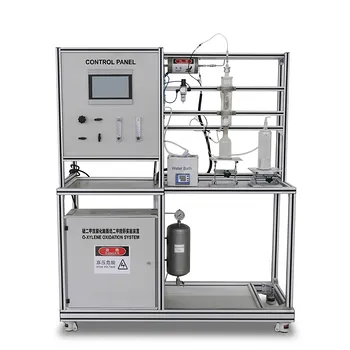
Fixed bed biofilm reactors offer a powerful, high-conversion platform for pilot-scale wastewater treatment, but their success hinges on one non-negotiable condition: the feed must be virtually free of suspended solids. The primary design task is selecting a packing material that maximizes surface area for biofilm growth while maintaining open channels for flow. The dominant operational limitation is plugging. If the feed contains particulate matter, it will clog the packed bed, rapidly degrading contact efficiency, increasing pressure drop, and ultimately crippling performance. For that reason, robust pre-filtration or the deliberate use of dissolved organic feedstocks is not an afterthought—it is the foundation of reliable pilot plant operation.
The fixed bed biofilm reactor’s greatest strength—a dense, stationary biomass retained on inert packing—is also its greatest vulnerability. It eliminates the need for a downstream recycle loop but cannot tolerate solids. Pilot studies must therefore be designed around this trade-off, prioritizing feed quality control as the primary lever for success.
Why the Fixed Bed Biofilm Reactor Shines in Pilot Plants
Superior Biomass Retention Without a Recycle Loop
Fixed-film reactors keep microorganisms anchored to solid media, so the biomass remains inside the reactor. Unlike suspended-growth systems (such as activated sludge), this eliminates the need for a separate sedimentation tank and a continuous sludge recycle loop. That architectural simplicity reduces equipment footprint, simplifies mass balances, and makes the pilot plant easier to operate and control during experimental campaigns.
High-Throughput Treatment of Soluble Organic Loads
The primary reference confirms that this configuration is highly suitable for rapid decomposition of soluble, easily convertible organic substrates. In practice, fixed bed reactors consistently achieve 90–98% conversion of high-concentration streams (up to 200 kg COD/m³) when fed slowly digestible carbohydrates with minimal solids, operating at weight hourly space velocities of 10–20 kg COD/(m³·day). This makes them an ideal testbed for exploring high-strength and high-organic-load scenarios in a compact unit operations pilot plant.
A Robust Tool for Kinetic and Hydrodynamic Studies
Because the biofilm remains attached, pilot plant operators can isolate variables such as mass transfer rates, organic loading capacities, and biofilm surface area without the confounding effects of biomass washout. The configuration also allows direct comparison with suspended or fluidized systems, offering students and researchers clear insights into how reactor geometry shapes conversion kinetics.
Key Design Considerations for a Reliable Pilot-Scale System
Packing Material: The Heart of the Biofilm Reactor
The inert packing material—gravel, rock, or specialized plastic media—dictates the available biofilm surface area and the hydraulic behavior of the bed. The material must be chemically inert, mechanically durable, and provide a high specific surface area to support a dense active biofilm. However, increasing surface area by reducing void space increases the risk of clogging, so the design must balance biological capacity against hydraulic openness.
Flow Direction and Phase Configuration
Downward flow is the standard for single-phase operation because upward velocities can fluidize or displace the packed bed, destroying the fixed-film advantage. For two-phase (gas-liquid) systems common in aerobic treatment, co-current downward operation—known as trickle-bed flow—is favored. This configuration evenly distributes wastewater and air, maintains good wetting of the biofilm, and avoids the hydraulic instabilities of countercurrent flow. Radial flow is reserved for situations where pressure drop must be minimized, but it is less common in pilot biofilm reactors.
Liquid Hourly Space Velocity and Organic Loading
Design must target the appropriate liquid hourly space velocity (LHSV) and organic loading rate to match the experimental goals. Pilot plants are often configured to demonstrate conversion at a WHSV of 10–20 kg COD/(m³·day) for high-concentration feeds. Operating within this window ensures that the biofilm remains active without being overloaded or starved, and it allows researchers to probe the transition from mass-transfer-limited to kinetically-limited regimes.
Temperature Control and Non-Isothermal Considerations
Even at pilot scale, biological reactions generate heat, and the fixed bed can develop axial temperature gradients. The reactor should be designed as a pressure vessel when operating above ambient temperature or under pressure, with engineered wall thicknesses, head types, and temperature sensor ports that enable mapping of temperature distribution along the bed. This is especially important when students are asked to investigate how thermal profiles affect reaction kinetics and biofilm vitality.
The Critical Operational Limitation: Plugging—and How to Mitigate It
Why Suspended Solids Are the Enemy of Performance
The primary reference is unequivocal: the wastewater must contain minimal suspended solids. Particulate matter lodges in the narrow channels between packing elements, progressively reducing the effective contact area between the wastewater and the biofilm. The result is a self-reinforcing cycle: local clogging increases liquid velocity through remaining passages, which may shear off established biofilm and further redistribute solids into the bed, leading to a sharp drop in conversion efficiency.
Mandatory Pre-Filtration and Feed Selection
Pilot plant protocols must either pre-filter the wastewater to remove suspended solids or use synthetic dissolved organic feedstocks. Without this step, the data generated will be unreliable, and the reactor will require frequent, disruptive cleaning. In educational settings, demonstrating the rapid performance degradation caused by bypassing pre-treatment becomes a powerful lesson in the importance of feedstock quality for fixed-bed processes.
Monitoring Pressure Drop as a Leading Indicator
A carefully instrumented pilot plant will include differential pressure sensors across the bed. A rising pressure drop at constant flow is the earliest, most reliable signal that plugging is beginning. Operators can then adjust feed quality, reduce loading, or trigger a backwash cycle (if the system is designed for it) before total failure occurs. This turns an operational limitation into a teachable moment about predictive maintenance and process control.
Understanding the Trade-Offs and Choosing the Right System
Fixed Bed vs. Suspended Growth
Suspended growth reactors like activated sludge handle particulate-laden wastewater more gracefully because the biomass is continuously mixed and settled. However, they require a sedimentation tank and recycle loop, complicating the pilot plant layout. Fixed bed biofilm reactors sacrifice this flexibility for simplicity and higher conversion per unit volume—but only when the feed is clean. The decision, therefore, must be guided by the real-world feed characteristics expected in the full-scale process being modeled.
Fixed Bed vs. Other Fixed-Film Technologies
Upflow Anaerobic Sludge Blanket (UASB) reactors, for example, handle small particles and proteins well, with low mixing costs driven by biogas. However, they are less suited for the very high organic loads (25–200 kg COD/m³) and slowly digestible substrates where fixed beds excel. Rotating biological contactors, another fixed-film alternative, avoid plugging by moving the biofilm through air, but they introduce mechanical complexity. The fixed bed occupies a specific niche: high conversion of high-concentration soluble streams with minimal solids, and pilot-plant designers must respect that niche to obtain meaningful results.
Making the Right Choice for Your Pilot Plant Goals
The ideal configuration depends on the specific learning or research objectives of your unit operations pilot plant. Use these goal-oriented recommendations to guide your design:
- If your primary focus is demonstrating high conversion of high-strength, soluble wastewater: Choose a fixed bed biofilm reactor with a carefully selected packing material and downward flow. Invest in precise LHSV control and ensure a completely soluble feed to avoid plugging.
- If your primary focus is comparing biofilm kinetics against suspended growth systems: Run a fixed bed unit alongside an activated sludge system, using identical soluble feed. This isolates the impact of biomass attachment, while the fixed bed’s simplicity makes material balance calculations far easier.
- If your primary focus is teaching the real-world impact of feed quality on reactor operation: Use the fixed bed’s sensitivity to solids as an educational tool. Deliberately introduce a controlled amount of particulates to demonstrate the pressure drop spike and conversion decline, then show the restoration of performance after pre-filtration is re-instated.
- If your primary focus is exploring two-phase (aerobic) biofilm processes: Opt for a co-current downflow trickle-bed configuration. This design supports uniform air-liquid distribution, provides the superior heat transfer of the liquid phase, and mimics the industrial hydrodesulfurization type of trickle beds, linking wastewater theory to broader chemical engineering principles.
The fixed bed biofilm reactor is a master of specific, controlled conditions. When you respect its need for a clean feed, it rewards you with exceptional conversion, operational simplicity, and a crystal-clear window into the fundamentals of biofilm-based treatment.
Summary Table:
| Parameter / Challenge | Impact on System | Best Practice / Solution |
|---|---|---|
| Packing Material | Dictates biofilm surface area & void space | Balance surface area with hydraulic openness |
| Flow Configuration | Prevents bed fluidization | Use downward single-phase or co-current trickle flow |
| Solids Plugging | Blocks flow channels, drops conversion | Implement mandatory pre-filtration or soluble feed |
| Temperature Control | Affects biological kinetics & thermal profiles | Design as a pressure vessel with sensor ports |
Accelerate your research and training with LABPARK. We design and manufacture high-performance Educational and Vocational Unit Operations Pilot Plants in chemical engineering, bioprocess & biotech, and environmental & water treatment. Whether you are a university, research institute, or enterprise, we provide custom pilot-scale solutions tailored to your academic and R&D goals. Contact our technical experts today to find the perfect pilot reactor system for your lab!
Related Products
- Multi-Reactor Educational Pilot Plant for Reaction Engineering Unit Operations
- Fixed-Bed Chemical Reaction and Gas Dust Tar Removal Unit Operations Pilot Plant
- Fixed Bed Gas Solid Catalytic Reaction Educational Pilot Plant
- Multi Functional Catalytic Reaction and Reactor Evaluation Educational Unit Operations Pilot Plant
- Educational Unit Operations Pilot Plant for Intraparticle Diffusion Effective Factor Measurement
People Also Ask
- How do reactor pilot plants define QbD design space? Master chemical process scale-up.
- When configuring a reactor unit operations pilot plant for highly exothermic reactions, how to prevent thermal runaway?
- How do metal ion-catalyzed reaction mechanisms inform chemical engineering pilot plant design? From kinetics to scale-up
- What role do educational pilot plants play in scaling green chemistry? Bridging the Lab-to-Industry Gap
- What are the barriers to process intensification & how do pilot plants help?