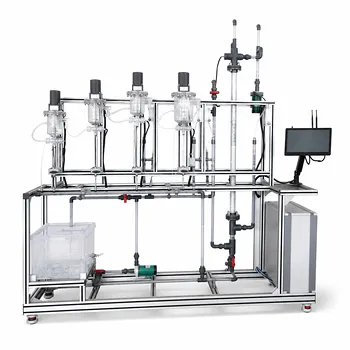
Here’s the immediate answer: In bioprocess training, genetically engineered bacterial bioreactors outperform traditional hybridoma technology by dramatically speeding up the discovery process, slashing operational costs, and offering unmatched genetic flexibility. These systems let trainees screen high-affinity antibody fragment clones in just 7–14 days—compared to months with hybridomas—while running in scalable, pilot-scale fermenters that mirror real-world manufacturing. The ability to shuffle light and heavy chains or introduce targeted mutations further transforms a simple production run into a hands-on lesson in protein engineering.
The core advantage isn’t just faster production; it’s the pedagogical depth. Bacterial bioreactors turn a bioprocess training exercise into an integrated experience that combines molecular biology, process development, and scale-up—all within a single, cost-effective platform.
The Speed of Discovery: Phage Display vs. Hybridoma Screening
Traditional hybridoma technology involves fusing B-cells with myeloma cells, then spending months selecting, subcloning, and stabilizing immortalized cell lines. In an educational setting, this timeline is a non-starter.
Rapid Clone Identification
Genetically engineered bacteria use phage display libraries to present Fab fragments on their surface. Trainees can screen billions of variants and isolate high-affinity binders in a matter of days.
This speed comes from a simple selection cycle—bind, wash, elute, and amplify—that fits neatly into a week-long lab module.
From Months to Days
Where a hybridoma-based workflow might take several months to yield a stable clone, a bacterial system delivers results in 7 to 14 days. This compression means students can run multiple iterative rounds in a single semester.
They’re not just learning how to operate a bioreactor; they’re learning how to optimize a biological search engine.
Scalability and Cost-Effectiveness in a Training Environment
Running a pilot plant is expensive, and mammalian cell culture adds complexity that can distract from core bioprocess learning.
Pilot-Scale Fermentation Simplicity
Bacteria grow fast in chemically defined media, tolerate a wide range of conditions, and require no complex CO₂ or serum-supplemented environments. This makes them far easier to scale in the small stirred-tank fermenters common in training facilities.
Trainees can focus on controlling dissolved oxygen, pH, and feeding strategies—the universal principles of bioprocessing—without the overhead of maintaining fragile mammalian lines.
Lower Operational Costs
Media for E. coli costs a fraction of the serum-containing, high-glucose media hybridomas demand. Contamination risks are lower, and turnaround between batches is measured in hours, not weeks.
The result is a training platform that maximizes hands-on time per dollar spent.
Genetic Engineering: A Tool for Tailored Learning
The most profound advantage is what you can teach beyond just “making a protein.”
Chain Shuffling and Mutagenesis
Bacterial hosts let trainees directly manipulate the light and heavy chain genes of the Fab fragment. They can perform chain shuffling to create combinatorial diversity or use site-directed mutagenesis to probe structure-function relationships.
This turns the bioreactor into a live textbook on directed evolution—a core skill in modern biotherapeutics.
Generating Diverse Binding Sites
With a simple transformation, you can generate a library containing billions of unique binding specificities. Trainees then use functional screening (e.g., binding assays) to identify clones with improved affinity or novel epitope recognition.
No hybridoma-based protocol can match this genetic throughput, especially not within the constraints of a training schedule.
Understanding the Trade-offs
No technology is perfect, and an honest assessment is critical for effective training.
Where Hybridomas Still Excel
Hybridomas produce full-length antibodies with native glycosylation patterns that bacteria cannot replicate. For teaching the production of complete, effector-functional monoclonal antibodies, mammalian systems remain essential.
Additionally, some Fab fragments may form insoluble inclusion bodies in bacteria, requiring refolding steps that add a downstream processing consideration.
Bridging the Gap in Training
However, bioprocess training goals typically center on mastering fermentation, scale-up, and protein engineering—not on delivering a final therapeutic. For that purpose, the inability to glycosylate is irrelevant, and inclusion-body management becomes an additional learning opportunity.
The bacterial system’s limitations are, in fact, teachable moments in quality-by-design and process optimization.
Making the Right Choice for Your Bioprocess Training Goal
Your choice hinges on what you want students to internalize. Use these priorities to decide.
- If your primary focus is teaching high-throughput discovery and genetic engineering: Choose bacterial bioreactors. The 7-day clone-screening cycle and ease of mutagenesis are unmatched.
- If your primary focus is demonstrating scalable, cost-efficient bioprocessing: Choose bacterial bioreactors. They minimize media costs and simplify pilot-scale fermenter operation.
- If your primary focus is the full mammalian production pathway for complete antibodies: Hybridoma technology still has a place, but consider it only after foundational bacterial work.
Bacterial bioreactors don’t just produce antibody fragments—they produce skilled bioprocess professionals who understand speed, economy, and genetic control.
Summary Table:
| Feature | Bacterial Bioreactors | Hybridoma Technology |
|---|---|---|
| Timeline | 7–14 days | Several months |
| Operational Cost | Low (chemically defined media) | High (serum & CO₂ required) |
| Genetic Flexibility | High (mutagenesis & chain shuffling) | Low (fixed clone selection) |
| Target Output | Antibody fragments (Fab) | Full-length glycosylated antibodies |
Ready to upgrade your biotechnology curriculum? LABPARK provides advanced Educational and Vocational Unit Operations Pilot Plants in chemical engineering, bioprocess & biotech, and environmental & water treatment. Designed to help universities, research institutes, and enterprises train the next generation of bioprocess professionals, our customizable systems bring real-world industry scenarios into your lab. Contact us today to discuss your training needs!
Related Products
People Also Ask
- Why is temperature regulation via a cooling jacket a critical feature in CSTR pilot plants used for laboratory training?
- How does steady-state multiplicity affect the operation and safety of exothermic reactions within a CSTR pilot plant? - Guide
- What parameters to monitor transitioning from Batch to CSTR? Master Pilot Plant Setup
- What role do customizable reactor pilot plants play in evaluating heat and catalyst performance? Scale-up Guide
- Importance of heat balance calculations in reactor pilot plants & how they are taught via unit ops equipment.