The critical advantage is anti-fouling performance. In pilot-scale bioprocess and water treatment operations, surface-modified PVDF membranes dramatically reduce organic and protein fouling, which stabilizes permeate flux, simplifies cleaning protocols, and extends operational life—enabling more reliable, lower-maintenance experiments.
The core problem with standard PVDF in aqueous pilot plants is its inherent hydrophobicity, which attracts foulants and causes rapid flux decline. Surface modification, primarily through hydrophilic grafting or blending, directly solves this by creating a low-protein-binding, easily cleanable surface. This transforms PVDF from a high-maintenance risk into a robust, scalable tool for teaching and research.
The Hidden Cost of Untreated PVDF in Your Pilot Plant
PVDF is often chosen for its excellent chemical and thermal stability. It can handle a wide pH range, oxidizing environments like ozone, and temperatures up to 140°C.
However, its native hydrophobic surface creates a significant operational burden. In any process involving proteins, cells, or natural organic matter—exactly the scenarios found in fermentation harvesting or wastewater polishing—foulants adhere aggressively to the membrane. The result is a rapid, unpredictable drop in permeate flux that forces frequent interruptions.
Why Fouling Destroys Reproducibility and Learning
In a pilot plant, constant flux decline means you are fighting the system, not studying it. Cleaning cycles become more frequent, masking the true performance of your separation process. For students and researchers, an unstable baseline makes it nearly impossible to gather valid kinetic data or compare process parameters fairly. Surface modification eliminates this primary variable.
How Surface Modification Reshapes Pilot Plant Performance
The core strategy is to make the membrane surface permanently hydrophilic. This can be done through plasma grafting of polymers like acrylic acid or by blending in hydrophilic agents like PVP or PEG during manufacturing.
Once modified, the surface binds a layer of water molecules. This hydration layer acts as a physical and energetic barrier that repels hydrophobic foulants like proteins and oils. The benefits cascade through every aspect of pilot plant operation.
Dramatically Reduced Fouling Rates
This is the single most transformative advantage. A hydrophilic, low-protein-binding surface prevents foulants from making initial contact. You maintain higher critical flux and can operate for far longer between cleaning cycles. This directly translates into more experimental runs per week.
Stable, Predictable Permeate Flux
Because foulants are repelled rather than accumulated, the transmembrane pressure and flux hold steady. A stable flux profile is essential for accurate scale-up calculations. The data you collect in the pilot plant will genuinely predict what happens in a production-scale system.
Simplified and Safer Cleaning Protocols
Aggressive fouling demands harsh chemical cleaning. With a modified low-fouling membrane, most organic deposits rinse away with water or mild caustic solutions. This reduces chemical consumption, minimizes researcher exposure to harsh cleaners, and preserves the physical integrity of the membrane, extending its lifespan.
Enhanced Selectivity Options
Beyond simple anti-fouling, other surface modifications can introduce charge or catalytic functionality. Charge-modified membranes repel charged foulants and can target specific ions, elevating filtration from a size-based to an interaction-based separation. In research settings, this enables novel studies in desalination pre-treatment and affinity separation.
Enabling Ambient-Temperature, Low-Energy Processing
While a general advantage of all membrane systems, a non-fouling PVDF membrane ensures the energy benefits don’t degrade. Because the pressure remains low and stable, you avoid the energy penalty of a fouled system. This, combined with no phase change, makes the pilot plant a true model of energy-efficient bioprocessing—crucial for concentrating heat-sensitive enzymes or antibiotics without thermal damage.
Understanding the Trade-offs and Limits
No material is perfect. A modified surface does not make the underlying PVDF invincible. Being transparent about these limits is essential for pilot plant planning.
Persistent Chemical Vulnerability
Even a modified PVDF membrane retains the chemical limits of its polymer backbone. It will be attacked by strong organic solvents like tetrahydrofuran or in extreme polar-nonpolar aromatic separations. For such applications, ceramic or metal membranes remain the only viable choice, regardless of surface treatment.
Finite Modification Stability
Grafted or blended hydrophilic layers can, over time, degrade or leach out under constant aggressive cleaning or high shear. While modern cross-linking methods minimize this, pilot plant operators designing long-term studies should monitor hydrophilicity as a key quality attribute. A gradual increase in cleaning frequency signals surface degradation.
Higher Initial Cost
Modified membranes are more expensive to manufacture. However, in a pilot plant context, this cost is rapidly returned through reduced labor for cleaning, smaller chemical inventories, and more hours of usable experimental time. Frame the cost as an investment in data quality and throughput.
How to Choose the Right Membrane for Your Pilot Plant Goals
Your selection must directly match your primary operational need. Use this framework to cut through the technical noise.
- If your primary focus is maximizing data quality and operational uptime: Prioritize a robustly hydrophilized PVDF membrane. The stable flux baseline and minimized cleaning interruptions will safeguard the reproducibility of your experimental program.
- If you are teaching fundamental downstream processing: A simple, commercially available blended hydrophilic PVDF membrane offers the perfect balance of affordability and ease, allowing students to run complete harvest-l-clean cycles in a single lab session without being derailed by catastrophic fouling.
- If your research involves selective ion or foulant removal: Move beyond simple hydrophilicity and select a charge-modified membrane. This allows you to design experiments around electrostatic repulsion and demonstrates an advanced, scalable purification strategy.
- If your process involves aggressive solvents or extreme pH: Do not use a polymeric membrane. Instead, accept the higher cost of ceramic or metallic alternatives for those specific modules, reserving modified PVDF for your main, aqueous biological streams.
A surface-modified PVDF membrane transforms the pilot plant from a punishing exercise in fouling management into a precise, reliable tool for scientific discovery and process scale-up.
Summary Table:
| Feature | Native (Untreated) PVDF | Surface-Modified PVDF | Pilot Plant Benefit |
|---|---|---|---|
| Surface Property | Hydrophobic (water-repelling) | Hydrophilic (water-attracting) | Creates hydration barrier against organic foulants |
| Fouling Rate | High protein & organic adhesion | Very low (repels foulants) | Reduces downtime and increases weekly experimental runs |
| Permeate Flux | Rapid, unpredictable decline | Stable & predictable baseline | Enables accurate, reproducible data for scale-up calculations |
| Cleaning Needs | Frequent, harsh chemical cycles | Infrequent, mild/water rinsing | Extends membrane life and improves lab safety |
Optimize Your Lab Operations with LABPARK
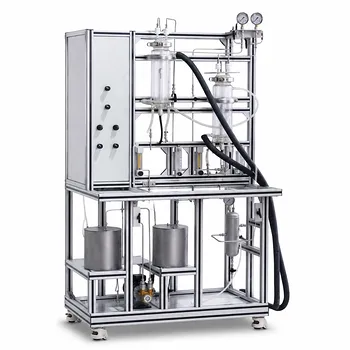
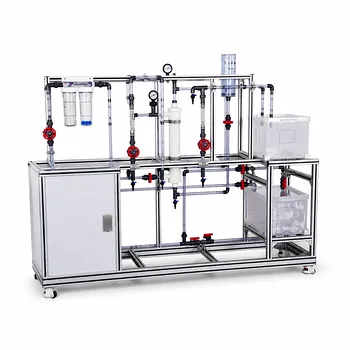
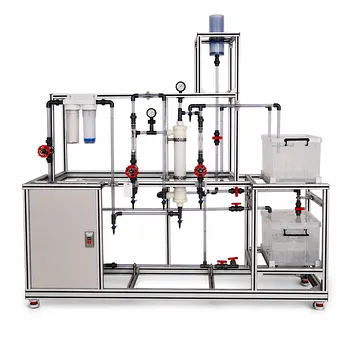
Are you looking to elevate your research and teaching capabilities? LABPARK provides state-of-the-art Educational and Vocational Unit Operations Pilot Plants in chemical engineering, bioprocess & biotech, and environmental & water treatment. Designed specifically for universities, research institutes, and enterprises, our systems integrate advanced membrane technologies to ensure stable performance and reliable experimental data.
Ready to upgrade your laboratory? Contact LABPARK today to discuss your pilot plant requirements with our engineering experts!
Related Products
- Photocatalytic Membrane Separation and Degradation Unit Operations Pilot Plant
- Hollow Fiber Ultrafiltration Membrane Separation Educational Pilot Plant
- Ultrafiltration Membrane Separation Educational Pilot Plant
People Also Ask
- What are the key differences in membrane configurations? Choose the Right Unit Operations Pilot Plant
- How Do Pervaporation, Vapor, and Gas Permeation Differ in Pilot Plants? Key Comparison
- What are the structural & performance trade-offs of flat-sheet, spiral-wound, & hollow-fiber membrane modules?
- Pervaporation vs. Vapor Permeation: Handling Suspended Solids in Membrane Pilot Plants
- How do PEI, PVDF, and PSU membranes compare in pilot plants? Find the best fit.