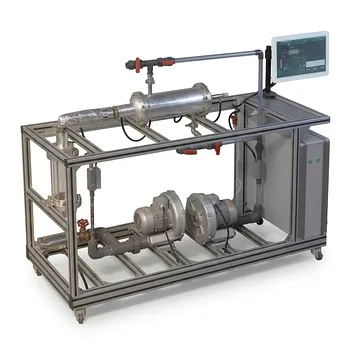
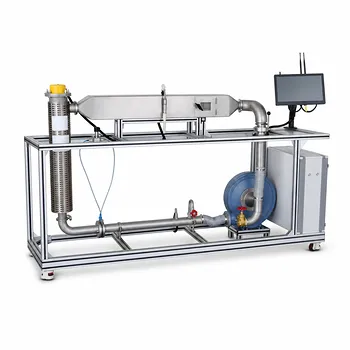
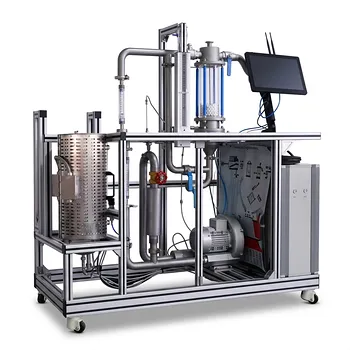
A standard heat exchanger cannot melt 0°C ice using only a -2°C process stream because heat naturally flows from hot to cold. The colder stream would absorb heat from the ice, causing the ice to cool rather than melt. Although an energy balance may suggest that heat could be transferred, the required direction violates the Second Law of Thermodynamics.
The limitation is not energy quantity but heat-flow direction. A heat pump or refrigeration cycle supplies mechanical work to move heat from the -2°C stream to a warmer surface maintained above 0°C, allowing the ice to melt.
Why Direct Heat Transfer Fails
The First Law Only Checks Energy Balance
The First Law states that energy is conserved. In principle, one could write an energy balance involving heat released or absorbed by the process stream and heat required to melt ice.
However, an energy balance does not determine whether the proposed heat-transfer direction is physically possible. It says how much energy is involved, not whether heat can flow spontaneously in that direction.
The Second Law Determines Heat-Flow Direction
The Second Law requires spontaneous heat transfer to occur from a higher temperature to a lower temperature.
A process stream at -2°C is colder than ice at its melting point, approximately 0°C. Therefore, in a conventional heat exchanger, the ice would transfer heat to the process stream.
That transfer would cool the ice below its melting point rather than supply the latent heat needed for melting.
A Temperature Difference Is Required
Even if a heating medium is nominally at 0°C, it cannot effectively melt ice at 0°C in a practical heat exchanger because heat transfer requires a driving temperature difference.
The heating surface must be maintained at a temperature above 0°C to transfer heat into the ice at a useful rate.
How a Heat Pump Overcomes the Limitation
The Refrigeration Cycle Uses Work
The limitation is addressed by integrating a closed refrigeration cycle, which functions as a heat pump when viewed from the heating side.
The cycle uses mechanical work, supplied primarily through a compressor, to move heat from a lower-temperature region to a higher-temperature region.
The Evaporator Absorbs Heat at Low Temperature
The refrigerant evaporates in an evaporator at a temperature below that of the -2°C process stream.
Because the refrigerant is colder, heat flows from the process stream into the refrigerant, cooling the process stream while vaporizing the refrigerant.
The Compressor Raises Refrigerant Temperature
The compressor raises the refrigerant pressure. This also increases its saturation and discharge temperature.
After compression, the refrigerant is hot enough to reject heat at a temperature above 0°C.
The Condenser Supplies Heat to the Ice
In the condenser, the high-temperature refrigerant releases heat to the ice or to a surface in contact with it.
That heat both cools and condenses the refrigerant and provides the sensible and latent heat required to raise the ice to its melting condition and melt it.
What the Pilot Plant Is Actually Demonstrating
The Process Is Not Direct Stream-to-Ice Exchange
The -2°C stream and the ice are not being connected by an ordinary heat exchanger with heat flowing directly from one to the other.
Instead, the system contains an intermediate working fluid—the refrigerant—and a compressor that provides the required work input.
The refrigeration loop separates the two heat-transfer duties:
- Evaporator: heat enters the refrigerant from the cold process stream.
- Compressor: work raises the refrigerant pressure and temperature.
- Condenser: heat leaves the refrigerant and enters the ice.
- Expansion device: pressure and temperature are reduced so the refrigerant can repeat the cycle.
The Heat Pump Does Not Violate the Second Law
A heat pump does not make heat flow uphill spontaneously.
It uses external work to force heat from the lower-temperature source to the higher-temperature sink. This is analogous to a water pump moving water from a lower elevation to a higher one: the transfer is possible, but it requires input energy.
Understanding the Trade-offs
Mechanical Work Is Required
The refrigeration cycle requires compressor power. The heat delivered to the ice is therefore greater than the work input alone because it includes heat extracted from the cold process stream.
The system’s performance is commonly evaluated using a coefficient of performance, or COP, rather than treating it as a passive heat exchanger.
Temperature Lift Reduces Efficiency
The larger the temperature difference between the evaporator and condenser, the more difficult and energy-intensive the heat pump operation becomes.
The condenser must be above 0°C to melt ice at a useful rate, while the evaporator must be below -2°C to absorb heat from the process stream. This required temperature lift imposes an efficiency penalty.
Heat Exchanger Pinch Still Matters
The evaporator and condenser each require a finite temperature difference for practical heat transfer.
If the approach temperature is too small, the required heat-transfer area can become large, and the system may not provide the desired melting rate.
Alternative Heating Sources May Be Simpler
If the goal is only to melt ice, a warm utility stream or electric heater may be simpler than recovering heat from a colder process stream.
A heat pump becomes attractive when the cold stream must be cooled anyway and its rejected or extracted heat can be usefully upgraded for the melting duty.
How to Apply This to Your Pilot Plant
The correct design depends on whether the objective is heat recovery, process cooling, ice melting, or demonstration of refrigeration principles.
- If your primary focus is direct heat exchange: Use a warmer utility than 0°C, because a -2°C stream cannot passively supply heat to melt 0°C ice.
- If your primary focus is heat recovery: Add a heat pump or refrigeration cycle that uses compressor work to upgrade heat from the -2°C stream.
- If your primary focus is process cooling: Treat the -2°C stream as the evaporator-side heat source and reject the extracted heat through a condenser operating above 0°C.
- If your primary focus is ice melting rate: Design the condenser and ice-contact surface for a practical temperature approach above 0°C, not merely a nominal 0°C heating temperature.
A heat pump converts an impossible passive heat-transfer arrangement into a feasible work-assisted process by controlling both temperature level and heat-flow direction.
Summary Table:
| Key point | Explanation |
|---|---|
| Direct heat transfer | Heat naturally flows from higher to lower temperature, so 0°C ice would cool the -2°C stream. |
| Thermodynamic limit | The First Law confirms energy balance, but the Second Law determines heat-flow direction. |
| Heat pump solution | A compressor uses mechanical work to move heat from the colder stream to a surface above 0°C. |
| Refrigeration cycle | The evaporator absorbs heat, the compressor raises temperature, the condenser melts the ice, and the expansion device resets the cycle. |
| Main trade-off | Greater temperature lift requires more compressor power and can reduce COP. |
Need to demonstrate heat recovery, refrigeration, or ice-melting in a teaching or industrial pilot plant? Contact LABPARK to discuss a customized Educational or Vocational Unit Operations Pilot Plant. LABPARK supplies systems for chemical engineering, bioprocess and biotech, and environmental and water treatment applications, helping universities, research institutes, and enterprises demonstrate heat exchangers, heat pumps, refrigeration cycles, temperature control, and energy-efficiency concepts with practical, application-focused equipment.
Related Products
- Shell and Tube Heat Exchanger Heat Transfer Coefficient Determination Educational Pilot Plant
- Comprehensive Multi-Modal Heat Transfer Unit Operations Pilot Plant for Engineering Training
- Dual Mode Heat Transfer Pilot Plant for Unit Operations Training
- Three-Tube Heat Transfer Educational Pilot Plant for Unit Operations Training
- Comprehensive Heat Transfer Coefficient Determination Educational Unit Operations Pilot Plant
People Also Ask
- Why Apply LMTD Correction in Shell-and-Tube Pilot Plants & How to Determine It
- Why adjust baffle spacing in shell-and-tube heat exchanger pilot plants? Master heat transfer & pressure drop.
- How to Estimate Shell-Side Pressure Drop in a Shell-and-Tube Heat Exchanger Pilot Plant: Key Parameters Explained
- How is the fouling factor (Rd) evaluated? Key Pilot Plant Insights for Students
- How is fouling factor demonstrated using shell and tube pilot plants? Practical Lab Guide