Choosing the wrong gasket material can turn a promising pilot run into a safety hazard. Selecting sealing materials for chemical engineering pilot plant piping and pump systems is fundamentally about matching the material’s resistance profile to your specific chemical environment, operating temperature, and pressure. PTFE offers near-universal chemical resistance for gaskets and seals, rubber excels where flexibility and vibration damping are needed, and graphite is the go-to for high-temperature, high-pressure applications requiring inertness and lubricity.
The core principle is to prioritize chemical compatibility first, then verify thermal and mechanical limits. A systematic, data-driven approach—not guesswork—prevents leaks, ensures operational reliability, and safeguards the integrity of your pilot plant experiments.
The Critical Triad: Chemical, Thermal, and Mechanical Demands
Chemical Compatibility: The First Line of Defense
The most frequent cause of seal failure in pilot plants is chemical attack. Incompatible process fluids can soften, swell, or degrade gasket materials, leading to containment loss. This risk is amplified in pilot plants that frequently switch between solvents, acids, and bases.
Always consult chemical resistance charts and MSDS data to verify that your chosen gasket material can withstand the full spectrum of chemicals at the expected concentrations and temperatures. Overlooking a trace contaminant or cleaning agent can be just as damaging as the main process fluid.
Temperature and Pressure: Defining the Operational Window
Even a chemically resistant material will fail if it cannot handle the thermal and mechanical stress.
For pressures below 20 bar, chemical and temperature compatibility become the primary drivers. Below 100°C, vegetable fiber or synthetic rubber gaskets are often suitable. Up to 260°C, solid PTFE or compressed asbestos rubber (where still permitted) can serve reliably. Once you cross into high-temperature territory up to 450°C, metal-reinforced or graphite-based seals are required because they maintain stability and self-lubricating properties where polymers decompose.
Mechanical Demands: Vibration, Flexing, and Cycling
Pilot plant piping and pump systems endure vibration, thermal expansion, and frequent disassembly.
Rubber is unmatched in its ability to absorb vibration and accommodate movement, which is why it dominants expansion joints, diaphragms, and flexible hoses. Graphite, while brittle, provides excellent lubricity that reduces friction in pump packing and valve stems. PTFE gaskets, particularly when unreinforced, are prone to cold flow under sustained load—a mechanical trait that demands careful flange design to maintain bolt torque over time.
Material Profiles: Matching Properties to Pilot Plant Realities
PTFE: The Chemical Workhorse
PTFE’s almost universal chemical inertness makes it the default choice for gaskets, seals, valve stem packings, and linings across diverse pilot campaigns.
Its operational ceiling of 250°C covers most non-refractory processes. However, pure PTFE has low mechanical strength. For structural gasket applications, you will often need glass or carbon-fiber reinforced PTFE to resist creep and extrusion. The trade-off is higher cost and reduced flexibility. For piping systems that require easier fabrication, PVDF can be a viable alternative up to 140°C with similar chemical resistance, though it cannot match PTFE’s temperature breadth.
Rubber: The Flexible Problem-Solver
Rubber’s elasticity and sealing capacity make it essential for dynamic applications like pump diaphragms and thermal expansion loops. Different rubber types offer tailored chemical resistance—EPDM for water and mild acids, Viton (FKM) for oils and aggressive chemicals up to about 200°C.
However, all rubbers have a narrower chemical niche than PTFE. They are susceptible to swelling in organic solvents and can harden or crack over time due to oxidation. In pilot plants with changing chemistries, specifying a rubber without rigorous compatibility testing invites premature failure.
Graphite: The High-Performance Specialist
For high-temperature, high-pressure steam or corrosive media where polymers degrade, flexible graphite sheets and reinforced graphite gaskets provide an inert, thermally stable seal.
Their self-lubricating character prevents galling and allows repeated cycling without sticking, a critical asset in pilot plant equipment that is frequently opened for inspection. The main limitation is brittleness—graphite gaskets can fracture if mishandled—and a susceptibility to oxidation in air at temperatures above 450°C, or when exposed to strong oxidizers. In these extremes, purely metallic seals become necessary.
Understanding the Trade-offs
Cost Versus Performance
PTFE and graphite materials are significantly more expensive than commodity rubbers and vegetable fiber gaskets.
For a dedicated pilot process with a well-defined, mild chemical stream, a lower-cost rubber gasket tested for compatibility can deliver safe performance. Universal switching to high-end PTFE for every seal can inflate budgets without proportional safety gains—unless the pilot plant frequently handles aggressive or unknown media.
Cold Flow and Creep in PTFE
Unreinforced PTFE will slowly deform under load, relaxing the gasket stress and eventually causing leaks.
This demands re-torquing of flanges after thermal cycles or using spring-loaded live-loading on bolts. If your pilot plant undergoes frequent temperature swings, reinforced PTFE or a different material like graphite might serve better.
Permeation and Aging in Rubber
Rubber linings and gaskets can absorb process fluids and leach plasticizers, changing both their mechanical properties and their sealing ability.
Ozone and UV exposure further degrade natural rubbers. This means rubber seals require more frequent inspection and replacement compared to PTFE or graphite, increasing maintenance overhead.
Brittleness and Oxidation in Graphite
While chemically inert to most substances, graphite will react with strong oxidizing agents and can burn off in high-temperature air environments.
Its brittle nature also means that uneven bolt loading can crack a graphite gasket, leading to a sudden catastrophic leak. Proper installation procedures and attention to gasket stress are non-negotiable.
A Practical Selection Framework
Step 1: Inventory Your Chemicals and Conditions
List every chemical, including cleaning agents, minor additives, and their concentration and temperature extremes. Pilot plants are notorious for transient conditions; your seal material must survive the worst-case chemical and thermal spike.
Step 2: Consult Chemical Resistance Data
Reference chemical resistance databases from reputable gasket manufacturers and cross-check with MSDS data.
Look for ratings that cover both the fluid and its vapor phase if the seal will be in the vapor space. A material rated “excellent” for a liquid may swell severely in its saturated vapor.
Step 3: Match Material Capabilities to Mechanical and Operational Needs
- For rigid flanges with minimal vibration: PTFE (reinforced if above 15 bar) is a chemically safe workhorse.
- For pump discharge piping with pulsating flow: Rubber expansion joints absorb shock, but verify the rubber’s compatibility with the pumped fluid.
- For high-temperature reactor lids or heat exchanger flanges: Graphite is the resilient, non-sticking choice that handles thermal cycling.
Step 4: Validate with Small-Scale Testing
Before committing to a fleet-wide gasket specification, submerge samples in the actual process fluid at operating temperature for an extended period.
Measure weight change, hardness, and visual swelling. A pilot plant is itself an experimental platform—use that flexibility to de-risk your sealing material choice through empirical validation.
Making the Right Choice for Your Pilot Plant
Your priority will dictate which material family leads your selection.
- If your primary focus is maximizing chemical compatibility across diverse experiments: Choose reinforced PTFE for gaskets, seals, and packings. Its near-universal resistance simplifies inventory and prevents unexpected material-campaign mismatches.
- If your primary focus is absorbing pump vibration and accommodating thermal expansion: Select rubber components (like EPDM or Viton) for flexible hoses and expansion joints, but enforce rigorous compatibility checks against every process fluid.
- If your primary focus is high-temperature or high-pressure operation up to 450°C: Graphite-based seals are your baseline, with careful consideration given to oxidizing environments that might demand metallic alternatives.
- If your primary focus is cost-effectiveness for a single, mild-chemistry process: A tested commodity rubber or vegetable fiber gasket, operated within its strict temperature and pressure limits, can safely meet your needs without overspending.
By systematically matching material properties to your pilot plant’s chemical, thermal, and mechanical demands, you transform sealing material selection from a source of risk into a robust foundation for safe, reproducible research.
Summary Table:
| Material | Key Advantages | Temperature Limit | Best For |
|---|---|---|---|
| PTFE | Near-universal chemical inertness, low friction | Up to 250°C | Corrosive media, general gaskets, valve packings |
| Rubber (EPDM/Viton) | High elasticity, excellent vibration damping | Up to 200°C (Viton) | Expansion joints, pump diaphragms, flexible hoses |
| Graphite | Thermal stability, self-lubricating, non-stick | Up to 450°C | High-temperature/pressure steam, reactor lids |
Build Safer, High-Performance Pilot Plants with LABPARK
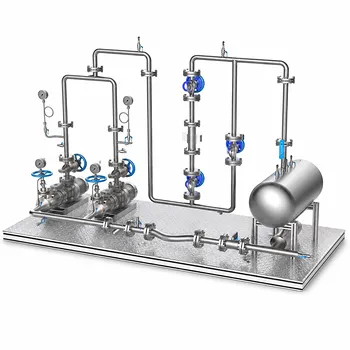
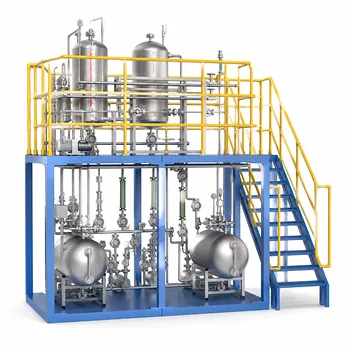
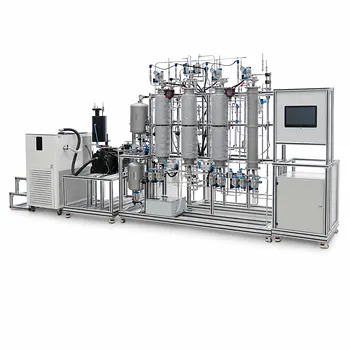
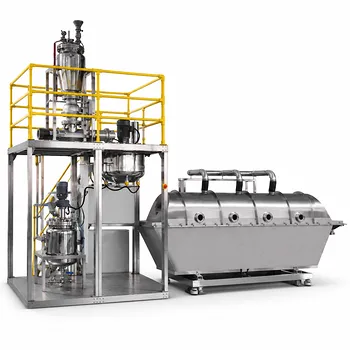
Designing piping and pump systems for complex chemical processes requires precision and the right material selections. LABPARK provides premium Educational and Vocational Unit Operations Pilot Plants in chemical engineering, bioprocess & biotech, and environmental & water treatment.
We assist universities, research institutes, and enterprises in setting up robust, reliable, and safe experimental platforms customized to your research needs.
Ready to elevate your lab capabilities? Contact LABPARK today to consult with our engineering experts!
Related Products
- Multi Pump Fluid Transport Process Piping Unit Operations Training Pilot Plant
- Chemical Pipeline Assembly and Fluid Transport Practical Training Unit Operations Pilot Plant
- Fluid Transport and Piping Dynamics Practical Training Unit Operations Pilot Plant
- Educational Pressure Swing Adsorption Ethylene Capture Unit Operations Pilot Plant
- Polymerization Granulation and Pellet Processing Educational Unit Operations Pilot Plant
People Also Ask
- Why distinguish Newtonian & non-Newtonian fluids in pilot plants? Prevent design errors.
- Why is the chemical plant startup schedule crucial? De-risk scale-up with pilot plants.
- When to transition from PID to adaptive control in pilot plants? Key process indicators.
- How do deviations in estimating latent heat impact pilot plant thermal systems? Avoid hardware mis-sizing.
- How to study gasification in pilot plants? Compare exit gas composition & efficiency