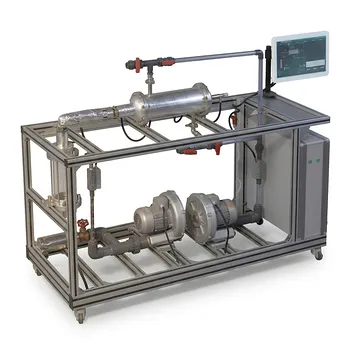
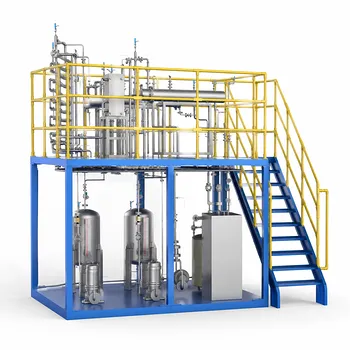
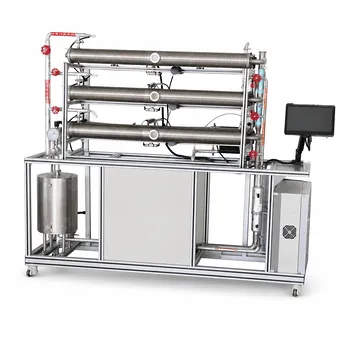
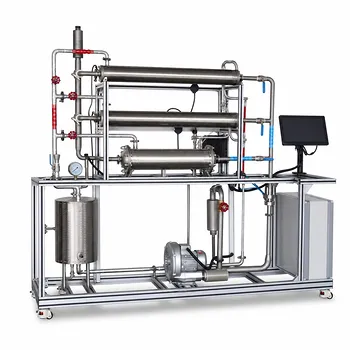
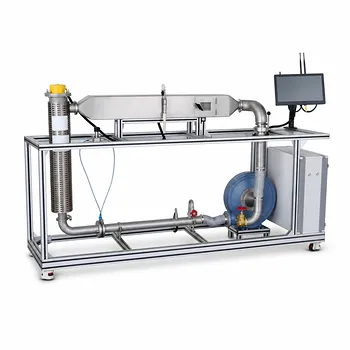
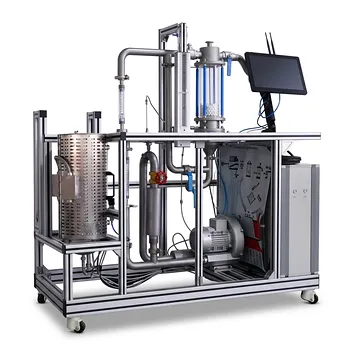
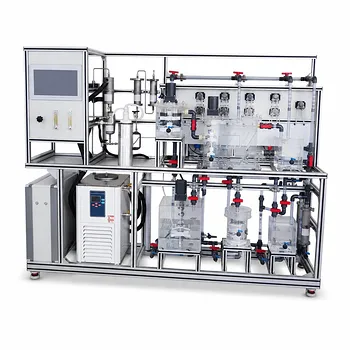
A plate heat exchanger is best for teaching high-efficiency, compact heat transfer and easy maintenance, while a shell-and-tube exchanger is essential for demonstrating industrial-scale operation, thermal stress, and complex fluid dynamics.
The real question is not which exchanger is “better.” It is which learning objectives you need to support in your pilot plant. Plate exchangers provide unmatched heat transfer coefficients in a small footprint and can be disassembled in minutes to visualize fouling. Shell-and-tube exchangers are the industrial backbone for high-temperature, high-pressure, and phase-change processes, forcing students to grapple with baffle design, thermal expansion, and tube-side/shell-side fluid allocation. Most comprehensive unit operations labs incorporate both, allowing students to benchmark performance and understand where each technology excels.
The decision hinges on pedagogical intent. A plate exchanger puts high efficiency, compact design, and maintenance visibility at the center of the lesson. A shell-and-tube exchanger anchors the curriculum in industrial realism, robust construction, and the management of severe process conditions. The deepest educational value often comes from running them side by side.
Aligning Heat Exchanger Choice with Educational Objectives
Every heat exchanger teaches a different lesson. Your selection shapes which thermodynamic, mechanical, and practical skills students develop.
The Case for the Plate Heat Exchanger
Plate and frame exchangers bring the theory of convective heat transfer into sharp focus. Because they can achieve overall heat transfer coefficients up to 7000 W/(m²·°C) for low-viscosity fluids, students can instantly see the impact of turbulence and surface area on thermal performance.
The ability to add or remove plates lets learners experiment with heat transfer area as a controlled variable. They can disassemble the unit, inspect the flow channels for fouling, and reassemble it—a direct lesson in gasket integrity, plate alignment, and maintenance planning. This hands-on access is invaluable for connecting textbook correlations to physical hardware.
The Case for the Shell-and-Tube Heat Exchanger
Shell-and-tube exchangers are the industrial standard for a reason. They teach students how to manage shell-side bypass, baffle spacing, and tube pass arrangements—factors that dominate real-world thermal design. When you introduce steam condensation or hot oil, the exchanger’s robust construction handles temperatures and pressures far beyond the gasket limits of a typical plate unit.
This type also forces critical decisions about fluid routing: corrosive or fouling streams on the tube side, viscous fluids on the shell side. Teaching these practical criteria transforms the lab from a simple heat balance exercise into a miniature process engineering challenge.
Operating Constraints in a Teaching Laboratory
Pilot plants built for universities and training centers often operate under mild conditions—water-to-water heat transfer at low pressures. In these scenarios, a plate exchanger’s limitations (typically <1.5–2.0 MPa and gasket-dependent temperatures of 130 °C to 250 °C) are irrelevant.
However, if your curriculum requires demonstrating high-pressure saturated steam or process fluids above 200 °C, that same plate exchanger becomes a safety risk and a source of premature gasket failure. Map your planned experiments before specifying equipment. A shell-and-tube unit built from carbon steel or stainless steel will safely endure those conditions and last for decades with minimal maintenance.
Footprint, Cost, and Laboratory Space
Many educational pilot plants are squeezed into existing lab bays. Plate heat exchangers are inherently compact, offering a large heat transfer area per unit volume. If space is tight and budget permits, they deliver high thermal duty without consuming valuable floor area.
Shell-and-tube exchangers can also be made compact—but at a cost. As noted in common design practice, drastically shortening the tube length (e.g., from 20 feet to 12 feet) while increasing the number of tube passes shrinks the unit. This requires careful optimization of baffle configuration to prevent excessive shell-side bypass and poor flow distribution. The resulting equipment typically demands a higher pressure drop on the tube side and a slightly larger overall heat transfer area, increasing both capital cost and pump power. Students should calculate these trade-offs, not just be told about them.
The Role of Material Selection in Learning
Materials of construction are part of the curriculum. For non-corrosive, low-temperature service, carbon steel (A3F, 16MnR) shell-and-tube units and stainless steel plates in a plate exchanger work well and keep costs down. If you intend to demonstrate chemical compatibility or run acidic streams, specifying stainless steel (e.g., 1Cr18Ni9Ti) or even non-metallic materials like graphite or PTFE becomes essential.
Plate exchangers force a conversation about gasket material compatibility, while shell-and-tube exchangers bring tube-sheet metallurgy and thermal expansion into focus. For a comprehensive program, exposing students to both material selection philosophies builds a critical skill they will use in plant design.
Understanding the Trade-offs
Neither technology is a panacea, and choosing blindly leads to a less effective lab.
- Maintenance visibility vs. mechanical complexity: A plate exchanger’s disassembly is simple and instructive. A shell-and-tube unit demands tube cleaning with brushes or chemical methods, and inspecting the shell-side is nearly impossible without cutting the shell. Choose the former for frequent student tear-downs; choose the latter to teach industrial maintenance limitations.
- Thermal performance vs. operating envelope: Plates win on heat transfer coefficient per unit volume. Shell-and-tube wins on pressure and temperature range. If you commit to only one, your students will miss the other half of the story.
- Scale-up fidelity: A pilot shell-and-tube exchanger with multi-pass arrangements and segmented baffles mirrors large-scale plants. A plate exchanger looks almost identical from lab scale to production scale for food or pharmaceutical applications. Decide which scale-up narrative fits your program.
Common pitfalls in educational plant design include: ignoring the minimum flow rates needed to achieve proper turbulence in a shell-and-tube unit (leading to stagnant zones and misleading data), and selecting a plate gasket material without checking its chemical resistance against all planned test fluids. Always run a design verification to ensure the shell-side bypass fraction does not fall below critical thresholds—this directly affects the quality of experimental data.
Making the Right Choice for Your Educational Goals
Your selection strategy should flow directly from the skills and insights you want students to gain. Consider these goal-driven paths:
- If your primary focus is teaching high-efficiency heat transfer and compact system design: Select a plate heat exchanger. Its high heat transfer coefficients and visual disassembly will make thermal principles tangible.
- If your primary focus is preparing students for traditional chemical and refining industries: Select a shell-and-tube heat exchanger. It forces mastery of baffling, thermal stress, and practical fluid allocation—exactly the problems they will face in a plant.
- If your primary focus is creating a comparative laboratory experience: Install one of each. Run identical heat duties and let students measure effectiveness, pressure drop, and approach temperatures side-by-side. This delivers the deepest understanding.
- If your primary focus is a budget-constrained, low-temperature water-only lab: A plate exchanger often gives more educational features per dollar, while a simple double-pipe unit can serve as the fundamental baseline for heat transfer concepts.
The most successful unit operations lab is not the one with the newest equipment—it is the one where the hardware forces students to confront real design trade-offs. Match your heat exchanger to the lesson, and the learning will follow.
Summary Table:
| Feature | Plate Heat Exchanger | Shell-and-Tube Heat Exchanger |
|---|---|---|
| Best For | High efficiency & compact footprints | Industrial realism & high temp/pressure |
| Max Temp/Pressure | Low to medium (gasket-dependent) | High (robust construction) |
| Maintenance | Easy disassembly & inspection | Complex (requires tube-cleaning methods) |
| Learning Focus | Convective transfer, plate configuration | Baffle design, fluid allocation, thermal stress |
Upgrade Your Chemical Engineering Lab with LABPARK
Building a modern unit operations pilot plant requires the right balance of educational value and industrial reality. LABPARK designs and provides premium Educational and Vocational Unit Operations Pilot Plants in chemical engineering, bioprocess & biotech, and environmental & water treatment for universities, research institutes, and enterprises.
Whether you need high-efficiency plate systems or industry-standard shell-and-tube heat exchangers, we can customize the perfect configuration for your curriculum. Contact LABPARK today to consult with our experts and get a tailored proposal!
Related Products
- Shell and Tube Heat Exchanger Heat Transfer Coefficient Determination Educational Pilot Plant
- Comprehensive Multi-Modal Heat Transfer Unit Operations Pilot Plant for Engineering Training
- Dual Mode Heat Transfer Pilot Plant for Unit Operations Training
- Three-Tube Heat Transfer Educational Pilot Plant for Unit Operations Training
- Comprehensive Heat Transfer Coefficient Determination Educational Unit Operations Pilot Plant
People Also Ask
- Why Apply LMTD Correction in Shell-and-Tube Pilot Plants & How to Determine It
- How is the fouling factor (Rd) evaluated? Key Pilot Plant Insights for Students
- How is fouling factor demonstrated using shell and tube pilot plants? Practical Lab Guide
- Why is simulating and calculating fouling factors crucial when operating educational heat exchanger pilot plants?
- Why Keep Shell-Side Reynolds Number Above 2100? Maximize Pilot Plant Heat Transfer