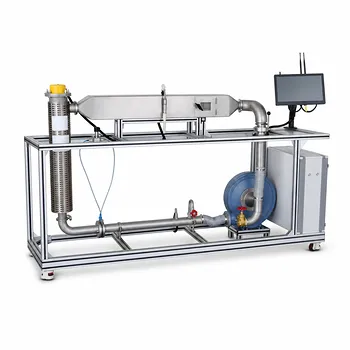
Short residence time and mechanical film formation are the key selection criteria. For heat-sensitive solutions, an engineer must choose an evaporator with minimal liquid holdup and extremely brief thermal exposure, such as a falling film or scraped thin film unit. When the feed is highly viscous, a scraped thin film evaporator becomes the only reliable choice because its mechanical blades force a uniform film onto the heated surface, eliminating the dry spots and clogging that defeat standard falling film designs.
The guiding principle is to match residence time and film formation to the fluid’s properties. Heat-sensitive materials demand seconds of contact; high-viscosity materials cannot form a consistent film without mechanical assistance. Scraped thin film evaporators uniquely satisfy both demands, but that performance comes with greater mechanical complexity and cost.
Decoding the Physics of Degradation and Flow
Why Heat-Sensitive Solutions Cannot Tolerate a Conventional Approach
Thermal degradation is a function of both temperature and time. In an evaporator, the liquid held in a static pool or a slow-moving layer continues to cook, destroying product quality.
The goal is to eliminate liquid holdup and slash residence time. Falling film evaporators achieve this by distributing feed along the inner walls of vertical tubes as a gravity-driven thin film. The liquid flashes into vapor almost instantly because the entire volume is in direct contact with the heat transfer surface.
Scraped thin film evaporators take this principle even further. A rotor with close-clearance blades continuously spreads the feed into a highly turbulent, microns-thick film. Residence times are measured in seconds, not minutes, preventing thermal degradation in notoriously unstable biomolecules, pharmaceuticals, or fine chemicals.
Why High-Viscosity Fluids Defeat Standard Film Formers
Viscous fluids resist gravity-driven flow. In a falling film evaporator, this means the liquid cannot spread reliably across the tube perimeter.
You get rivulets instead of a film. Dry patches develop, leading to localized overheating, fouling, and eventual clogging. A standard falling film unit is simply not designed for feeds above approximately 100 mPa·s, and it becomes dangerously unreliable for anything approaching 1000 mPa·s.
Scraped thin film evaporators solve this mechanically. The rotor blades act as a dynamic film distributor, spreading even extremely viscous polymers, waxes, or slurries into a uniform layer. The process is independent of fluid rheology, guaranteeing stable heat transfer and uninterrupted operation.
A Decision Matrix for Pilot Plant Evaporators
Falling Film: The Go-To for Clean, Heat-Sensitive Feeds
A falling film evaporator is the most resource-efficient choice when you face a straightforward heat-sensitivity challenge with a low-viscosity, non-scaling liquid.
It offers high heat transfer coefficients and short contact times, and it operates without complex moving parts inside the heating zone. This makes it easy to clean, validate, and scale up—ideal for early-stage process development where the feed is only thermally delicate.
The hard limit is film integrity. Any feed that can crystallize, form scale, or rise above roughly 100 mPa·s will disrupt the film and should immediately steer you toward a different technology.
Scraped Thin Film: The Powerhouse for Complex Fluids
When a feed is simultaneously heat-sensitive and highly viscous—or when it contains suspended solids, tends to crystallize, or fouls surfaces aggressively—a scraped thin film evaporator removes the risk.
Mechanical film formation eliminates the viscosity barrier. The blades physically force the material against the heated wall, achieving the thin-film, short-residence-time conditions that heat-sensitive products demand. It can process fluids with viscosities exceeding 1000 mPa·s and handle pastes or sludges that would stall any other evaporator.
This design excels in pilot plants where the material properties are extreme, variable, or not yet fully characterized. It gives you a proven path for concentrating heat-sensitive APIs, viscous polymer melts, or fouling food ingredients in a single piece of equipment.
Forced Circulation: The Scaling and Crystallization Specialist
When the primary problem is severe fouling or crystallization and the feed is only moderately heat-sensitive, forced circulation evaporators become a strong alternative.
A pump drives the liquid at high velocities (typically 2.0–3.5 m/s) through the heat exchanger tubes. Boiling is suppressed inside the tubes, pushing vaporization to a downstream separator and minimizing scale deposition on the hot walls.
This technology handles high-viscosity feeds and scaling solutions robustly. However, the recirculating inventory increases liquid holdup and residence time, which makes it less suitable for materials that degrade rapidly. Choose forced circulation when operational reliability and cleanability for heavily fouling fluids outweigh the need for the briefest possible thermal exposure.
Understanding the Trade-offs
The Double-Edged Sword of Mechanical Complexity
Scraped thin film evaporators solve the most difficult separation problems, but they require a rotor, a mechanical seal, and precise blade adjustments. You are trading process robustness for mechanical intricacy.
This means higher capital cost, more demanding maintenance schedules, and the potential for seal leakage under vacuum. If your feed is a clean, low-viscosity, heat-sensitive liquid, a falling film unit delivers equal thermal protection with far simpler, more forgiving hardware.
The Thermal Dilemma of High-Velocity Circulation
Forced circulation evaporators can process highly fouling or viscous feeds, but they do not inherently minimize residence time. The continuous recirculation exposes the product to elevated temperatures repeatedly, creating a cumulative thermal load that can degrade moderately sensitive materials over hours of operation.
Do not use a forced circulation unit as a drop-in replacement for a falling film evaporator when thermal sensitivity is a primary concern. It is a workhorse for harsh, scaling-rich processes, not a precision tool for temperature-labile molecules.
Scaling Up from Pilot Decisions
A pilot plant must generate data that scales predictably. Falling film and forced circulation evaporators have well-established scale-up criteria, making them safe choices when you need to design a commercial plant.
Scraped thin film evaporators are more complex to scale. Large-diameter units with mechanical rotors face manufacturing limits and higher power inputs. Your pilot results will still be valid, but the path to production will demand deeper collaboration with specialized equipment vendors.
Making the Right Selection for Your Pilot Plant
The best evaporator is the one that preserves your product’s integrity at the pilot stage and generates meaningful scale-up data. Apply this goal-oriented logic to your specific challenge:
- If your primary focus is a heat-sensitive, low-viscosity solution that does not scale or crystallize: Choose a falling film evaporator for its unbeatable combination of short residence time, simplicity, and straightforward scalability.
- If your primary focus is a highly viscous feed that is also heat-sensitive, or one that combines viscosity with scaling or crystallization: Select a scraped thin film evaporator as the only technology that mechanically guarantees a uniform thin film and minimal thermal degradation.
- If your primary focus is a heavily scaling or crystallizing solution where the product is only moderately heat-sensitive: Opt for a forced circulation evaporator, which uses high tube velocities to suppress in-tube boiling and simplify cleaning.
- If your primary focus is an educational or multi-user lab where extreme cleanliness and easy changeover are paramount: Consider an external heating evaporator or a forced circulation design, which allow the heating bundle to be separated and washed thoroughly between experiments.
A successful pilot plant selection never starts with the equipment catalog—it starts with a brutally honest assessment of your fluid’s sensitivity to time and its refusal to flow where gravity alone directs it.
Summary Table:
| Evaporator Type | Key Mechanism | Best For | Main Limitation |
|---|---|---|---|
| Falling Film | Gravity-driven thin film | Low-viscosity, heat-sensitive fluids | Risk of dry spots & fouling >100 mPa·s |
| Scraped Thin Film | Rotor blades force dynamic film | High-viscosity (>1000 mPa·s) & heat-sensitive | High cost & mechanical complexity |
| Forced Circulation | Pumped high-velocity circulation | Heavily scaling or crystallizing fluids | High residence time (thermal load) |
Optimize Your Unit Operations with LABPARK
Are you looking to upgrade your research or training facilities? LABPARK provides premium Educational and Vocational Unit Operations Pilot Plants in chemical engineering, bioprocess & biotech, and environmental & water treatment for universities, research institutes, and enterprises.
From falling film evaporators to custom scraped thin film units, our systems are built to ensure precise process control and reliable scale-up data. Contact us today to find the perfect pilot plant configuration for your needs.
Related Products
- Rising and Falling Film Evaporation Educational Unit Operations Pilot Plant
- Supercritical High-Gravity Flash Evaporation Educational Unit Operations Pilot Plant
- Natural Product Extraction Unit Operations Training Pilot Plant
- Thermal Desorption Exhaust Gas and Tail Water Treatment Educational Pilot Plant
- Continuous Batch Extractive Distillation Educational Pilot Plant
People Also Ask
- How to Select Natural vs. Forced Circulation Evaporators by Feed Type
- How do unit operation requirements differ between traditional chemical processes and bioprocesses? Build Better Pilot Plant Curricula
- How do educational unit operations pilot plants bridge theory and design? Bridge the Engineering Gap
- How do educational unit operations pilot plants bridge theory and industrial process development? Hands-On Learning
- How do educational unit operations pilot plants address safety and waste management when scaling up?