Steam pressure is the direct, predictable dial for controlling temperature in chemical engineering pilot plants. By regulating the pressure of condensing steam, you set its saturation temperature—each pressure yields one exact temperature. This allows precise temperature targets, while the condensation process delivers a high heat transfer coefficient that makes heat exchangers smaller and more cost-effective. The combination simplifies design and operation in research and training environments.
The core insight: Steam pressure is your temperature setpoint. This provides precise control and enables compact, affordable heat exchangers, but only if you respect practical limits like approach temperature, pressure drop, and the mechanical demands of higher pressures.
The Saturation Temperature–Pressure Relationship
How Steam Turns Pressure into a Temperature Controller
When steam condenses, it releases latent heat at a constant temperature that depends solely on its saturation pressure.
Adjusting a steam pressure valve forces the system to a new saturation condition: low-pressure steam at 3 bar condenses at ~134°C, medium-pressure at 20 bar gives ~212°C, and high-pressure at 40 bar reaches ~250°C.
In a pilot plant, this means students and researchers can hit a desired process temperature by simply dialing in the corresponding pressure—no complex cascade loops needed.
Why One Pressure Gives One Temperature
The saturation curve is a physical law, not an approximation.
As long as two‑phase liquid–vapor equilibrium is maintained, the steam’s temperature is locked to its pressure, ensuring repeatable, drift‑free control.
This built‑in self‑correction makes steam an ideal utility for unit operations where temperature must remain stable across runs.
Design Advantages: Why Steam Enables Compact, Cost‑Effective Exchangers
Constant Temperature, Not a Sliding Profile
A condensing fluid maintains a uniform temperature across the heat transfer surface.
This avoids the temperature drops seen in single‑phase sensible‑heat fluids like thermal oil, drastically improving the driving force for heat exchange.
Exceptionally High Heat Transfer Coefficient
Condensing steam yields a very high film coefficient, often an order of magnitude greater than forced‑convection gases or even many liquids.
For a given duty, a smaller heat transfer area is required, slashing the size, weight, and capital cost of pilot‑plant exchangers.
Direct Impact on Mechanical Sizing
The high coefficient combined with a stable temperature lets you achieve the required heating with fewer tubes or a smaller shell.
This is especially valuable in educational pilot plants, where space is tight and budget constraints are real.
Critical Design Parameters to Apply in Your Pilot Plant
The Minimum Approach Temperature
For any heat exchanger cooling against ambient air, the approach temperature—the difference between the process‑side outlet and the air inlet—must be at least 15°F, preferably 20°F or more.
If the outlet temperature is specified too close to ambient (e.g., a 5–10°F difference) the driving force collapses, demanding more than half the tube bundle area just for the last few degrees.
Respecting this lower bound prevents excessively oversized, costly tube bundles.
Acceptable Pressure Drop Ranges
In liquid‑phase heating, design pressure drops typically stay between 10 and 100 kPa; for gas‑phase systems, the range is 1 to 10 kPa.
Exceeding these limits forces operators to revisit fluid velocity, baffle spacing, or tube layout—otherwise the plant’s pumps or blowers cannot maintain flow, hurting safety and economy.
Control Loop Integration and Thermal Lag
Steam pressure regulation is only as good as the loop controlling it.
Equipment factors like heat transfer surface area, reactor jacket thickness, and load variations introduce thermal lag that can degrade response.
On the control side, sensor sensitivity, PID tuning, and the control valve’s flow characteristic all determine whether the specified saturation temperature is reached smoothly and without overshoot.
Understanding the Trade‑offs When Using Steam
Pressure Elevation Comes with Mechanical Cost
Higher steam pressure yields a higher saturation temperature, but it also raises the design pressure of the entire exchanger.
This demands thicker shells, stronger flanges, and possibly more expensive materials—eroding some of the initial cost advantage if you push pressures too high without a compensating increase in duty.
The Risk of Wet Steam and Superheat
If the steam supply carries liquid droplets, the effective temperature can be lower than expected, and the heat transfer coefficient may fluctuate.
Conversely, a sudden pressure drop without desuperheating can produce superheated steam that behaves like a gas, losing the high coefficient until condensation begins—a control challenge for sensitive processes.
Comparison with Sensible‑Heat Fluids
Thermal oil, molten salt, or pressurized water offer wider temperature ranges above steam’s practical limits (typically above 250°C) and avoid the need for high‑pressure vessels if you stay liquid.
However, they require larger heat transfer surfaces, additional pumping power, and lack the self‑limiting temperature behavior that makes steam so forgiving in educational settings.
Making the Right Choice for Your Pilot Plant Goal
- If your primary focus is precise, repeatable temperature control: Use a steam pressure regulator with a fast‑acting control valve and confirm that the steam quality is high (dry saturated). This locks you to the exact saturation temperature needed for the experiment.
- If your primary focus is minimizing equipment size and capital cost: Leverage steam’s inherently high heat transfer coefficient by selecting a moderate pressure that meets your maximum temperature—this keeps the design pressure manageable while shrinking the heat exchanger area.
- If your primary focus is teaching control system dynamics: Vary the thermal lag (e.g., by changing jacket thickness) and the controller settings to demonstrate how these factors affect overshoot and settling time. The one‑to‑one pressure–temperature relationship makes the lessons immediately observable.
- If the process outlet temperature must be close to ambient air: Never violate the 15–20°F minimum approach temperature rule. Instead, consider a secondary cooling utility or adjust the process conditions to keep the driving force viable and avoid an oversized, economically impractical exchanger.
Harness steam’s pressure‑temperature coupling to simplify your design, but let practical limits like approach temperature and pressure drop guide your final sizing—this balance is what transforms a theoretical scheme into a robust, educational pilot plant.
Summary Table:
| Parameter / Concept | Effect of Steam Pressure | Practical Pilot Plant Application |
|---|---|---|
| Saturation Relationship | One pressure level yields one exact condensing temperature | Simplifies control loops; acts as a reliable temperature setpoint. |
| Heat Transfer Coefficient | High condensing film coefficient | Shrinks required surface area, leading to compact, low-cost exchangers. |
| Approach Temperature | Requires a minimum of 15°F to 20°F above ambient | Prevents oversized tube bundles and controls capital costs. |
| Pressure Drop Limits | Must stay within 10-100 kPa (liquids) or 1-10 kPa (gases) | Protects system safety and ensures pump/blower compatibility. |
Build a Smarter Engineering Lab with LABPARK
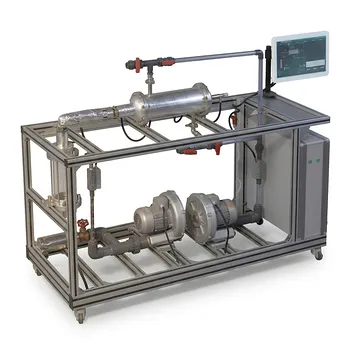
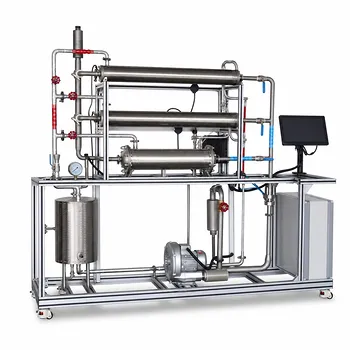
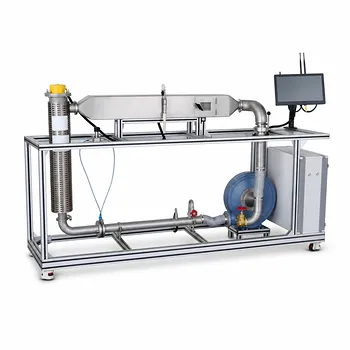
Optimizing heat transfer and utility control requires precise, reliable equipment. LABPARK provides premium Educational and Vocational Unit Operations Pilot Plants in chemical engineering, bioprocess & biotech, and environmental & water treatment.
We help universities, research institutes, and enterprises build hands-on learning systems that safely and accurately mirror industrial steam and heat exchange processes.
Ready to elevate your engineering training or research capabilities? Contact our expert team today to discuss your pilot plant requirements!
Related Products
- Shell and Tube Heat Exchanger Heat Transfer Coefficient Determination Educational Pilot Plant
- Three-Tube Heat Transfer Educational Pilot Plant for Unit Operations Training
- Comprehensive Multi-Modal Heat Transfer Unit Operations Pilot Plant for Engineering Training
- Dual Mode Heat Transfer Pilot Plant for Unit Operations Training
- Comprehensive Heat Transfer Coefficient Determination Educational Unit Operations Pilot Plant
People Also Ask
- Why Apply LMTD Correction in Shell-and-Tube Pilot Plants & How to Determine It
- How is the fouling factor (Rd) evaluated? Key Pilot Plant Insights for Students
- How is fouling factor demonstrated using shell and tube pilot plants? Practical Lab Guide
- Why is simulating and calculating fouling factors crucial when operating educational heat exchanger pilot plants?
- Why Estimate Tube Wall Temp in Heat Exchangers? Master Pilot Plant Thermal Resistance