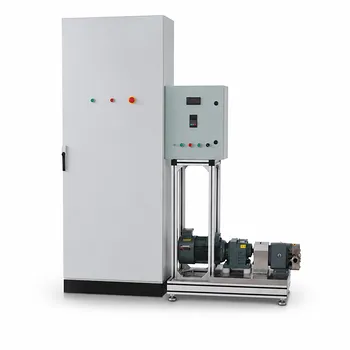
The short answer is that diffusion-controlled mathematical models provide the predictive theoretical backbone for mass transfer unit operations, and pilot plants are the indispensable physical testbeds where those models are challenged, refined, and transformed into practical engineering competence. In chemical and bioprocess engineering education, the models aren't just abstract equations—they are the why behind the what you observe in the pilot plant. When you run a leaching, extraction, or membrane separation experiment, it's the diffusion model that lets you predict kinetics, design the equipment, and then interpret the real data you collect. The relationship is a continuous, iterative loop: the model tells you what should happen, the pilot plant reveals what does happen, and the gap between them builds your intuition as an engineer.
Diffusion-controlled modeling is the conceptual engine that drives the design and analysis of pilot-scale mass transfer operations. Pilot plants then become the proving ground where these idealized mathematical frameworks are validated against messy physical realities—fouling, heat loss, imperfect mixing, and measurement lag—turning textbook theory into actionable engineering judgment. This symbiosis is the core of unit operations education: knowing not just how to run a column, but why it behaves as it does.
The Theoretical Foundation: Modeling Diffusion-Controlled Systems
Before any pilot plant is designed or operated, mathematical models of mass transfer set the stage. These models are not limited to drug delivery—they apply directly to the core unit operations taught in chemical engineering.
Fick’s Laws Are the Universal Language of Mass Transfer
Diffusion-controlled release models, from simple 1D slabs to complex spheres, rest on Fick’s first and second laws.
These laws quantify how a concentration gradient drives a molar flux, and how that gradient evolves over time. In a leaching operation, the extraction of a solute from a solid matrix follows the same pseudosteady state assumptions you would use to model drug release from a polymer slab. The geometry changes—cylinders, spheres, packed beds—but the underlying partial differential equations remain identical.
This means mastering one diffusion model teaches you how to think about dozens of unit operations. The same math that predicts release kinetics from a spherical microcapsule also governs the performance of a membrane separation module or an extraction column.
How Geometry and Initial Loading Become Engineering Levers
The models highlight which variables you can control to manipulate performance.
Geometry directly alters the characteristic diffusion length. A thinner slab or a smaller sphere releases faster because the distance a molecule must travel is shorter. In a pilot plant, that translates to choices about particle size, membrane thickness, or column packing configuration.
Initial loading—the starting concentration of the target species—sets the driving force. In a bioprocess extraction, loading more product into the solid phase shifts the equilibrium and accelerates the early stages of mass transfer. Running a sensitivity analysis on these formulation variables in a model teaches you exactly which knobs to turn when the pilot plant data shows a deviation from expected performance.
Pseudosteady State Assumptions and Their Practical Power
Most simple diffusion models adopt a pseudosteady state assumption: the system adjusts so slowly that at any instant, the flux profile looks like a steady-state snapshot.
This simplification is what makes hand calculations and spreadsheet-level sensitivity analyses possible. In a pilot plant, you can use these approximations to quickly estimate mass transfer coefficients during a run, to back-calculate effective diffusivities, or to design in vitro–in vivo correlations (IVIVCs) for biopharmaceutical operations. The model becomes a real-time decision aid, not just a post-experiment report.
The Pilot Plant: Where Models Meet Reality
Unit operations pilot plants are not scaled-down toys—they are the bridge between abstract equations and industrial-scale confidence.
Bridging the Gap Between Simulation and Production
While computer-simulated process models are fast and cost-effective, they rely on idealized assumptions like perfect mixing, constant heat transfer coefficients, and isothermal behavior.
Pilot plants inject reality into that simulation. When you run a physical leaching vessel or a membrane skid, you collect actual mass and energy balance data. You measure the true exit concentration, the real temperature profile, and the pressure drop across the unit. That empirical data either validates your model, or it reveals hidden physics—fluid channeling, fouling layer buildup, heat loss to ambient—that no idealized diffusion equation ever captured.
This validation step is not just academic. In industry, it’s the difference between a process that works on a flowsheet and one that scales up safely.
Exposing the Non-Idealities That Make Engineering Hard
Mathematical models assume a control volume with perfectly defined boundaries and uniform properties. A pilot plant rudely interrupts that assumption.
Heat loss through uninsulated flanges, mixing dead zones in a stirred tank, sensor lag from thermocouple response times—these real-world phenomena create systematic deviations between model predictions and measured outputs. By comparing the two, you learn what matters most: Is that membrane flux drop due to concentration polarization (which the model might predict) or a buildup of rejected solids on the surface (which it probably missed)?
That skill—diagnosing the type of model mismatch—is one of the highest-level learning objectives of any unit operations course.
Generating the Data That Tunes Both Model and Control
Pilot plant runs produce rich time-series data: temperatures, pressures, flow rates, concentrations. This data feeds back into the mathematical model in two ways.
First, you can re-estimate kinetic parameters—like an effective diffusion coefficient—that were only guessed at from literature. A single well-instrumented pilot experiment can produce a diffusion coefficient far more accurate than any predictive correlation.
Second, you can use the validated model to design the plant’s control system. Dynamic models of controlled objects (e.g., a CSTR with a cooling jacket) let you calculate optimal PID parameters, define alarm thresholds, and build operator training simulators. The diffusion model, once grounded in pilot data, becomes the core algorithm for safe startup, shutdown, and emergency response training.
Understanding the Trade-offs
No educational approach is flawless. Both the models and the pilot plants have limitations that must be acknowledged to build genuine expertise.
The Danger of Over-Trusting an Elegant Model
A mathematically beautiful diffusion model can still be wrong.
Pseudosteady state assumptions break down when the external mass transfer resistance is significant, when swelling or phase change alters the diffusion path, or when the process is far from isothermal. Students who have never seen a pilot plant may carry an unjustified faith in model outputs, missing critical scale-up pitfalls.
The remedy is to treat every model as a hypothesis, not a prophecy. The pilot plant’s job is to disprove that hypothesis enough times until the model is robust.
The Pilot Plant Is Not a Perfect Mirror of Industry
A benchtop extraction unit will never fully replicate the wall effects, flow maldistribution, and piping dead-legs of a 10,000-liter reactor.
Also, pilot plants are expensive and time-consuming to run. You cannot fully explore every variable because it would consume years and budgets. So you must use the model to intelligently choose which runs to perform—another high-level skill. The model tells you which variables have the highest sensitivity, so you can focus pilot efforts on validating those critical parameters while accepting model predictions for less sensitive ones.
The Productivity Loop: Model-Inform-Validate-Refine
The highest-order learning objective is to stop seeing these as separate activities.
You don’t “learn the model” and then “run the plant.” You build a quick model to plan the experiment. You run the pilot plant and collect data. You use the data to update the model. Then you use the updated model to design a better experiment. This iterative loop—model-inform-validate-refine—is the professional practice that unit operations education aims to instill.
Making the Right Choice for Your Learning Goal
The relationship between diffusion models and pilot plants is not a one-way street. How you connect them depends entirely on what you are trying to achieve.
- If your primary focus is mastering fundamental mass transfer principles: Begin with the mathematical models. Work through Fick’s laws, pseudosteady state derivations, and geometry effects using simulation tools. Then, go to the pilot plant to see how those idealized curves bend under real flow conditions, and use that gap to deepen your theoretical understanding.
- If your primary focus is process design and scale-up: Use the pilot plant as your source of empirical truth from day one. Build a simple diffusion-based model to guide your experimental matrix, but let the pilot data drive all major decisions. The model becomes a safety check, not the blueprint.
- If your primary focus is control system design and troubleshooting: Run the pilot plant first to collect dynamic input–output data, then use that data to identify a validated model (diffusion-based or empirical). Use the model to simulate faults, tune controllers, and train before you ever touch a larger system.
- If your primary focus is technical training and simulation: Lean on the validated mathematical model as the core of an operator training simulator. The pilot plant provides the realistic fingerprints (time constants, noise levels) that make the simulator feel real, while the model ensures the underlying physics are correct.
Each of these pathways reinforces the same truth: the diffusion model and the pilot plant are partners, not competitors. Separately, they are incomplete. Together, they build the judgment that no textbook or single experiment can provide.
Summary Table:
| Feature | Mathematical Modeling | Unit Operations Pilot Plants |
|---|---|---|
| Primary Role | Provides the predictive theoretical backbone | Acts as the physical validation and testing bed |
| Key Strengths | Fast, low-cost, identifies key design variables | Exposes real-world non-idealities (fouling, heat loss) |
| Focus Area | Idealized kinetics and equations (Fick's Laws) | Empirical data collection and control system tuning |
| Learning Outcome | Understanding mass transfer fundamentals | Developing practical troubleshooting and scale-up judgment |
Bridge the Gap Between Theory and Practice with LABPARK
Bring textbook equations to life in your lab. LABPARK provides state-of-the-art Educational and Vocational Unit Operations Pilot Plants in chemical engineering, bioprocess & biotech, and environmental & water treatment.
Designed specifically for universities, research institutes, and enterprises, our pilot plants allow students and researchers to validate mathematical models, analyze real-world non-idealities, and build essential engineering competence.
Ready to elevate your engineering curriculum or research capabilities? Contact us today to find the perfect pilot plant solution for your facility!
Related Products
- Educational Unit Operations Pilot Plant for Intraparticle Diffusion Effective Factor Measurement
- Quantitative Dosing and Liquid Flow Control Educational Unit Operations Pilot Plant
- Multi-Stage Stirred Tanks in Series Residence Time Distribution and Mixing Performance Determination Educational Pilot Plant
- Multi-Functional Special Distillation Educational Pilot Plant
People Also Ask
- How do educational unit operations pilot plants bridge theory and design? Bridge the Engineering Gap
- How do educational unit operations pilot plants address safety and waste management when scaling up?
- Why is the chemical plant startup schedule crucial? De-risk scale-up with pilot plants.
- How do deviations in estimating latent heat impact pilot plant thermal systems? Avoid hardware mis-sizing.
- Why Compare Predicted and Experimental Excess Enthalpy? Key to Accurate Pilot Plant Scale-up