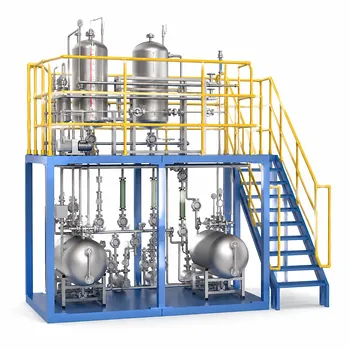
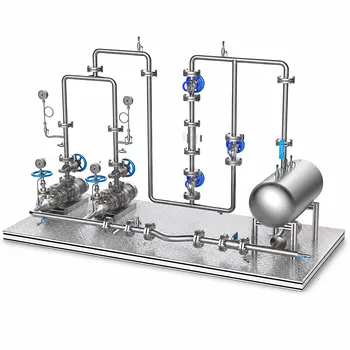
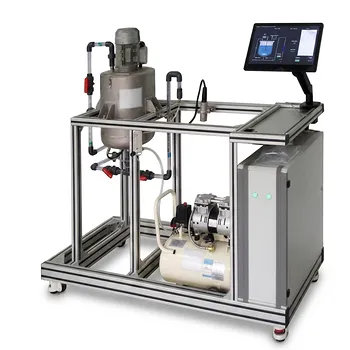
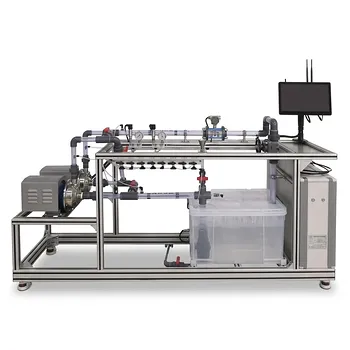
Your training system’s design hinges entirely on how you intend to extract value—both literally and pedagogically. The processing mechanisms of decoction and hydrodiffusion dictate the physical components a bioprocess unit operation trainer must include. Decoction’s need for prolonged boiling of dense plant matter demands a rugged, heated vessel with agitation and filtration, while hydrodiffusion’s steam-driven volatiles separation requires a steam generator, a structured bed, and a condenser/separator. Both setups, when built into a single trainer, transform abstract principles into tangible comparative experiments.
Decoction trainers center on a heated, agitated reactor with robust filtration, mirroring the extraction of non-volatile compounds from tough matrices. Hydrodiffusion trainers replicate a downward steam flow through botanicals, relying on condensation and density to isolate oils. A dual-system trainer doesn’t just teach two methods—it makes the relationship between raw material structure, compound volatility, and equipment design immediately visible.
How Decoction’s Mechanism Shapes Trainer Design
Decoction isn’t a subtle process. It forces hard plant materials like bark, roots, and stems to release their water-soluble compounds through sustained boiling. This mechanism places very specific demands on any training unit meant to replicate it.
The Boiling and Agitation Requirement
Long extraction times at high temperatures mean the trainer’s reactor vessel must include a reliable boiling mechanism. Whether an external heating jacket or an immersed element, the heat source needs precise temperature control to prevent scorching.
Agitation is equally critical. Without constant mixing, densely packed solids can settle and form hot spots, leading to uneven extraction and equipment damage. A practical trainer will therefore integrate an impeller or magnetic stirrer, allowing students to observe how mass transfer improves with motion.
Filtration and Solid-Liquid Separation
Once boiling ends, the valuable extract must be separated from the spent plant material. This step is a defining design feature. The unit must incorporate a filtration system—often a mesh screen, a filter press, or a simple drain valve with a catch basket—to isolate the liquid decoction.
Instructors use this feature to demonstrate solid-liquid separation principles under thermal stress. Students quickly learn that the particle size distribution of the raw material directly influences filter selection and cycle time.
Why Hydrodiffusion Demands a Different Engineering Approach
Hydrodiffusion takes the opposite path. Instead of submerging material, low-pressure steam is introduced at the top of a bed of volatile botanicals and flows downward. This gentle mechanism targets essential oils, not bulk water-soluble compounds.
Steam Generation and Directional Flow
A dedicated steam generator is non-negotiable. It must produce saturated, low-pressure steam that won’t strip delicate aromatics too aggressively. The design challenge in a trainer is to make this steam flow visible and controllable.
The bed container becomes a teaching tool in itself. Its perforated base and structured packing require students to think about steam distribution, channeling, and pressure drop. A transparent column or sight glass here turns a hidden transport phenomenon into a classroom demonstration.
Condensation and Density-Based Separation
As the steam carries volatiles out of the bed, it must be condensed. A downstream condenser, typically a shell-and-tube or coil cooler, grabs the mixture of water and essential oils. The trainer’s separator then relies on gravity and density differences to isolate the oil layer.
This sequence teaches a core bioprocess lesson: thermal separation is only half the story. The mechanical design of the separator—overflow weirs, drain valves, sight glasses—determines the purity students can achieve.
The Pedagogical Power of Contrast in a Single Trainer
When both decoction and hydrodiffusion units are built into the same trainer, the design requirements serve a higher purpose. Students can switch between brute-force boiling and delicate steam stripping, feeling the operational differences firsthand.
Highlighting Raw Material Structure and Compound Volatility
The trainer physically enforces a fundamental rule: hard, lignin-rich materials go to the decoction vessel; fragile, oil-rich flowers go to the hydrodiffusion bed. Instrumentation on both sides—thermocouples, flow meters, pressure gauges—lets learners map temperature histories against yield.
Comparative data makes abstract theory concrete. The same batch of mixed botanicals will yield a dark, tannin-heavy decoction on one side and a clear, aromatic hydrosol on the other, driving home the impact of extraction mechanism on product profile.
Understanding the Trade-offs in Trainer Design
Building a dual-mode trainer isn’t without compromise. The very mechanisms that create valuable learning contrasts also introduce operational complexity. A decoction vessel’s robust boiling system can dominate the budget, while the hydrodiffusion side’s steam generator and precise temperature controls add delicate maintenance points.
Another pitfall is cross-contamination. Shared downstream lines or a poorly designed separator can let non-volatile residues from a decoction run foul a subsequent hydrodiffusion batch, confusing student results. Rigorous cleaning protocols and dedicated fluid paths are not optional extras—they are critical design requirements.
Finally, versatility can dilute depth. A trainer that superficially covers both methods may leave students without the hands-on trouble-shooting skills they’d gain from a dedicated, single-process unit. The design must strike a balance between breadth and instructive fidelity.
Making the Right Choice for Your Training Goal
Your decision on a bioprocess unit operation trainer should start not with hardware, but with the learning outcomes you prioritize. The extraction mechanisms point you toward the configuration that will deliver those outcomes most effectively.
- If your primary focus is teaching robust thermal extraction and solid-liquid separation: Prioritize a decoction-dominant trainer. Ensure it includes a boiling reactor with variable agitation, multiple filtration options, and thorough temperature logging.
- If your primary focus is volatile oil isolation and gentle steam processes: Build the trainer around hydrodiffusion. Invest in a stable steam generator, a transparent structured bed, and a high-efficiency condenser/separator that clearly shows the oil-water interface.
- If your primary focus is comparative bioprocess education and experimental design: Integrate both systems into a single, switchable unit. Don’t just bolt them together—design the piping and instrumentation so that students can directly contrast energy consumption, extraction kinetics, and product quality from a shared raw material.
The processing mechanism isn’t just a detail—it’s the blueprint for the learning experience you will deliver.
Summary Table:
| Feature | Decoction Trainer Design | Hydrodiffusion Trainer Design |
|---|---|---|
| Target Compounds | Non-volatile, water-soluble extracts | Volatile essential oils & aromatics |
| Core Components | Heated jacketed vessel, impeller, filter screen | Steam generator, packed bed, condenser, separator |
| Flow Dynamics | Agitated batch liquid mixing | Downward low-pressure steam flow |
| Separation Method | Solid-liquid filtration | Density-based gravity separation |
Elevate Your Bioprocess Training with LABPARK
Bridge the gap between complex thermodynamic theory and hands-on engineering. LABPARK provides state-of-the-art Educational and Vocational Unit Operations Pilot Plants in chemical engineering, bioprocess & biotech, and environmental & water treatment.
Designed specifically for universities, research institutes, and enterprises, our training systems empower students and researchers to master real-world extraction, separation, and process control mechanisms with industry-grade equipment.
Ready to transform your laboratory capabilities? Contact LABPARK today to discover the perfect pilot plant configuration for your training goals!
Related Products
- Bio-fermentation Ethanol Production Practical Training Unit Operations Pilot Plant
- Multi Pump Fluid Transport Process Piping Unit Operations Training Pilot Plant
- Multimodal Absorption and Desorption Pilot Plant for Unit Operations Training
- Multi-Modal Distillation Unit Operations Training Pilot Plant
- Natural Product Extraction Unit Operations Training Pilot Plant
People Also Ask
- Why Use PTFE & Hastelloy in Chemical Pilot Plants? Prevent Corrosion & Ensure Safety
- Why Compare Predicted and Experimental Excess Enthalpy? Key to Accurate Pilot Plant Scale-up
- Why is the chemical plant startup schedule crucial? De-risk scale-up with pilot plants.
- How can pilot plants demonstrate a control strategy in a design space? Practical QbD implementation.
- Why Does a Pilot Plant Solver Return a Singular Matrix Error, and How Can You Resolve It?