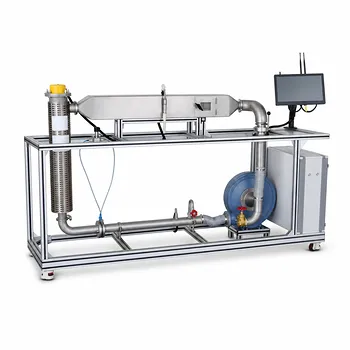
Here is the definitive answer: TEMA’s Class R, B, and C standards define the mechanical robustness and construction rigor of a heat exchanger, with Class B serving as the standard for process-realistic research pilots and Class C usually being the most appropriate and cost-effective choice for fundamental educational demonstrations operating under benign conditions.
The challenge isn’t just about selecting a heat exchanger that fits your process diagram; it’s about specifying a unit that safely meets your operating pressures, budget constraints, and educational or research goals. While Class R is often overkill for a teaching lab, the default choice for a research pilot simulating chemical manufacturing should be Class B, whereas basic training units can almost always rely on Class C construction.
Deconstructing the TEMA Classes: Rigor and Application
You must move beyond viewing TEMA standards as simple categories and instead see them as a direct reflection of safety factors, corrosion allowances, and manufacturing tolerances. Specifying the wrong class for a pilot plant leads to either unnecessary cost or unacceptable safety risk.
Class R: The Industrial Heavyweight
Class R is engineered for the relentless demands of the petroleum and severe processing industries. It assumes volatile, high-pressure, and hazardous environments.
This designation demands heavy-duty construction, thicker walls, and rigorous non-destructive testing. In the context of a vocational school or standard research lab, specifying a Class R exchanger is almost always disproportionate to the risk unless you are specifically replicating high-pressure petrochemical reactions at pilot scale.
Class B: The Process Simulation Standard
Class B is explicitly tailored for chemical process services. This is where industrial relevance and research pragmatism intersect.
If your pilot plant aims to replicate or study actual chemical manufacturing processes, Class B is your target specification. It provides a critical corrosion allowance and safety margin that generic commercial units lack, making it safe for the solvent, acid, or monomer exposures common in catalytic research.
Class C: The Commercial Economy
Class C is built for general applications—the kind found in HVAC systems, water chilling, and low-demand commercial kit. It is the most cost-effective option.
For an educational unit operations lab focused on non-hazardous demonstrations—like heating water with steam or cooling a food-grade solution—Class C is perfectly sufficient. It allows thermal principles to be taught without the financial burden of chemical-grade metallurgy.
Beyond Specs: The Educational & Research Rationale
Your deep need isn't just defining these classes—it's understanding why the distinction matters for safety integrity and academic legitimacy in a unit operations lab.
Bridging the Gap Between Theory and Industry
Integrating TEMA-rated exchangers trains students to operate with real-world constraints. A pilot plant designed to commercial standards forces students to consider standard flange ratings, gasket compatibility, and maintenance clearances.
When a student sees a TEMA nameplate on a Class B unit, they are connecting the heat transfer equation to a physical artifact governed by the ASME Boiler and Pressure Vessel Code. This visibility transforms a theoretical exercise into a lesson on industrial compliance.
Ensuring Pilot Plant Safety and Integrity
Vocational equipment does not exist in a legal vacuum just because it’s small. Using a standard like TEMA provides a recognized engineering shield for you.
If you run an exothermic reaction using a random non-rated heat exchanger, you are personally gambling on its integrity. Specifying a Class B exchanger immediately anchors your safety protocol to a defensible, third-party mechanical standard, significantly reducing the risk of catastrophic gasket blowouts.
Understanding the Trade-offs and Selection Pitfalls
Specifying a TEMA class incorrectly is the most common mistake in pilot plant design. You must weigh durability against fiscal reality.
The "Always Class B" Fallacy
Many engineers over-specify pilot plants as Class B for "future-proofing," but this often wastes limited training budgets.
A Class B unit requires specialized manufacturing, heavier support structures, and more expensive certificates. If your training course only ever runs tap water and compressed air through a double-pipe exchanger, the increased cost and lead time of Class B yields no educational return.
The Risk of General-Purpose Components
Conversely, a research pilot executing high-temperature thermal fluid loops should never default to the cheapest Class C commercial heat exchanger.
The thinner tube walls and smaller flange allowances in Class C construction make them susceptible to thermal fatigue and galvanic corrosion in aggressive environments. A failure here halts critical research and poses a direct chemical burn risk to students.
Making the Right Choice for Your Goal
To select the correct TEMA specification, you must align the exchanger’s mechanical rigor with the chemical risk and didactic intent of your system.
- If your primary focus is simulating harsh chemical manufacturing: Insist on Class B. This is non-negotiable for research involving aggressive fluids, ensuring safe corrosion allowances and mechanical durability that match industrial reality.
- If your primary focus is teaching core heat transfer fundamentals: Standardize on Class C. This provides the best budget efficiency, allowing you to purchase a wider variety of exchangers (plate, shell-and-tube, double-pipe) for a comprehensive curriculum without paying for unnecessary metallurgy.
- If your primary focus is replicating petroleum or high-pressure processes: Isolate these specific modules to Class R. Do not blanket the entire plant with this expensive standard, but use it precisely where the safety risk demands maximum integrity.
By anchoring your pilot plant in the appropriate TEMA language, you stop guessing about safety and start engineering an educational platform that legitimately mirrors the industrial world.
Summary Table:
| TEMA Class | Target Application | Key Mechanical Features | Best Suited For |
|---|---|---|---|
| Class R | Severe petroleum/heavy industrial processes | Heavy-duty design, thick walls, strict testing | High-pressure petrochemical research |
| Class B | Standard chemical process services | Balanced safety margins, corrosion allowance | Process-realistic research pilot plants |
| Class C | General commercial applications | Standard metallurgy, cost-effective construction | Fundamental educational labs & training |
Build a Compliant and Safe Lab with LABPARK
Selecting the right heat exchanger standard is crucial for the safety, budget, and educational goals of your facility. LABPARK provides premium Educational and Vocational Unit Operations Pilot Plants in chemical engineering, bioprocess & biotech, and environmental & water treatment for universities, research institutes, and enterprises.
Let our engineering experts help you specify the exact equipment your curriculum or research demands. Contact LABPARK today to request a detailed consultation and catalog!
Related Products
- Shell and Tube Heat Exchanger Heat Transfer Coefficient Determination Educational Pilot Plant
- Comprehensive Multi-Modal Heat Transfer Unit Operations Pilot Plant for Engineering Training
- Dual Mode Heat Transfer Pilot Plant for Unit Operations Training
- Three-Tube Heat Transfer Educational Pilot Plant for Unit Operations Training
- Comprehensive Heat Transfer Coefficient Determination Educational Unit Operations Pilot Plant
People Also Ask
- Why Apply LMTD Correction in Shell-and-Tube Pilot Plants & How to Determine It
- Why adjust baffle spacing in shell-and-tube heat exchanger pilot plants? Master heat transfer & pressure drop.
- How to Estimate Shell-Side Pressure Drop in a Shell-and-Tube Heat Exchanger Pilot Plant: Key Parameters Explained
- How is the fouling factor (Rd) evaluated? Key Pilot Plant Insights for Students
- How is fouling factor demonstrated using shell and tube pilot plants? Practical Lab Guide