Knowledge Chemical Engineering Education How do fluid transport pilot plants teach shaft and flow work? Bridge theory & practice.
Author avatar

Tech Team · LABPARK

Updated 3 weeks ago

How do fluid transport pilot plants teach shaft and flow work? Bridge theory & practice.


The gap between a textbook equation and a running pump is where true understanding lives.
A fluid transport pilot plant lets students directly measure the pressure rise, flow rate, and electrical power input of a real pump. By plugging these values into the steady‑state open‑system energy balance, they can calculate exactly how much shaft work the pump rotor delivers and how much flow work the fluid picks up across the inlet and outlet. This transforms abstract terms into concrete, calculated numbers—making the equation stick forever.

The core insight: pilot plants turn the theoretical split between shaft work and flow work into a tactile, data‑rich investigation. Students stop memorizing symbols and start seeing how mechanical rotation becomes pressure energy, all while confronting the real‑world losses that perfection‑only models ignore.

From Abstract Equations to Tangible Measurements

The Open‑System Energy Balance in Theory

Thermodynamics teaches that for a steady‑state open system, the energy equation splits mechanical work into two components.
Shaft work (( \dot{W}{\text{shaft}} )) is the power delivered by a moving part—like a pump impeller—across the system boundary.
Flow work (( \dot{W}
{\text{flow}} )) is the net pressure‑volume energy that enters and leaves with the fluid mass: at the inlet, the surroundings push fluid in; at the outlet, the fluid pushes against the surroundings. In per‑unit‑mass terms, it is ( P v ) evaluated between exit and inlet.

The Challenge of Conceptualizing Shaft and Flow Work

Without physical context, students often confuse shaft work with flow work or treat them as arbitrary equation fragments.
They ask: “If the pump does shaft work, why doesn’t that account for the pressure rise? And why does flow work even exist if no extra shaft is visible?”
A chalkboard derivation can’t fully answer this—it shows the math but not the mechanism. That’s where a pilot plant shines.

How Pilot Plants Bring the Concepts to Life

Measuring Shaft Work at the Pump Shaft

A well‑instrumented pilot plant typically includes a variable‑frequency drive, a torque sensor or a calibrated motor, and a wattmeter to read electrical input.
Students can calculate shaft work directly: if they know motor efficiency and measure electrical power, they derive brake horsepower delivered to the pump shaft.
That number, often in watts, is the real‑world equivalent of ( \dot{W}_{\text{shaft}} ) in their textbook. It sits in their lab notebook, not just in an equation.

Quantifying Flow Work through Pressure‑Drop Analysis

Right at the pump suction and discharge, pressure transducers or simple manometers capture the inlet and outlet pressures.
A flow meter (rotameter, magnetic, or turbine) gives the volumetric flow rate.
For an incompressible fluid, the flow work per unit mass reduces to ( v,(P_{\text{out}} - P_{\text{in}}) ). Multiply by mass flow and they have ( \dot{W}_{\text{flow}} )—a number they can touch.

Seeing the Total Energy Conversion Loop

With both shaft work and flow work quantified, students complete the energy balance:
[ \dot{W}{\text{shaft}} = \dot{m}\left[ (h{\text{out}} - h_{\text{in}}) + \frac{1}{2}(c_{\text{out}}^2 - c_{\text{in}}^2) + g(z_{\text{out}} - z_{\text{in}}) \right] ] For a liquid, the enthalpy difference is essentially the flow work plus any frictional heating.
Because they measure the rise in mechanical pressure energy, they can isolate the hydraulic power—the fraction of shaft work that actually becomes useful fluid energy—and separate it from losses.

The Pedagogical Power of Manual Data Collection

Calculating, Plotting, and Predicting

Running the pump at different speeds and valve openings creates a pump characteristic curve.
Students plot head vs. flow rate, then overlay the shaft‑work curve. They immediately see that at shut‑off, shaft work still happens—but flow work is zero. That confrontation erases the false equivalence between “pump running” and “fluid energy delivered.”

Debugging Common Misconceptions

When the calculated flow work doesn’t match the shaft work input, students scramble to explain the gap.
This leads them to discover mechanical losses, volumetric losses, and hydraulic inefficiencies—realities that pure thermodynamic treatments often omit.
They learn that flow work is not simply the shaft work minus friction; it is the energy stored and transported by the fluid, a distinct concept they can now point to in the data.

Understanding the Trade‑offs and Limitations

The Gap Between Ideal and Real Measurements

No pilot plant is perfectly insulated, and every sensor has uncertainty.
When students find that the energy balance doesn’t close perfectly, they’re tempted to tweak the numbers.
Resist that urge—the residual heat from friction, the slight elevation changes, and the pump casing heat loss all teach that no real system is a clean open‑system boundary.

When a Pilot Plant Can Mislead You

If students only measure electrical input and ignore motor efficiency, they’ll overestimate shaft work.
If they ignore the kinetic‑energy term across large pipe diameter changes, they’ll misattribute energy to flow work.
The pilot plant demands discipline: you must account for all energy streams, or the concept you’re trying to clarify gets smudged.

Making the Right Choice for Your Learning Goal

The way you structure your pilot‑plant lab determines which concept you reinforce. Tailor your approach to your primary educational objective.

  • If your primary focus is mastering the open‑system energy balance: Conduct full energy audits at multiple operating points, forcing the reconciliation of shaft work, flow work, and all losses.
  • If your primary focus is pump selection and performance: Generate the pump curve and efficiency curve, then discuss how shaft work and flow work drive the system curve.
  • If your primary focus is combating the “black‑box pump” mindset: Have students measure only external variables (electrical power, pressures, flows) and predict internal shaft work before cracking open the pump curve documentation.
  • If your primary focus is instrumentation and data integrity: Dive into the uncertainty analysis of each sensor; a sloppy pressure reading corrupts flow‑work calculations and masks the real physics.

A fluid transport pilot plant does more than demonstrate a pump—it transforms the energy balance from a wall of symbols into a battle‑tested mental model. Once students have calculated shaft work and flow work from their own data, those two concepts stop being merely theoretical and start being tools they will trust for a lifetime.

Summary Table:

Concept Key Measurement Practical Value
Shaft Work (W_shaft) Electrical power (via VFD, motor torque, or wattmeter) Calculates actual mechanical energy delivered to the pump.
Flow Work (W_flow) Pressure difference & flow rate (via transducers & flow meters) Quantifies the pressure-volume energy change within the fluid.
Energy Losses Difference between shaft work and flow work Identifies mechanical friction, volumetric slip, and hydraulic losses.

Bring Thermodynamics to Life in Your Lab

Bridge the gap between textbook equations and real-world engineering. LABPARK provides high-quality Educational and Vocational Unit Operations Pilot Plants in chemical engineering, bioprocess & biotech, and environmental & water treatment. Designed specifically for universities, research institutes, and enterprises, our pilot plants empower students and researchers to get hands-on experience with fluid transport, pump characterization, and energy balance verification.

Ready to upgrade your laboratory equipment? Contact us today to request a quote and see how we can enhance your educational outcomes!

Related Products

People Also Ask

Related Products

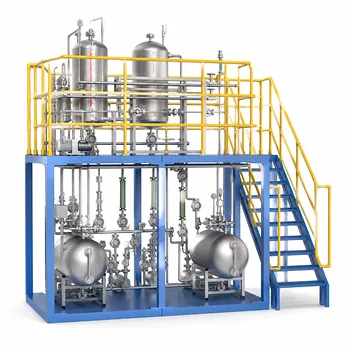
Multi Pump Fluid Transport Process Piping Unit Operations Training Pilot Plant

Multi Pump Fluid Transport Process Piping Unit Operations Training Pilot Plant

Industrial-scale multi-pump pilot plant for unit operations training in fluid transport and process piping, featuring real-material and semi-physical simulation modes, comprehensive pump and flowmeter calibration, and safety-enhanced two-tier platform, bridging academic theory and industrial practice for chemical engineering education.

Fluid Transport and Piping Dynamics Practical Training Unit Operations Pilot Plant

Fluid Transport and Piping Dynamics Practical Training Unit Operations Pilot Plant

This industrial-scale fluid transport and piping dynamics training pilot plant provides essential hands-on experience with pump operations, cavitation, piping resistance, flow metering, and process control. Customizable to fit specific academic engineering curricula.

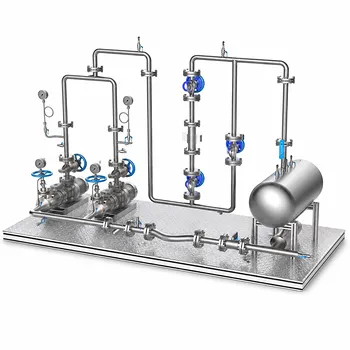
Chemical Pipeline Assembly and Fluid Transport Practical Training Unit Operations Pilot Plant

Chemical Pipeline Assembly and Fluid Transport Practical Training Unit Operations Pilot Plant

Integrated skid-mounted engineering training pilot plant for university labs offers hands-on experience in chemical pipeline assembly, fluid transport, centrifugal pump operation, and pressure testing. Customizable system bridges academic theory and industrial practice with digital pre-lab resources and comprehensive tools.

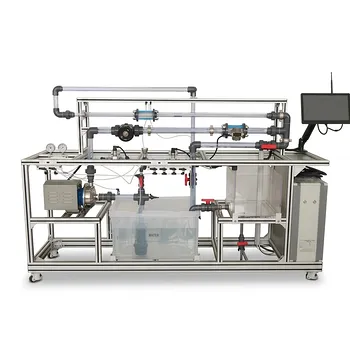
Centrifugal Pump Performance and Orifice Flowmeter Calibration Educational Pilot Plant

Centrifugal Pump Performance and Orifice Flowmeter Calibration Educational Pilot Plant

This versatile educational pilot plant enables engineering students to conduct centrifugal pump performance tests, orifice flowmeter calibration, and fluid mechanics experiments using a transparent flow loop, industrial HMI, and 3D virtual simulation for a comprehensive hands-on learning experience.

Comprehensive Fluid Mechanics Educational Unit Operations Pilot Plant

Comprehensive Fluid Mechanics Educational Unit Operations Pilot Plant

Hands-on fluid mechanics pilot plant for engineering education covering over 13 principles including pipe flow, minor losses, flowmeter calibration, and pump performance with industrial-grade components, smooth and rough piping, venturi and orifice flowmeters, and centrifugal pump testing and analysis.

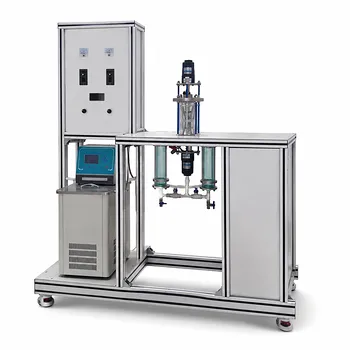
Liquid-Liquid Mass Transfer Coefficient Determination Educational Pilot Plant

Liquid-Liquid Mass Transfer Coefficient Determination Educational Pilot Plant

This bench-scale educational pilot plant for liquid-liquid mass transfer coefficient determination offers precise control of phase boundary, temperature, and agitation, enabling hands-on study of transport phenomena and unit operations in chemical engineering labs for teaching.

Quantitative Dosing and Liquid Flow Control Educational Unit Operations Pilot Plant

Quantitative Dosing and Liquid Flow Control Educational Unit Operations Pilot Plant

Explore industrial fluid transport and automated process control with this quantitative dosing and liquid flow control educational pilot plant, featuring local and remote control cabinets, variable speed metering pump, high-precision flow sensors, and PLC-based SCADA integration for engineering students.

Two-Dimensional Fluidization Hydrodynamics Educational Pilot Plant for Unit Operations Training

Two-Dimensional Fluidization Hydrodynamics Educational Pilot Plant for Unit Operations Training

Explore gas-solid and liquid-solid fluidization hydrodynamics with our transparent 2D educational pilot plant. Ideal for chemical engineering unit operations labs, it demonstrates fixed to fluidized bed regimes, measures pressure drop, and integrates QR-code digital learning for enhanced student training.

Orifice and Venturi Flowmeter Calibration Educational Pilot Plant for Fluid Mechanics Laboratory

Orifice and Venturi Flowmeter Calibration Educational Pilot Plant for Fluid Mechanics Laboratory

Enhance fluid dynamics education with the Orifice and Venturi Flowmeter Calibration Educational Unit Operations Pilot Plant, featuring transparent orifice and Venturi meters, industrial sensors, touchscreen interface for real-time data analysis and automatic coefficient calculations in engineering student laboratories.

Tubular Reactor Flow Characteristics Determination Educational Unit Operations Pilot Plant

Tubular Reactor Flow Characteristics Determination Educational Unit Operations Pilot Plant

Educational pilot plant for investigating tubular reactor flow characteristics and residence time distribution Features adjustable recycle for plug flow and backmixing studies industrial touchscreen interface and real-time data acquisition Ideal for chemical engineering unit operations laboratory training and education

Centrifugal Pump Performance Determination Educational Unit Operations Pilot Plant

Centrifugal Pump Performance Determination Educational Unit Operations Pilot Plant

This lab system determines centrifugal pump performance curves for unit operations. Students configure dual pumps in series or parallel for hands-on learning. Includes industrial controls, clear piping, and data logging. Customizable for chemical, mechanical, and environmental engineering programs.

Residence Time Distribution and Reactor Flow Characteristics Determination Educational Pilot Plant

Residence Time Distribution and Reactor Flow Characteristics Determination Educational Pilot Plant

This versatile educational pilot plant is designed for comprehensive study of residence time distribution and reactor flow characteristics, featuring multiple CSTRs in series, a tubular reactor, variable recycle loop, and automated real-time data acquisition, perfect for hands-on chemical engineering education.

Two Phase Flow Pattern Velocity Resistance Measurement Educational Pilot Plant

Two Phase Flow Pattern Velocity Resistance Measurement Educational Pilot Plant

Benchtop educational pilot plant for university labs studying gas-liquid two-phase flow patterns, velocity, and resistance across circular, square, and rectangular conduits. Features 15.6-inch touchscreen, 5G connectivity, differential pressure sensors, safe water-air operation. Supports chemical engineering curricula.

Comprehensive Liquid-Liquid Extraction Pilot Plant for Engineering Education

Comprehensive Liquid-Liquid Extraction Pilot Plant for Engineering Education

Comprehensive liquid-liquid extraction pilot plant for engineering education, integrating rotary and vibratory columns for hands-on observation of phase behavior, flooding limits, and mass transfer efficiency, enabling precise HTU and mass transfer coefficient calculations.

Bernoulli Equation Demonstration Unit Operations Pilot Plant

Bernoulli Equation Demonstration Unit Operations Pilot Plant

Laboratory pilot plant for Bernoulli's equation demonstration with transparent PVC pipes, 23 piezometer tubes for pressure measurement, and hands-on experiments. Designed for engineering education to study energy conservation, hydraulic grade line, and localized losses in fluid steady-flow systems.

Multi-Reactor Educational Pilot Plant for Reaction Engineering Unit Operations

Multi-Reactor Educational Pilot Plant for Reaction Engineering Unit Operations

Integrated bench-scale educational pilot plant for chemical engineering teaching featuring fixed bed fluidized bed and stirred tank reactors with web-based digital twin controls and safety interlocks for hands-on unit operations and reaction engineering comparative studies in one compact system.

Fluidized Bed Gas Solid Catalytic Reaction Educational Pilot Plant

Fluidized Bed Gas Solid Catalytic Reaction Educational Pilot Plant

Our educational fluidized bed gas-solid catalytic reaction pilot plant is ideal for chemical engineering labs. Students study fluidization dynamics, catalyst evaluation, and process control hands-on. Features include a customizable reactor, touchscreen HMI, and safety interlocks for safe, curriculum-aligned experiments.

Packed Bed Absorption Educational Unit Operations Pilot Plant

Packed Bed Absorption Educational Unit Operations Pilot Plant

Study gas-liquid absorption, pressure drop, flooding, and mass transfer coefficients with this pilot plant. Transparent packed column, industrial touchscreen, real-time sensor data, automated analysis. Investigate two-phase flow, loading points, column efficiency. Comprehensive data logging and assessment software included.

Constant Pressure Filtration Educational Unit Operations Pilot Plant

Constant Pressure Filtration Educational Unit Operations Pilot Plant

Hands-on educational pilot plant for constant pressure filtration. Classic plate and frame filter press allows students to study kinetics, determine specific cake resistance, perform cake washing and evaluate washing rates. Ideal for chemical engineering curriculum. Mobile, customizable, safety-compliant design.

Multi Functional Catalytic Reaction and Reactor Evaluation Educational Unit Operations Pilot Plant

Multi Functional Catalytic Reaction and Reactor Evaluation Educational Unit Operations Pilot Plant

Bench-scale educational pilot plant for catalytic reaction and reactor evaluation, integrating fixed bed, fluidized bed, and stirred tank reactors. Students compare reactor designs, evaluate catalysts, and study reaction kinetics and hydrodynamics. Perfect for unit operations labs in chemical engineering curricula.


Leave Your Message