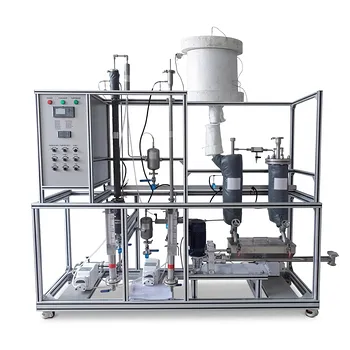
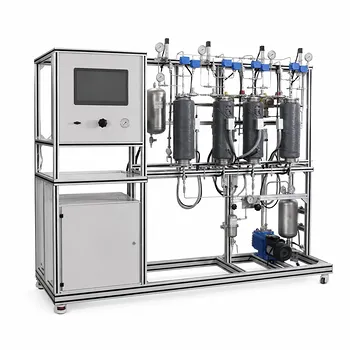
For a small-scale pilot plant, the "best" hydrogen purification module isn't universal—it's a calculated trade between purity, operating complexity, and hydrogen efficiency. Pressure swing adsorption delivers excellent purity but demands high-pressure infrastructure and complex valve control. Palladium membranes achieve ultra-high purity but require both high temperature and pressure while risking thermal fatigue. Preferential oxidation is compact yet introduces delicate air-injection control challenges. Selective methanation offers tempting simplicity but wastes three hydrogen molecules for every carbon monoxide molecule it removes.
While no single method dominates, the right choice hinges on your plant's true priorities. For a teaching or exploratory pilot plant, operational simplicity often trumps extreme purity. For a research platform generating ultra-pure hydrogen for sensitive catalysts, the complexity of a hot membrane might be justified. Understanding the precise cost of each method—in energy, control effort, and lost product—is the foundation of a sound selection.
Key Purification Methods for Pilot Plants
Small-scale unit operations often repurpose or simplify industrial techniques. The following four methods represent the primary module options, each with distinct integration requirements.
Pressure Swing Adsorption (PSA)
PSA separates gases by cycling pressure over adsorbent beds that selectively trap impurities. It's a workhorse for large-scale hydrogen production.
In pilot settings, its main burden is system complexity. The process canonically requires high operating pressures—around 17 atm—to achieve meaningful capacity. This forces you to incorporate rated pressure vessels, compressors, and multiple adsorption beds. The valve sequencing to alternate between beds and pressure levels adds significant control logic. For a unit operations course or a rapid prototyping lab, this complexity can overshadow the educational or experimental value.
However, PSA offers robust, tunable purity and needs no additional reactants like air or steam. If your pilot plant already operates at elevated pressure or is designed to demonstrate industrial relevance, PSA can be a compelling choice.
Metal Membranes (Palladium Alloys)
Dense palladium-alloy membranes deliver an extreme purity edge: hydrogen exceeding 99.999%. They operate by selectively dissolving and diffusing hydrogen atoms through the metal lattice.
The trade-off is a demanding operating envelope. These membranes require elevated temperatures (300–400°C) and high feed pressures (100–400 psi) to drive permeation. For a pilot plant, this means integrating high-temperature heaters, insulation, and pressure regulation—adding both capital cost and safety considerations. More critically, metal membranes can suffer from instability during repeated thermal cycling. The expansion and contraction of the material from heating and cooling can develop pinholes or cracks, degrading selectivity over time. In a stop-and-go pilot environment typical of academic or R&D settings, this durability concern is a major practical limitation.
Preferential Oxidation (PrOx) Reactors
PrOx reactors selectively oxidize carbon monoxide to carbon dioxide over a catalyst, preventing CO from poisoning downstream components like fuel cells.
These modules are compact and fast-responding, making them attractive where space and transient operation matter. The hidden complexity lies in precise air injection. You must meter a stoichiometric amount of oxygen relative to CO—too little, and CO slips through; too much, and excess oxygen begins to combust the valuable hydrogen product stream. This creates a tight control loop requiring calibrated mass flow controllers and often a feedback signal from a CO sensor. For a pilot plant emphasizing control strategies, a PrOx unit becomes an excellent challenge. But if the goal is a simple purification step, the injection system overhead can feel excessive.
Selective Methanation Reactors
Selective methanation converts CO to methane over a catalyst without requiring air input. This absence of an oxidant stream makes it simpler to integrate than PrOx—one less mass flow controller, no risk of burning your hydrogen with mistuned air.
That simplicity comes with a steep hydrogen penalty. The reaction consumes three molecules of hydrogen for every molecule of CO removed. In a pilot plant where hydrogen yield is a key metric or where hydrogen is produced in limited batches, this stoichiometric loss can be unacceptable. Furthermore, the catalyst must be kept at a precise temperature window to ensure it reacts with CO rather than CO2, which would consume even more hydrogen. You trade air injection complexity for temperature control precision, shifting the engineering challenge but not eliminating it.
Understanding the Trade-offs: Matching Method to Mission
Beyond comparing each technology in isolation, your selection must weigh these interconnected practical factors.
Purity Demand Versus Complexity Budget
A pilot plant testing new ammonia synthesis catalysts may need hydrogen with less than 0.1 ppm CO. That ultra-high purity single-handedly tips the scale toward palladium membranes, despite their thermal cycling sensitivity. Conversely, a pilot plant studying broad reaction kinetics with robust catalysts might tolerate 1% impurities, making PSA or even methanation viable. Align the purity spec with the minimum your downstream process requires—specifying 5N purity when 3N suffices adds needless capital and operational pain.
Hydrogen Efficiency: A Hidden Cost Multiplier
The methanation reaction’s 3:1 H2-to-CO ratio is not just a chemical note; it directly erodes your product. If your pilot plant reformer produces 10 standard liters per minute of hydrogen containing 1% CO, a methanation unit will consume about 0.3 liters per minute of hydrogen just to clean that stream. Over a week-long campaign, that becomes a tangible economic and material loss. PSA and metal membranes do not chemically consume hydrogen, preserving your mass balance for experimental accuracy. PrOx can also consume some hydrogen if the air injection overshoots, but a well-tuned system minimizes this.
Thermal and Pressure Infrastructure
Your pilot plant’s existing utilities dictate feasibility. If you lack a process heating system, the 300°C requirement of palladium membranes is a non-starter unless you add a dedicated heater. If your feed gas is available only at low pressure, a PSA module requiring 17 atm will demand a compressor and appropriate pressure-rated components. PrOx and methanation reactors typically operate at lower temperatures and near-ambient pressures, making them easier to bolt onto an existing gas delivery skid. However, they still demand precise temperature control—a high-quality furnace or oil bath with tight regulation.
Durability and Cycling Modes
Pilot plants rarely run 24/7 steady-state. They start, stop, and change conditions frequently. Metal membranes are notably vulnerable to this pattern, with thermal cycling known to reduce separation performance over tens of cycles. PSA systems, while mechanically complex, handle cycling inherently—their operational principle is cycling. The adsorbents can last for millions of cycles if kept free of liquid water or heavy contaminants. PrOx and methanation catalysts can also degrade if improperly heated or cooled, but they are typically more forgiving than thin palladium films. If your plant will be switched on and off daily, avoiding or ruggedizing membrane modules becomes a key design criterion.
Control Philosophy and Operator Skill
A PrOx reactor with a closed-loop air injection demands sensors and logic that a simple PID controller can manage—if staff are comfortable tuning it. Selective methanation requires equally careful temperature control. PSA needs complex valve sequencing programs, often requiring a PLC. If your pilot plant is a teaching facility, the simplicity of a methanation unit (few connections, no air) can be educationally valuable despite the hydrogen loss. If you're training operators on industrial-like processes, PSA's valve control and pressure swing logic offer direct relevance.
How to Choose the Right Hydrogen Purification Module
The “best” module is the one that aligns with your pilot plant's specific mission and practical constraints. Evaluate your priorities against these goal-oriented recommendations.
- If your primary focus is achieving extreme hydrogen purity (>99.999%): Consider a palladium membrane module, but plan for its high temperature and pressure requirements, and be aware of thermal cycling fatigue—design for long, steady runs or a careful heat-up/cool-down protocol.
- If your primary focus is minimizing system complexity and integration effort: Lean toward a selective methanation reactor, accepting its hydrogen consumption penalty in exchange for simpler hardware (no air injection) and lower operating pressure and temperature.
- If your primary focus is demonstrating an industrially relevant, robust process: Select a pressure swing adsorption module. Its complexity in valves and pressure swings mirrors full-scale plants, and it offers strong purity without chemical hydrogen loss, making it an excellent teaching or process-development platform.
- If your primary focus is compactness and rapid response with moderate purity needs: Deploy a preferential oxidation reactor, but invest in a precise air injection control loop—view this challenge as a core part of your plant’s learning or research objective.
The right module choice transforms a finicky purification train into a reliable, instructive centerpiece of your pilot plant. Match the method to your mission, not to a generic specification sheet.
Summary Table:
| Purification Method | Key Advantage | Major Trade-off | Best Suited For |
|---|---|---|---|
| Pressure Swing Adsorption (PSA) | High, tunable purity; no chemical H2 loss | High mechanical/control complexity | Industrial simulation & robust testing |
| Metal Membranes (Pd Alloys) | Ultra-high purity (>99.999%) | Thermal cycling fatigue; high temp/pressure | Catalyst research requiring pure H2 |
| Preferential Oxidation (PrOx) | Compact design; fast response | Requires precise, complex air-injection control | Advanced process control training |
| Selective Methanation | Simple hardware integration; no air needed | High hydrogen consumption (3:1 H2:CO ratio) | Simple educational labs prioritizing ease of use |
Optimize Your Unit Operations with LABPARK
Selecting the right purification module is critical for reliable process engineering. LABPARK provides state-of-the-art Educational and Vocational Unit Operations Pilot Plants in chemical engineering, bioprocess & biotech, and environmental & water treatment. Designed specifically for universities, research institutes, and enterprises, our modular solutions ensure safety, accuracy, and ease of integration.
Ready to elevate your research or training capabilities? Contact LABPARK today to discuss your custom pilot plant configuration!
Related Products
- Green Anhydrous Ethanol Purification Extractive Distillation Unit Operations Training Pilot Plant
- Steam Methane Reforming Hydrogen Production and Purification Educational Pilot Plant
- Ion Exchange Water Purification Educational Pilot Plant for Engineering Unit Operations
- Electrolyte Distillation Purification and Formulation Educational Pilot Plant
- Fixed-Bed Chemical Reaction and Gas Dust Tar Removal Unit Operations Pilot Plant
People Also Ask
- How can energy balance equations for condensers & reboilers be validated experimentally? Guide
- Fugacity vs Activity Coefficient: How to Choose VLE Models for Distillation Pilot Plants
- How can real-time carbon number prediction improve distillation pilot plants? Optimize control.
- Why is vacuum operation capability an essential feature for a distillation unit operations pilot plant? Unlock Efficiency
- Why is condensate subcooling critical in pilot plants? Expert Design & Control Guide