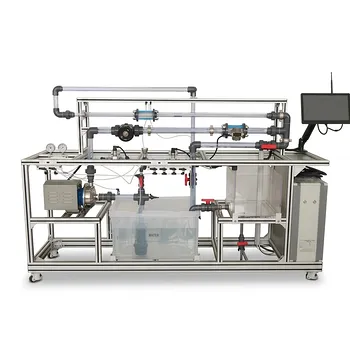
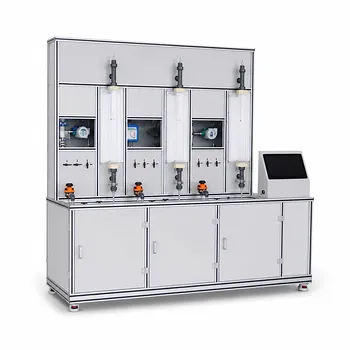
Bringing NIRS directly into the fluid bed dryer transforms a batch black box into a transparent, data-rich unit operation. By mounting an inline near-infrared probe inside the drying chamber and coupling it with chemometric software, you gain real-time moisture content and end-point determination without ever opening the dryer or pulling a grab sample. The integration replaces unsafe, lag-ridden offline methods like Karl Fischer titration with a closed-system, non-destructive measurement that captures the drying curve every few seconds, enabling both immediate process control and a deeper understanding of hydrate behavior.
The true power of integrating NIRS into a fluid bed drying pilot plant lies not in a faster moisture number, but in the ability to see the entire drying trajectory live—turning a purely empirical operation into a teachable, controllable, and scalable Quality by Design exercise that links air dynamics, product stability, and process automation.
How NIRS Transforms Fluid Bed Drying Monitoring
The jump from periodic manual sampling to continuous inline spectroscopy changes what you can learn and how you can control the process. The real value emerges when you treat the NIRS signal not as a substitute laboratory measurement, but as a process fingerprint.
Replacing Thief Sampling with an Inline Eye
Traditional fluid bed dryer monitoring relies on sampling ports and thief probes to extract material for Karl Fischer titration. This approach introduces multiple problems: exposure to hazardous or hygroscopic solids, sample perturbation that alters the bed, and long delays that make true end-point control impossible.
An inline NIRS probe inserted directly into the fluidized bed or positioned over a flowing product stream eliminates those risks entirely. It continuously collects spectra from the moving powder, providing a non-destructive, closed-system measurement that tracks the moisture level in real time. This single change converts the dryer from a timed operation into a condition-based process.
Capturing the “Real-Time” Process Signature
Because NIRS collects spectra in seconds, you can observe the drying curve as it happens, not reconstruct it from a handful of data points. That high-resolution view lets students and researchers correlate moisture loss with critical process parameters—inlet air temperature, humidity, flow rate—and identify exactly when the product reaches its target hydration state.
This dynamic view also teaches how air distribution and fluidization quality affect spectral noise. Erratic fluidization or dead zones show up as increased measurement variability, providing immediate feedback on the mechanical performance of the dryer itself.
Teaching Quality by Design Through Direct Observation
When a fluid bed dryer is equipped with NIRS, the pilot plant becomes a living demonstration of Quality by Design (QbD). Students can watch the process operate within a design space, see how raw material variability shifts the drying endpoint, and use the real-time signal to implement manual or automated feedback control loops. The dryer stops being a simple moisture-reduction step and becomes a controlled chemical engineering unit operation where Critical Quality Attributes (CQAs) are actively managed, not assumed.
The Technical Foundation: How the Integration Works
Moving from concept to a working system requires attention to probe engineering, chemometric model development, and instrument qualification. Each layer builds on the last to turn raw spectra into actionable process decisions.
Probe Placement and Spectral Acquisition
The NIR instrument connects to a process probe that contacts the fluidized material directly, often at a wall-mounted sight glass or through an immersion well. The probe scans in the wavelength range of 780–2526 nm, capturing absorption bands primarily from O–H, C–H, and N–H bonds. For moisture monitoring, the water peaks dominate—but with enough spectral resolution you can distinguish surface water from bound hydrate water.
The acquisition sequence must account for the moving, multi-particle environment. Multiple stationary or flowing volumes are sampled to average out particle size effects and local moisture gradients, building a representative spectrum that tracks the bulk property.
Building a PLS Model with Karl Fischer Reference Data
A standalone NIRS trace is not a moisture value—it must be correlated to a primary reference method. Partial Least Squares (PLS) regression is the workhorse for this task. During model development, you collect NIR spectra from dozens of samples drawn at different stages of drying, then immediately perform Karl Fischer titration on the same samples.
The PLS algorithm learns the spectral features that predict water content, including separating surface water from crystalline hydrate water when the process conditions justify it. Once validated, the model resides in the analyzer software and generates a real-time moisture number every time a new spectrum is acquired, eliminating further sampling.
Instrument Qualification: The Non-Negotiable First Step
Before relying on any NIRS data for process decisions, the instrument itself must be verified. In a pilot plant setting, a simplified but rigorous qualification sequence protects against teaching incorrect conclusions. The key checks include:
- Wavelength accuracy using standards with known absorption maxima.
- Wavelength repeatability verified with polystyrene or rare-earth oxide references.
- Response repeatability using reflective thermoplastic resins doped with carbon black.
- Photometric linearity tested against a series of transmittance or reflectance standards such as Spectralon mixtures.
- Photometric noise confirmed by scanning a stable reflectance standard like Teflon or a white ceramic tile.
Completing these steps ensures that spectral variations seen during drying are due to actual process changes—not instrument drift or optical misalignment.
Understanding the Trade-offs and Common Pitfalls
Inline NIRS brings tremendous advantages, but its practicality is bounded by the physics of the measurement and the reality of model maintenance. Being honest about these limitations prevents misuse and teaches good engineering judgment.
The Sensitivity Ceiling: 0.1% and Above
NIRS excels at detecting compounds containing C–H, O–H, or N–H bonds at concentrations typically down to 0.1%. For drying applications where the endpoint is often a fraction of a percent moisture, this sensitivity is usually sufficient. However, if the process requires quantifying moisture below that threshold, NIRS may not provide the necessary resolution, and a more sensitive technique like a chilled-mirror dew point analyzer or coulometric Karl Fischer should be considered.
Spectral Noise from Air Dynamics and Particle Movement
Fluidized beds are noisy environments for spectroscopy. Moving particles cause fluctuating path lengths, bubbles disrupt the probe–powder interface, and temperature swings shift spectral baselines. These effects can degrade the signal-to-noise ratio and, if not managed through careful probe positioning, spectral averaging, and temperature correction, can lead to erratic model predictions. This challenge itself becomes a learning opportunity: students see firsthand why engineering a robust measurement interface is as important as the chemistry.
Calibration Creep and Model Maintenance
A PLS model built with one product batch and dryer configuration works perfectly—until the raw material source changes, the particle size distribution shifts, or probe fouling begins. Without periodic model updating with new reference values, the predicted moisture will drift. In educational pilot plants, this maintenance cycle teaches the practical reality of PAT: it is a continuous commitment, not a one-time installation.
The Educational Gap: From Model to Meaning
A black-box moisture number displayed on a screen can mislead if students don’t understand what’s behind it. Teaching someone to trust a chemometric prediction requires also teaching spectral interpretation, model diagnostics, and the limitations of empirical correlations. Otherwise, the technology becomes a magic trick rather than a true engineering tool.
Making the Right Choice for Your Pilot Plant Setup
The integration depth you choose should match your primary learning, safety, and research objectives. The same NIRS hardware can be configured for a simple end-point switch or a full-blown research-grade monitoring station.
- If your primary focus is safety and hazardous material handling: Implement NIRS with a robust, permanently mounted probe and automate the end-point shutdown. This eliminates manual sampling of toxic or hygroscopic materials entirely, creating a closed process that can safely run unattended.
- If your primary focus is teaching modern manufacturing principles: Expose the full data pipeline to students—spectra, scores, predictions, and trends—alongside the control logic. Let them manually adjust inlet conditions and see the NIRS response in real time to internalize QbD and feedback control.
- If your primary focus is process optimization and scale-down research: Build a detailed PLS model that differentiates surface and bound water, and combine the NIRS signal with temperature and pressure data to map the complete drying design space. This transforms the pilot plant into a predictive development tool.
- If your primary focus is basic moisture monitoring with minimal complexity: Use a simpler calibration and a straightforward end-point detection algorithm that stops the dryer when moisture falls below a set limit. Even this entry-level integration teaches the value of real-time data over timed cycles and builds a foundation for more advanced PAT later.
By integrating NIRS into your fluid bed dryer, you're not just measuring moisture—you're equipping your team with the real-time control mindset that defines modern chemical manufacturing.
Summary Table:
| Parameter | Traditional Method (Thief Sampling & KF) | Inline NIRS Integration |
|---|---|---|
| Measurement Style | Offline, destructive manual grab sampling | Inline, non-destructive continuous scanning |
| Data Frequency | Periodic with long time lags | Real-time (every few seconds) |
| Process Safety | Exposure risk to hazardous solids | Closed-system, zero operator exposure |
| Control Capability | Empirical, timed runs | Dynamic feedback control & QbD learning |
Bring Modern PAT to Your Chemical Engineering Lab
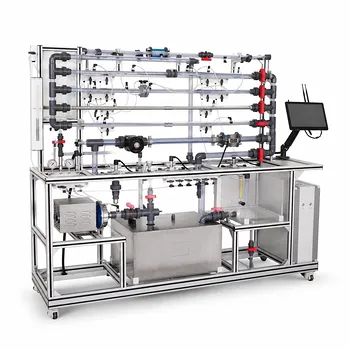
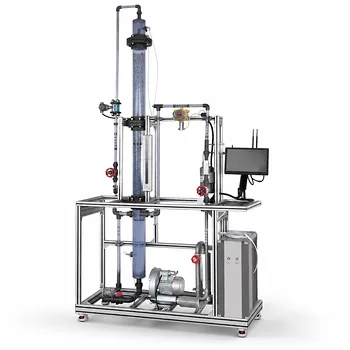
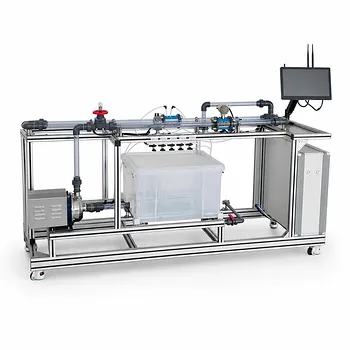
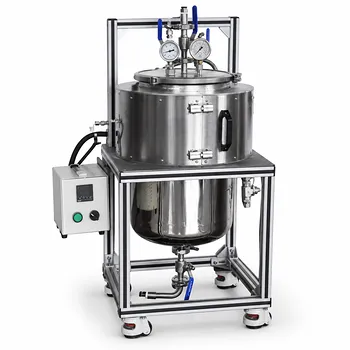
Looking to upgrade your hands-on training or research capabilities? LABPARK designs and manufactures premium Educational and Vocational Unit Operations Pilot Plants in chemical engineering, bioprocess & biotech, and environmental & water treatment.
Whether you are a university seeking to teach Quality by Design (QbD) principles or a research institute optimizing scale-up processes, our pilot plants can integrate advanced technologies like inline NIRS to deliver real-time process insights.
Contact LABPARK today to discuss your pilot plant requirements and explore our tailored solutions!
Related Products
- Multi-Functional Drying Educational Unit Operations Pilot Plant
- Fluidized Bed Gas Solid Catalytic Reaction Educational Pilot Plant
- Multi-Reactor Educational Pilot Plant for Reaction Engineering Unit Operations
- Two-Dimensional Fluidization Hydrodynamics Educational Pilot Plant for Unit Operations Training
- Multi Functional Catalytic Reaction and Reactor Evaluation Educational Unit Operations Pilot Plant
People Also Ask
- How to study gasification in pilot plants? Compare exit gas composition & efficiency
- Why is the chemical plant startup schedule crucial? De-risk scale-up with pilot plants.
- How do deviations in estimating latent heat impact pilot plant thermal systems? Avoid hardware mis-sizing.
- Why Use PTFE & Hastelloy in Chemical Pilot Plants? Prevent Corrosion & Ensure Safety
- When to transition from PID to adaptive control in pilot plants? Key process indicators.